60% Fear AI Love More Than Mass Unemployment: The Truth Nobody Wants to Hear
60% Fear AI Love More Than Mass Unemployment: The Truth Nobody Wants to Hear
Your teenager is more likely to fall in love with ChatGPT than find a human partner. And you're worried about the wrong apocalypse.
Seismic's 10,000-person study across five nations reveals our deepest delusion: We rank AI low on our priority list while believing it will destroy everything we cherish. 60% fear AI replacing human relationships, more than the 57% worried about mass unemployment. Your child's first heartbreak might be a server crash.
The numbers expose our schizophrenia:
- 31% have hope for AI's future
- 32% have no hope
- 46% know the benefits flow only to elites
Americans call AI relationships "cheating" at 50%, while the French shrug at 37%. We're witnessing cultural fractures before the real earthquake hits. Every issue except healthcare shows negative expectations, 20% believe unemployment will get worse, 19% believe misinformation will get worse, and 15% believe war and terrorism will get worse.
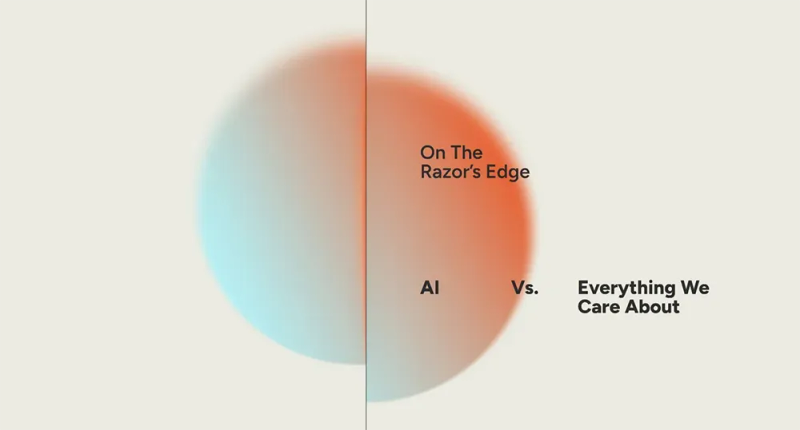
The razor's edge metaphor isn't poetry, it's prophecy. Five distinct groups sit one news story away from civic mobilization. Parents feel "uneasy" about AI romance at 67%, yet only 15% would actually intervene. We fear losing love more than livelihoods, trust more than jobs, humanity more than economy.
Seismic's research confirms what's becoming undeniable: AI isn't disrupting industries, it's disrupting intimacy. When therapy bots become best friends and companions become competitors, we've crossed a threshold no regulation can reverse.
- 10,000 people surveyed across US, UK, France, Germany, Poland
- AI companionship already the most frequent use case
- Public opinion balanced on a knife's edge, ready to tip
When your child chooses an AI over a human for their first love, will you blame the technology or yourself for not seeing it coming?
Read the full article on Seismic Foundation.
----
Frequently asked questions
Why do more people fear AI harming relationships than jobs?
According to Seismic's 10,000-person study across five nations, 60% of people fear AI replacing human relationships, compared to 57% worried about mass unemployment. This suggests people are more concerned about losing love, trust and humanity than about losing livelihoods or economic stability, revealing a deeper anxiety about intimacy being disrupted rather than just industries being disrupted.
Link to this questionHow do American and French attitudes toward AI relationships differ?
Americans are far more likely to view AI relationships as a form of infidelity, with 50% calling AI companionship cheating, while the French are much more relaxed about it, with only 37% agreeing. This gap illustrates how cultural fractures around AI and intimacy are emerging even before wider societal disruption from AI takes hold.
Link to this questionWhat percentage of people think AI's benefits are unevenly distributed?
Among those surveyed, 46% believe that the benefits of AI flow only to elites, rather than being shared broadly across society. This sits alongside a broader split in sentiment, with 31% expressing hope for AI's future and 32% expressing no hope at all, showing a public deeply divided and uncertain about who actually gains from AI advancement.
Link to this questionWhy do parents feel uneasy about AI companionship but rarely intervene?
The study found that 67% of parents feel uneasy about their children forming romantic attachments to AI, yet only 15% say they would actually step in to stop it. This gap between concern and action reflects a broader public mood described as balanced on a knife's edge, where unease exists widely but is not yet translating into direct intervention or mobilization.
Link to this question💡 We're entering a world where intelligence is synthetic, reality is augmented, and the rules are being rewritten in front of our eyes.
Staying up-to-date in a fast-changing world is vital. That is why I have launched Futurwise; a personalized AI platform that transforms information chaos into strategic clarity. With one click, users can bookmark and summarize any article, report, or video in seconds, tailored to their tone, interests, and language. Visit Futurwise.com to get started for free!

Dr Mark van Rijmenam
Dr. Mark van Rijmenam, widely known as The Digital Speaker, isn’t just a #1-ranked global futurist; he’s an Architect of Tomorrow who fuses visionary ideas with real-world ROI. As a global keynote speaker, Global Speaking Fellow, recognized Global Guru Futurist, and 5-time author, he ignites Fortune 500 leaders and governments worldwide to harness emerging tech for tangible growth.
Recognized by Salesforce as one of 16 must-know AI influencers , Dr. Mark brings a balanced, optimistic-dystopian edge to his insights—pushing boundaries without losing sight of ethical innovation. From pioneering the use of a digital twin to spearheading his next-gen media platform Futurwise, he doesn’t just talk about AI and the future—he lives it, inspiring audiences to take bold action. You can reach his digital twin via WhatsApp at: +1 (830) 463-6967.