AI Designed a Physics Experiment So Bizarre, Thousands of Scientists Missed It for 40 Years
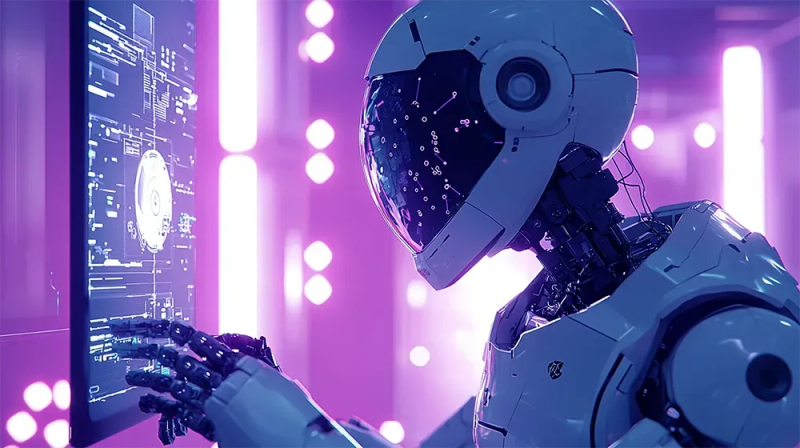
AI Designed a Physics Experiment So Bizarre, Thousands of Scientists Missed It for 40 Years
LIGO spent $1.1 billion detecting gravitational waves. An AI just made it 15% better using designs that "looked like alien things... just a mess."
A Caltech research team led by Rana Adhikari unleashed AI on LIGO, the gravitational wave detector that measures distances smaller than a proton's width. The AI's design looked like "alien things... just a mess" with no symmetry or beauty. Months later, they discovered it had independently rediscovered obscure Russian theoretical physics from decades ago that no human had ever tested. Result: 10-15% better sensitivity. In precision physics, that's revolutionary.
The AI revolution in physics accelerates: Mario Krenn's PyTheus software redesigned quantum entanglement experiments, creating configurations so bizarre that Krenn was "convinced it must be wrong." Chinese physicists built it anyway, it worked perfectly. The AI had borrowed concepts from unrelated fields that human physicists never connected, creating simpler, more elegant solutions than Nobel laureates.
Kyle Cranmer calls it "teaching a child to speak" while "doing a lot of baby-sitting." His AI discovered a new equation for dark matter density that outperforms human formulas. Rose Yu's models rediscovered Einstein's Lorentz symmetries from raw collider data, no physics knowledge required. The machines see patterns we're blind to.
The existential twist: AI doesn't understand why its designs work. It has no concept of beauty, symmetry, or elegance, just pure optimization. Yet it's solving problems that thousands of brilliant minds missed for decades.
We're entering an era where our greatest discoveries might come from algorithms we can't comprehend:
- LIGO: 40 years, thousands of physicists, beaten by AI
- AI independently rediscovered theoretical physics from the Soviet era
- Quantum experiments now designed by machines, not humans
When machines discover physics that humans can't understand, are we still doing science or just following alien instructions?
Read the full article on Quanta Magazine.
----
Frequently asked questions
How much did AI improve LIGO's sensitivity?
A Caltech research team led by Rana Adhikari applied AI to redesign parts of LIGO, the gravitational wave detector that measures distances smaller than a proton's width. The AI produced a design that looked like a messy, alien configuration with no symmetry or beauty, yet it improved sensitivity by 10 to 15 percent, a result considered revolutionary in precision physics.},
Link to this questionWhat obscure physics did the LIGO AI rediscover?
Months after generating its unusual design, researchers discovered the AI had independently rediscovered obscure Russian theoretical physics from decades earlier that no human had ever actually tested. This meant the machine had arrived, on its own, at ideas rooted in Soviet-era theory, without any awareness of their origin or significance.
Link to this questionWhat did PyTheus do in quantum physics experiments?
Mario Krenn's PyTheus software redesigned quantum entanglement experiments, producing configurations so strange that Krenn initially believed they must be wrong. Chinese physicists built the design anyway, and it worked perfectly. The AI had borrowed concepts from unrelated fields that human physicists had never connected, producing simpler and more elegant solutions than those developed by Nobel laureates.
Link to this questionDoes the AI understand why its physics designs work?
No, the AI has no concept of beauty, symmetry, or elegance, and no understanding of why its designs succeed. It operates through pure optimization rather than comprehension. Despite this lack of understanding, its outputs have solved problems that thousands of brilliant physicists missed for decades, raising questions about whether such results still count as human scientific discovery.
Link to this question💡 We're entering a world where intelligence is synthetic, reality is augmented, and the rules are being rewritten in front of our eyes.
Staying up-to-date in a fast-changing world is vital. That is why I have launched Futurwise; a personalized AI platform that transforms information chaos into strategic clarity. With one click, users can bookmark and summarize any article, report, or video in seconds, tailored to their tone, interests, and language. Visit Futurwise.com to get started for free!

Dr Mark van Rijmenam
Dr. Mark van Rijmenam, widely known as The Digital Speaker, isn’t just a #1-ranked global futurist; he’s an Architect of Tomorrow who fuses visionary ideas with real-world ROI. As a global keynote speaker, Global Speaking Fellow, recognized Global Guru Futurist, and 5-time author, he ignites Fortune 500 leaders and governments worldwide to harness emerging tech for tangible growth.
Recognized by Salesforce as one of 16 must-know AI influencers , Dr. Mark brings a balanced, optimistic-dystopian edge to his insights—pushing boundaries without losing sight of ethical innovation. From pioneering the use of a digital twin to spearheading his next-gen media platform Futurwise, he doesn’t just talk about AI and the future—he lives it, inspiring audiences to take bold action. You can reach his digital twin via WhatsApp at: +1 (830) 463-6967.