AI: The Game-Changer That Even Eric Schmidt Can't Predict

AI: The Game-Changer That Even Eric Schmidt Can't Predict
Is our reliance on AI driving us towards an innovation explosion—or unmanageable chaos?
Eric Schmidt, the former CEO of Google, recently shared his evolving and increasingly uncertain views on the future of AI during a discussion at Stanford, recorded probably 3-6 months ago but only now available on YouTube (and subsequently removed again, but copies remain fortunately):
Despite being a tech veteran with deep insider knowledge, Schmidt confessed to revising his AI predictions every six months—a testament to the field’s rapid and unpredictable evolution. Just six months ago, Schmidt believed smaller AI models could close the gap with the industry’s leading large-scale models. Today, however, he’s convinced that only larger models will push the frontier, reflecting the volatile nature of AI’s trajectory.
Schmidt’s insights highlight three critical advancements poised to reshape industries and society: large context windows, agent-based systems, and text-to-action capabilities. Large context windows, which significantly expand AI's working memory, will allow models to process and recall vast amounts of information—potentially millions of tokens—revolutionizing how we interact with data and enabling near-real-time insights on complex issues. This could transform everything from scientific research to business strategy, allowing organizations to make more informed decisions faster than ever before.
Agent-based systems, which can autonomously execute multi-step tasks and adapt based on feedback, represent another groundbreaking shift. These AI agents could streamline workflows across industries, handling tasks that currently require human intervention. For businesses, this means unprecedented efficiency and the ability to innovate rapidly, but it also raises concerns about job displacement and the ethical implications of such autonomy.
Finally, Schmidt touched on the potential of text-to-action capabilities, where natural language commands could directly trigger complex digital actions. Imagine telling an AI to "create a competitor to TikTok" and having it generate, deploy, and iterate on a fully functional app in mere minutes. This could democratize innovation, enabling individuals and small businesses to compete with tech giants—but it also poses significant risks, including the potential for misuse and the acceleration of digital disruption.
As these technologies converge, Schmidt warns of a future where the speed and scale of AI advancements outpace our ability to manage them. The implications for business, society, and global geopolitics are immense.
Will AI lead us to unprecedented innovation and prosperity, or will it usher in an era of chaos and disruption? As we stand on the brink of this AI-driven future, the question remains—are we truly prepared for what’s to come?
----
Frequently asked questions
What did Eric Schmidt say about predicting AI's future?
Eric Schmidt admitted he revises his AI predictions every six months, reflecting how rapidly and unpredictably the field evolves. He noted that six months ago he believed smaller AI models could close the gap with leading large-scale models, but he now believes only larger models will push the frontier forward, showing how volatile AI's trajectory has become even for insiders like himself.
Link to this questionWhat are large context windows in AI?
Large context windows expand an AI model's working memory, allowing it to process and recall vast amounts of information, potentially millions of tokens. This could revolutionize how people interact with data, enabling near-real-time insights on complex issues and transforming areas like scientific research and business strategy by helping organizations make more informed decisions faster.
Link to this questionWhat are AI agent-based systems and why do they matter?
Agent-based systems are AI systems that can autonomously execute multi-step tasks and adapt based on feedback. They could streamline workflows across industries by handling tasks that currently require human intervention, offering businesses unprecedented efficiency and faster innovation. However, this autonomy also raises concerns about job displacement and the ethical implications of machines acting independently.
Link to this questionWhat are text-to-action capabilities in AI?
Text-to-action capabilities allow natural language commands to directly trigger complex digital actions, such as telling an AI to create a competitor app and having it generate, deploy, and iterate on a fully functional product in minutes. This could democratize innovation by letting individuals and small businesses compete with tech giants, though it also risks misuse and faster digital disruption.
Link to this question💡 We're entering a world where intelligence is synthetic, reality is augmented, and the rules are being rewritten in front of our eyes.
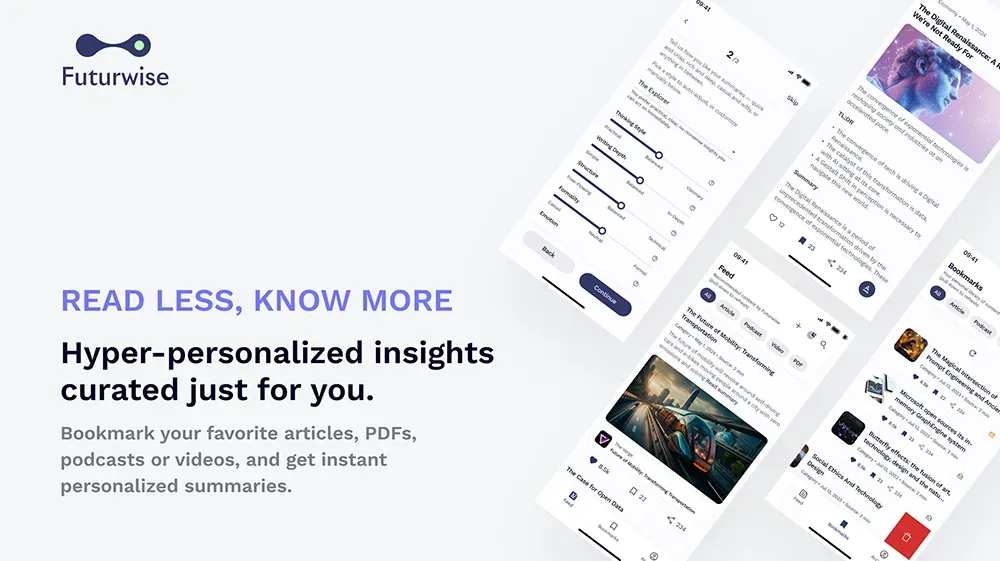
Staying up-to-date in a fast-changing world is vital. That is why I have launched Futurwise; a personalized AI platform that transforms information chaos into strategic clarity. With one click, users can bookmark and summarize any article, report, or video in seconds, tailored to their tone, interests, and language. Visit Futurwise.com to get started for free!

Dr Mark van Rijmenam
Dr. Mark van Rijmenam, widely known as The Digital Speaker, isn’t just a #1-ranked global futurist; he’s an Architect of Tomorrow who fuses visionary ideas with real-world ROI. As a global keynote speaker, Global Speaking Fellow, recognized Global Guru Futurist, and 5-time author, he ignites Fortune 500 leaders and governments worldwide to harness emerging tech for tangible growth.
Recognized by Salesforce as one of 16 must-know AI influencers , Dr. Mark brings a balanced, optimistic-dystopian edge to his insights—pushing boundaries without losing sight of ethical innovation. From pioneering the use of a digital twin to spearheading his next-gen media platform Futurwise, he doesn’t just talk about AI and the future—he lives it, inspiring audiences to take bold action. You can reach his digital twin via WhatsApp at: +1 (830) 463-6967.