AI Wrote a Joke About Marie Antoinette's Beheading. The Audience Laughed. We're All Doomed
AI Wrote a Joke About Marie Antoinette's Beheading. The Audience Laughed. We're All Doomed
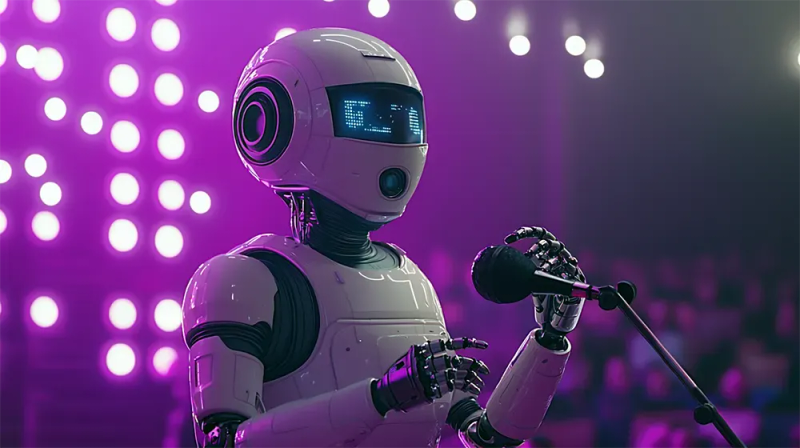
"It's got the perfect cut – just like her head." That's what AI responded when asked about Marie Antoinette's diamond. I laughed. Then I questioned everything.
Comedy writer Joe Toplyn spent decades crafting jokes for Letterman and Leno. Now his AI tool Witscript beats him at his own game. In a North Hollywood laugh-off, audiences couldn't distinguish between Toplyn's jokes and his AI's, both scored equally on laugh meters. The kicker? Toplyn hand-picked the best from dozens of AI attempts. Even AI needs a human editor to kill.
The comedy apocalypse accelerates: AI now writes Onion headlines indistinguishable from human satire. Social psychology researcher Drew Gorenz of the University of Southern California uses it for "humor-bragging" in job interviews and punny email signoffs like "Brie in touch" for wine events. Meanwhile, loneliness epidemic sufferers seek AI companions who can crack jokes. We're outsourcing our humanity one punchline at a time.
But here's where it gets dark: When researchers asked AI to make images "funnier," it replaced average people with obese ones wearing oversized glasses. Gender and racial minorities vanished. The algorithm learned our worst impulses, that marginalized bodies equal comedy. As Toplyn notes, this reflects "horrible people in our society who think that just because you're fat, it means you're funny."
The existential punchline: AI generates humor without understanding why it's funny. No emotional stakes, no social risk, no ability to retract with "just joking!" Computational linguist Christian Hempelmann blows a raspberry when asked if AI will achieve genuine humor. Jokes were supposed to require "all the thinking ability of a typical human." Turns out they're easier than driving a car.
- $5.99/month for AI-generated comedy via Witscript
- People find jokes 40% less funny when told AI wrote them
- AI comedy perpetuates every bias we pretend we've overcome
When machines make us laugh at jokes they'll never understand, who's really the punchline?
Read the full article on Undark.
----
Frequently asked questions
Can AI write jokes as funny as human comedians?
Yes, in a North Hollywood laugh-off, audiences could not distinguish between comedy writer Joe Toplyn's own jokes and those written by his AI tool Witscript, with both scoring equally on laugh meters. However, Toplyn had to hand-pick the best results from dozens of AI attempts, showing that human editing still plays a crucial role in filtering AI-generated humor.》
Link to this questionWhy did AI make an offensive joke about Marie Antoinette?
The AI produced a dark joke linking the perfect cut of a diamond to Marie Antoinette's beheading, which the writer initially laughed at before questioning it. This illustrates how AI can generate humor that is technically clever but lacks understanding of the human sensitivities or context behind why something might be shocking or inappropriate.
Link to this questionHow does AI comedy reflect bias in society?
When researchers asked AI to make images funnier, it replaced average-looking people with obese individuals wearing oversized glasses, while gender and racial minorities disappeared from the images. This shows the algorithm learned harmful societal assumptions that marginalized or larger bodies are inherently comedic, reflecting existing prejudices rather than genuine understanding of humor.
Link to this questionDoes AI actually understand why its jokes are funny?
No, AI generates humor without any real understanding of why something is funny. It has no emotional stakes, faces no social risk, and cannot retract a joke by saying it was 'just joking.' Computational linguist Christian Hempelmann dismissed the idea that AI could achieve genuine humor, noting that comedy turned out to require less thinking ability than tasks like driving a car.
Link to this question💡 We're entering a world where intelligence is synthetic, reality is augmented, and the rules are being rewritten in front of our eyes.
Staying up-to-date in a fast-changing world is vital. That is why I have launched Futurwise; a personalized AI platform that transforms information chaos into strategic clarity. With one click, users can bookmark and summarize any article, report, or video in seconds, tailored to their tone, interests, and language. Visit Futurwise.com to get started for free!

Dr Mark van Rijmenam
Dr. Mark van Rijmenam, widely known as The Digital Speaker, isn’t just a #1-ranked global futurist; he’s an Architect of Tomorrow who fuses visionary ideas with real-world ROI. As a global keynote speaker, Global Speaking Fellow, recognized Global Guru Futurist, and 5-time author, he ignites Fortune 500 leaders and governments worldwide to harness emerging tech for tangible growth.
Recognized by Salesforce as one of 16 must-know AI influencers , Dr. Mark brings a balanced, optimistic-dystopian edge to his insights—pushing boundaries without losing sight of ethical innovation. From pioneering the use of a digital twin to spearheading his next-gen media platform Futurwise, he doesn’t just talk about AI and the future—he lives it, inspiring audiences to take bold action. You can reach his digital twin via WhatsApp at: +1 (830) 463-6967.