AI's Toddler Transformation: A Leap Beyond Language Learning

AI's Toddler Transformation: A Leap Beyond Language Learning
In a groundbreaking experiment, an AI named Child's View for Contrastive Learning (CVCL) has embarked on a journey through the world of language, mirroring the learning process of a toddler named Sam.
Over a year and a half, Sam's daily interactions, captured via a camera strapped to his forehead, became the AI's classroom. Unlike traditional language models that feast on a vast diet of text, CVCL sipped on the essence of human experience, learning to match words with visual counterparts through the eyes and ears of a child. This approach marks a stark departure from the data-heavy methods of its predecessors, showcasing a potential path to more intuitive and efficient AI learning mechanisms.
The experiment not only challenges our understanding of AI's capabilities but also sheds light on the intrinsic nature of human language acquisition. As CVCL navigated through Sam's world, it demonstrated an ability to associate specific objects with their verbal identifiers, achieving a remarkable understanding of basic concepts with minimal data. This venture into "toddler-inspired" learning suggests a promising avenue for developing AI that can learn in more human-like ways, potentially revolutionizing our approach to machine learning and cognitive development.
This story illustrates the power of perspective in shaping intelligence, both artificial and human. As CVCL progresses, incorporating more dynamic elements like movement and intonation could further bridge the gap between AI and human learning. The experiment stands as a testament to the untapped potential of AI, inviting us to reimagine the bounds of technology through the lens of our earliest learning experiences.
Read the full article on Singularity Hub.
----
Frequently asked questions
What is CVCL in the AI toddler experiment?
CVCL, or Child's View for Contrastive Learning, is an AI system trained by mirroring the learning process of a toddler named Sam. Instead of consuming massive amounts of text like traditional language models, it learned by matching words with visual counterparts drawn from a child's everyday experiences.
Link to this questionHow was the data for CVCL collected?
Sam's daily interactions were captured over a year and a half using a camera strapped to his forehead. This footage became the AI's classroom, allowing CVCL to learn language the way a toddler does, through direct sensory experience of the world rather than through text.
Link to this questionWhy does this toddler-inspired AI approach matter?
It challenges assumptions about AI's data needs by showing that a system can achieve meaningful understanding of basic concepts with minimal data, unlike data-heavy traditional models. This suggests a promising path toward more intuitive, efficient, human-like machine learning and offers new insight into how human language acquisition itself works.
Link to this questionWhat did CVCL actually learn to do?
CVCL learned to associate specific objects with their verbal identifiers, essentially connecting words to their visual counterparts as seen through a toddler's eyes and ears. This let it achieve a notable understanding of basic concepts despite being trained on far less data than conventional language models typically require.
Link to this question💡 We're entering a world where intelligence is synthetic, reality is augmented, and the rules are being rewritten in front of our eyes.
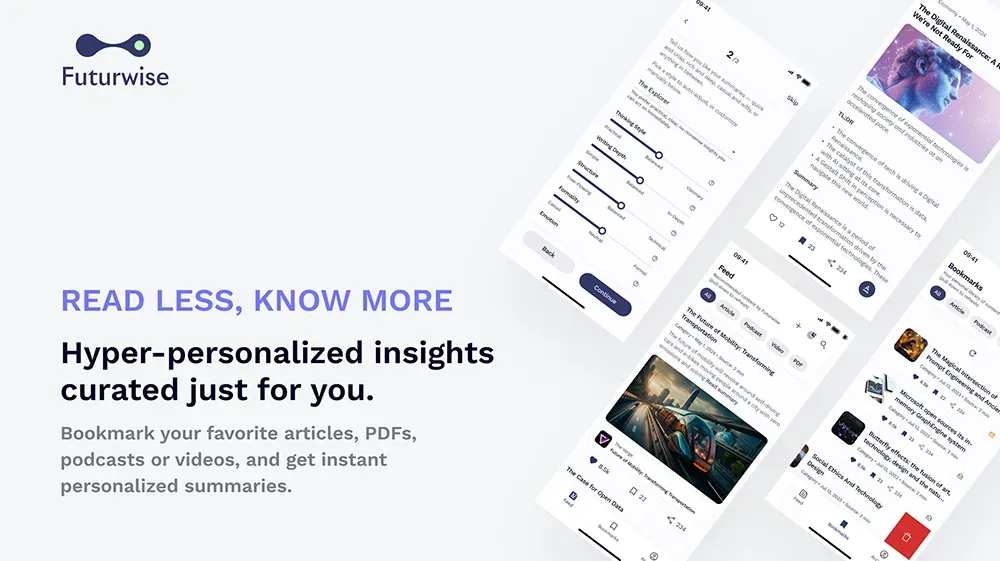
Staying up-to-date in a fast-changing world is vital. That is why I have launched Futurwise; a personalized AI platform that transforms information chaos into strategic clarity. With one click, users can bookmark and summarize any article, report, or video in seconds, tailored to their tone, interests, and language. Visit Futurwise.com to get started for free!

Dr Mark van Rijmenam
Dr. Mark van Rijmenam, widely known as The Digital Speaker, isn’t just a #1-ranked global futurist; he’s an Architect of Tomorrow who fuses visionary ideas with real-world ROI. As a global keynote speaker, Global Speaking Fellow, recognized Global Guru Futurist, and 5-time author, he ignites Fortune 500 leaders and governments worldwide to harness emerging tech for tangible growth.
Recognized by Salesforce as one of 16 must-know AI influencers , Dr. Mark brings a balanced, optimistic-dystopian edge to his insights—pushing boundaries without losing sight of ethical innovation. From pioneering the use of a digital twin to spearheading his next-gen media platform Futurwise, he doesn’t just talk about AI and the future—he lives it, inspiring audiences to take bold action. You can reach his digital twin via WhatsApp at: +1 (830) 463-6967.