AI’s Hunger for Power: The Race to Reinvent Computing
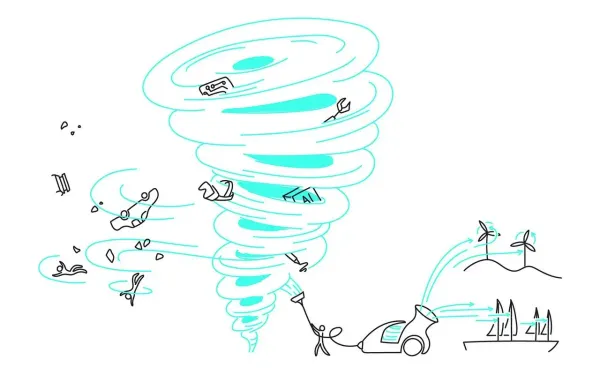
AI isn’t just eating the world—it’s devouring electricity, water, and billions of dollars. Tech giants are racing to reshape computing, but at what cost?
Read MoreDr. Mark van Rijmenam, CSP, is a world-leading strategic futurist and award-winning global keynote speaker who helps Fortune 500 leadership teams navigate AI and emerging technologies. Recognized by Salesforce as one of 16 global voices shaping the future of AI, he holds a PhD from University of Technology Sydney and is the author of six books on emerging technology and judgment in the AI era, including his latest book: Now What? How to Ride the Tsunami of Change. He is the founder of Futurwise and the developer of the Intelligence Age Scorecard that helps individuals and organizations understand how prepared they are for the future.
His pioneering efforts include the world's first TEDx Talk in VR in 2020. In 2023, he further pushed boundaries when he delivered a TEDx talk in Athens with his digital twin, delving into the complex interplay of AI and our perception of reality. In 2024, he launched a digital twin of himself, offering interactive, on-demand conversations via text, audio, or video in 29 languages, thereby bridging the gap between the digital and physical worlds – another world's first.
Dr. Van Rijmenam is a prolific author and has written more than 1,200 articles and six books in his career. As a corporate educator, he is celebrated for his candid, independent, and balanced insights. He is also the founder of Futurwise, which focuses on elevating global knowledge on crucial topics like technology, healthcare, and climate change by providing high-quality, hyper-personalized, and easily digestible insights from trusted sources.
Below, you can read all his articles.
AI isn’t just eating the world—it’s devouring electricity, water, and billions of dollars. Tech giants are racing to reshape computing, but at what cost?
Read MoreThe internet you know is already outdated. Quantum networks promise unhackable communication, and thanks to a Dutch-led breakthrough, you won’t even need to understand quantum mechanics to use it.
Read MoreThe quantum internet just took a giant leap forward. A European team, led by TU Delft, built a quantum network operating system (QNodeOS) that allows anyone to program quantum applications, no physics degree required.
Read MoreForget Python, Java, or C++. The hottest programming language is English, and AI is now taking instructions like an overachieving intern on steroids. But as AI does more, do we actually need expertise anymore, or just a good “vibe”?
Read MoreAI and automation are reshaping global supply chains, making warehouses smarter, faster, and more efficient. The question is: Where do humans fit in?
Read MoreIf AI search engines were students, they’d be the ones confidently shouting wrong answers in class. Loud enough to convince everyone they were right.
Read MoreAI is now a geopolitical battleground, and America just took a sharp right turn. Under Trump, the US is scrubbing “AI fairness” and “safety” from policy, replacing them with a focus on economic dominance and eliminating ideological bias.
Read MoreForget supercomputers. China just built a quantum processor that makes them look like abacuses. The Zuchongzhi 3.0 chip completed a task 1 million times faster than Google’s last-gen quantum chip and is 1 quadrillion times faster than the world’s top supercomputers.
Read MoreThis week’s Synthetic Minds covers why human self-awareness is key in the AI age. Plus, biohybrid AI, banks diving into stablecoins, Beijing teaches AI to first-graders, Singapore’s elderly AI revolution, and how AI hype alone might crash the economy.
Read MoreAI writing poetry was cute. AI mimicking human thought was impressive. But AI growing real brain cells to process data? That’s where things get weird.
Read MoreSomething went wrong
Something went wrong. Please, try again later