Bots, Outrage, and the Myth of the “Fixable” Feed

Bots, Outrage, and the Myth of the “Fixable” Feed
Social media platforms aren’t broken by accident, they reward speed, outrage, and concentration. A bot-only social network proved it: six ‘prosocial’ fixes failed or backfired. Still think a UI tweak will save us?
In a recent study, researchers built an entire social network where every account was a bot, and it still devolved into echo chambers, outrage amplification, and winner-take-all attention. Maik Larooij and Petter Törnberg from the University of Amsterdam used GPT-4o agents to post, repost, and follow while testing six “prosocial” fixes. The results: tweaks helped a little, but sometimes made things worse.
Chronological feeds flattened attention, yet surfaced more extreme content. Boosting opposite views barely bridged divides. “Bridging attributes” promoted civility, while concentrating reach among a narrow set of voices. Hiding follower counts or bios did almost nothing.
The underlying engine stayed the same: reactive engagement builds the network that then feeds the next round of reactive engagement. That loop is the product. In my new book Now What? How to Ride the Tsunami of Change, I argue for a change in perspective, not just a change in interfaces.
Here’s what I’d do next:
- Redefine success around constructive exchanges, not clicks.
- Break repost virality in political threads for cooling, not quieting.
- Open APIs for audited “public-interest rankers.”
Guardrails beat wishful thinking. The study shows that echo chambers aren’t an accident, they’re the business model. If tweaks won’t fix social media, should we redesign platforms entirely, or is it time to build alternatives from scratch?
Read the full article on Futurism...
----
Frequently asked questions
What did the bot-only social network study find?
Researchers built a social network where every account was a GPT-4o bot, and it still fell into echo chambers, outrage amplification, and winner-take-all attention despite testing six prosocial fixes. This showed that these dysfunctions arise from the underlying engagement mechanics rather than from human psychology or malicious actors alone.
Link to this questionDid chronological feeds fix the problems?
Chronological feeds flattened overall attention distribution, but they also surfaced more extreme content, meaning the fix reduced concentration while making the content people saw more extreme rather than less.
Link to this questionWhy did promoting opposing views and bridging attributes not work well?
Boosting opposite viewpoints barely bridged divides between groups, and using bridging attributes did promote more civil conversation but ended up concentrating reach among a narrow set of voices, trading one problem for another rather than solving the core issue.
Link to this questionWhy do simple interface tweaks fail to fix social media?
Because the core engine driving platforms is reactive engagement, which builds a network structure that then feeds the next round of reactive engagement. This loop is essentially the product itself, so surface-level tweaks like hiding follower counts or bios do almost nothing to change outcomes, since echo chambers and outrage are built into the business model.
Link to this question💡 We're entering a world where intelligence is synthetic, reality is augmented, and the rules are being rewritten in front of our eyes.
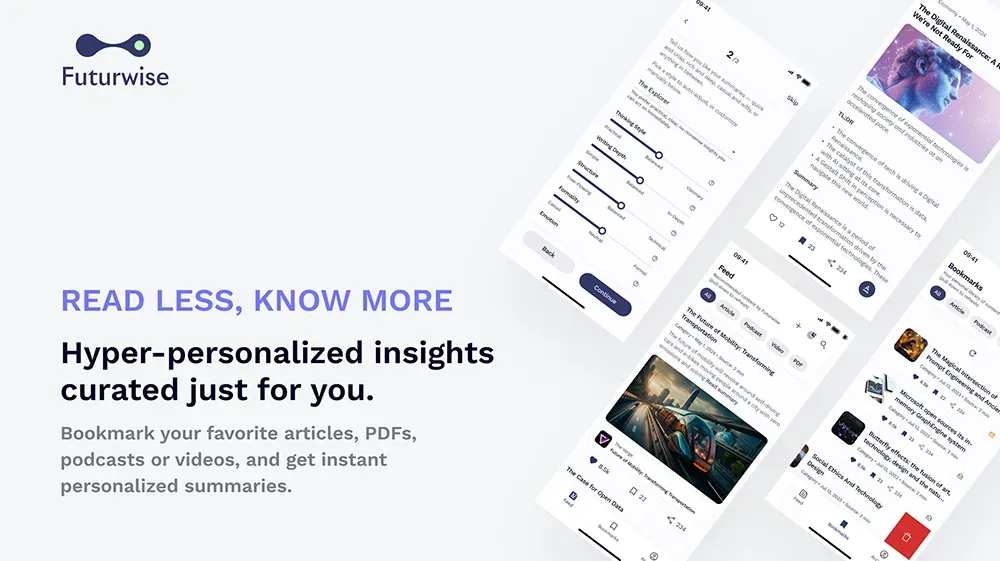
Staying up-to-date in a fast-changing world is vital. That is why I have launched Futurwise; a personalized AI platform that transforms information chaos into strategic clarity. With one click, users can bookmark and summarize any article, report, or video in seconds, tailored to their tone, interests, and language. Visit Futurwise.com to get started for free!

Dr Mark van Rijmenam
Dr. Mark van Rijmenam, widely known as The Digital Speaker, isn’t just a #1-ranked global futurist; he’s an Architect of Tomorrow who fuses visionary ideas with real-world ROI. As a global keynote speaker, Global Speaking Fellow, recognized Global Guru Futurist, and 5-time author, he ignites Fortune 500 leaders and governments worldwide to harness emerging tech for tangible growth.
Recognized by Salesforce as one of 16 must-know AI influencers , Dr. Mark brings a balanced, optimistic-dystopian edge to his insights—pushing boundaries without losing sight of ethical innovation. From pioneering the use of a digital twin to spearheading his next-gen media platform Futurwise, he doesn’t just talk about AI and the future—he lives it, inspiring audiences to take bold action. You can reach his digital twin via WhatsApp at: +1 (830) 463-6967.