China's Cashless Revolution Just Showed Us Our AI Future—And Most of You Aren't Ready
China's Cashless Revolution Just Showed Us Our AI Future—And Most of You Aren't Ready
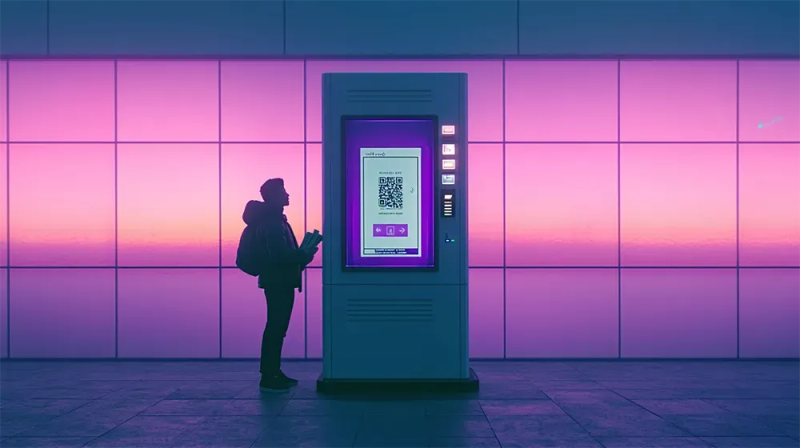
A vending machine that won't take cash. Museum tickets only through WeChat. Taxis that ignore you without the right app. This isn't dystopian fiction, it's China today. And it's exactly what's about to happen with AI literacy, except faster and more brutal.
We have sleepwalked into the digital age, but nothing matches the speed of China's transformation. Seven years from cash to QR-only. No transition period. No mercy for the unprepared. Now multiply that velocity by AI's exponential growth. The shift from technical literacy to epistemic fluency won't give you seven years. You'll get seven months if you're lucky.
Here's what most miss: The internet age asked you to learn tools. Click here, type there. The AI age demands you question reality itself. When AI generates perfect lies wrapped in flawless prose, when voice clones call pretending to be family, when every image could be synthetic, epistemic fluency becomes survival. It's not about using ChatGPT. It's about knowing when ChatGPT is using you.
The parallels are terrifying. Just as cashless systems made the familiar foreign overnight, AI is already rewriting the rules of trust, work, and human interaction. I see AI-generated faces in ads, chatbots screening job applicants, children forming bonds with AI companions. Each step normalizes our obsolescence. Each convenience costs human agency.
In "Now What?", I explore how to navigate these exponential shifts. But the China example shows we're past theory. When basic services require digital fluency, exclusion isn't gradual, it's instant.
When AI fluency determines who gets hired, who gets healthcare, who gets heard, the unprepared don't just fall behind. They disappear.
- China: 0 to cashless in 7 years
- AI: Already infiltrating every interaction
- Your choice: Adapt now or become invisible
If China locked out millions with QR codes, what happens when AI literacy becomes the price of admission to society itself?
Read the full article on Every.
----
Frequently asked questions
How does China's cashless shift relate to AI literacy?
China moved from cash to a QR-only, cashless society in seven years, leaving no transition period for those unprepared. This rapid, mercy-less shift mirrors what is expected with AI literacy, except the change will happen even faster, potentially in as little as seven months rather than years, leaving little time to adapt before exclusion becomes instant.
Link to this questionWhat is epistemic fluency and why does it matter?
Epistemic fluency is the ability to question reality itself, rather than simply learning to use tools like ChatGPT. As AI generates convincing lies, voice clones impersonate family members, and images can be entirely synthetic, this fluency becomes essential for survival. It means knowing when AI is being used by you versus when AI is using you.
Link to this questionWhat are examples of AI already reshaping daily life?
AI-generated faces appear in advertisements, chatbots screen job applicants, and children are forming emotional bonds with AI companions. Each of these developments normalizes a gradual loss of human agency and control, quietly rewriting the rules of trust, work, and human interaction in ways that often go unnoticed until they become deeply embedded in society.
Link to this questionWhat happens to people who don't adapt to AI literacy demands?
Those who fail to develop AI literacy risk more than falling behind, they risk disappearing entirely. As AI fluency increasingly determines who gets hired, who receives healthcare, and who gets heard, exclusion becomes instant rather than gradual, much like how China's cashless systems immediately locked out millions who lacked digital fluency.
Link to this question💡 We're entering a world where intelligence is synthetic, reality is augmented, and the rules are being rewritten in front of our eyes.
Staying up-to-date in a fast-changing world is vital. That is why I have launched Futurwise; a personalized AI platform that transforms information chaos into strategic clarity. With one click, users can bookmark and summarize any article, report, or video in seconds, tailored to their tone, interests, and language. Visit Futurwise.com to get started for free!


Dr Mark van Rijmenam
Dr. Mark van Rijmenam, widely known as The Digital Speaker, isn’t just a #1-ranked global futurist; he’s an Architect of Tomorrow who fuses visionary ideas with real-world ROI. As a global keynote speaker, Global Speaking Fellow, recognized Global Guru Futurist, and 5-time author, he ignites Fortune 500 leaders and governments worldwide to harness emerging tech for tangible growth.
Recognized by Salesforce as one of 16 must-know AI influencers , Dr. Mark brings a balanced, optimistic-dystopian edge to his insights—pushing boundaries without losing sight of ethical innovation. From pioneering the use of a digital twin to spearheading his next-gen media platform Futurwise, he doesn’t just talk about AI and the future—he lives it, inspiring audiences to take bold action. You can reach his digital twin via WhatsApp at: +1 (830) 463-6967.