Genie 3 and the Death of Reality: Just Words, Now Worlds
Genie 3 and the Death of Reality: Just Words, Now Worlds
If this isn’t proof we live in a simulation built by future humans… it’s the next best thing. Genie 3 turns text into interactive reality—and we’re not ready.
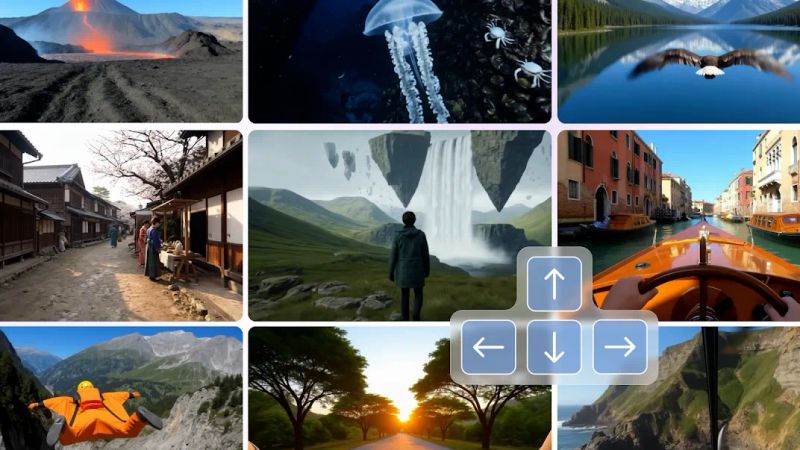
When you can type “lava-filled jungle temple” and get a playable, persistent 3D world… we’ve officially broken the fourth wall. Google DeepMind’s Genie 3 doesn’t just generate images or video—it generates experience. From bioluminescent jellyfish canyons to hurricane-lashed coastlines, this system builds immersive, navigable environments that respond in real-time, retain memory, and evolve based on your actions.
But what excites me isn’t the graphics—it’s the purpose. Genie 3 is an interface for thought, transforming language into simulated environments for agents to explore, train, fail, and adapt. Whether training autonomous robots, educating students, or stress-testing digital humans (or, crazy thought, real humans!), Genie 3 shifts us from describing the world to generating it. And it does so without any 3D models, code, or assets, just prompts.
That’s a fundamental change. This isn’t just another “cool AI demo.” It’s a step toward synthetic reality as a platform, where worlds become as editable as sentences. We must now ask: what happens when environments become as malleable as ideas?
- Persistent memory allows multi-minute interactions
- Environments react to agents, not just users
- No 3D mapping needed—just text prompts
Here's what keeps me up at night: world models are a crucial step toward AGI. When AI can simulate reality accurately enough to fool our senses, predict physics, and maintain logical consistency, we're approaching something profound. Genie 3 doesn't just render scenes, it understands spatial relationships, object permanence, cause and effect. It's building an internal model of how reality works.
In "Now What?", I explore how converging technologies create inflection points. Genie 3 exemplifies this perfectly: AI meets physics meets human creativity. We're not just automating tasks anymore—we're automating entire realities. The question isn't whether we live in a simulation. It's whether we're about to build one indistinguishable from our own.
As we accelerate toward more immersive, reactive, and agent-ready environments, the real question is not how real they feel,but how real their consequences become. What will you build when the boundary between thought and experience dissolves?
Read the full article on Google Deepmind.
----
Frequently asked questions
What is Genie 3?
Genie 3 is a system from Google DeepMind that turns text prompts into interactive, playable 3D worlds. Instead of generating static images or video, it creates immersive, navigable environments that respond in real-time, retain memory, and evolve based on the actions of whoever or whatever is exploring them, all without needing 3D models, code, or assets.
Link to this questionHow does Genie 3 create these worlds without 3D models?
Genie 3 builds environments purely from text prompts, generating experience rather than relying on traditional 3D mapping, coding, or pre-built assets. It maintains persistent memory that allows multi-minute interactions, and its environments react not just to human users but also to autonomous agents moving through them, effectively turning language directly into simulated reality.
Link to this questionWhy does Genie 3 matter beyond being a cool demo?
Genie 3 matters because it functions as an interface for thought, transforming language into simulated environments where agents can explore, train, fail, and adapt. This could be used to train autonomous robots, educate students, or stress-test digital and real humans. It signals a shift from merely describing the world to actually generating it, making synthetic reality as editable as sentences.
Link to this questionWhat is the connection between Genie 3 and AGI?
Genie 3 is considered a crucial step toward AGI because it goes beyond rendering scenes to understanding spatial relationships, object permanence, and cause and effect. By simulating reality accurately enough to predict physics and maintain logical consistency, it builds an internal model of how reality works, representing a convergence of AI, physics, and human creativity.
Link to this question💡 We're entering a world where intelligence is synthetic, reality is augmented, and the rules are being rewritten in front of our eyes.
Staying up-to-date in a fast-changing world is vital. That is why I have launched Futurwise; a personalized AI platform that transforms information chaos into strategic clarity. With one click, users can bookmark and summarize any article, report, or video in seconds, tailored to their tone, interests, and language. Visit Futurwise.com to get started for free!


Dr Mark van Rijmenam
Dr. Mark van Rijmenam, widely known as The Digital Speaker, isn’t just a #1-ranked global futurist; he’s an Architect of Tomorrow who fuses visionary ideas with real-world ROI. As a global keynote speaker, Global Speaking Fellow, recognized Global Guru Futurist, and 5-time author, he ignites Fortune 500 leaders and governments worldwide to harness emerging tech for tangible growth.
Recognized by Salesforce as one of 16 must-know AI influencers , Dr. Mark brings a balanced, optimistic-dystopian edge to his insights—pushing boundaries without losing sight of ethical innovation. From pioneering the use of a digital twin to spearheading his next-gen media platform Futurwise, he doesn’t just talk about AI and the future—he lives it, inspiring audiences to take bold action. You can reach his digital twin via WhatsApp at: +1 (830) 463-6967.