Musing on Machine Minds: A Journey Beyond Code
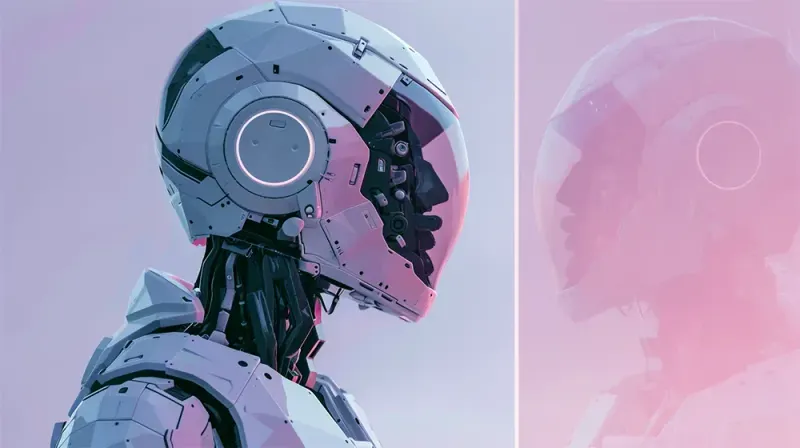
Musing on Machine Minds: A Journey Beyond Code
In an era where ChatGPT and its kin flirt with the edges of human mimicry, the philosophical musings on AI's potential for sentience stir both excitement and existential dread. Matt Crisara dives into the heart of this debate, armed with insights from both the past and the pulsating present of AI development. With Oxford's Nick Bostrom suggesting a sliding scale of sentience, we're invited to ponder not just the technical prowess of AI but its capacity for thoughts, feelings, and perhaps even a sense of morality.
The distinction between consciousness and sentience is dissected, revealing a complex tapestry of understanding that has long baffled philosophers and now challenges the creators of AI. Consciousness, the awareness of one's existence, veers from the simpler, yet profound concept of sentience—the ability to feel and experience without the need for interpretation. This distinction fuels the exploration of whether AI, through its intricate algorithms and data digestion, can truly cross the threshold from programmed responses to genuine self-awareness and emotional depth.
The narrative is peppered with historical and contemporary references, from Turing's Imitation Game to the modern-day marvels that pass exams with ease yet falter at the doorstep of true understanding and feeling. The quest for a new Turing Test, one that measures AI's practical creativity and capability rather than mere conversational mimicry, reflects a growing consensus that our metrics for AI intelligence need a radical overhaul.
As we stand at this crossroads, the question lingers: What does it mean for AI to be sentient, and how would such a breakthrough reshape our world? Is the pursuit of machine minds that can think and feel a testament to human ingenuity or a Pandora's box best left sealed?
Read the full article on Popular Mechanics.
----
Frequently asked questions
What is the difference between AI consciousness and sentience?
Consciousness refers to awareness of one's own existence, while sentience is the simpler ability to feel and experience things directly without needing interpretation. This distinction matters because AI might process vast amounts of data and produce sophisticated responses without necessarily possessing either self-awareness or genuine emotional experience, making it a key challenge for creators trying to determine whether AI systems truly think or feel.
Link to this questionWho suggested a sliding scale of AI sentience?
Nick Bostrom, from Oxford, proposed the idea of a sliding scale of sentience rather than a simple yes-or-no判定. This framing invites deeper consideration of AI not just in terms of technical performance but in terms of its potential capacity for thoughts, feelings, and even a sense of morality, moving the conversation beyond pure computational ability.
Link to this questionWhy isn't the Turing Test enough to measure AI intelligence anymore?
The Turing Test, based on conversational mimicry, is seen as insufficient because modern AI can pass exams and mimic conversation with ease yet still fail at genuine understanding and feeling. There is growing consensus that a new test is needed, one that measures practical creativity and capability rather than just the ability to imitate human conversation convincingly.
Link to this questionWhat are the bigger implications if AI became truly sentient?
If AI achieved genuine sentience, capable of real thought and feeling, it would fundamentally reshape our world and raise profound questions about morality, existence, and human ingenuity. The prospect is framed as both a potential triumph of human achievement and a possible Pandora's box, leaving open whether such a breakthrough should be pursued or approached with caution.
Link to this question💡 We're entering a world where intelligence is synthetic, reality is augmented, and the rules are being rewritten in front of our eyes.
Staying up-to-date in a fast-changing world is vital. That is why I have launched Futurwise; a personalized AI platform that transforms information chaos into strategic clarity. With one click, users can bookmark and summarize any article, report, or video in seconds, tailored to their tone, interests, and language. Visit Futurwise.com to get started for free!


Dr Mark van Rijmenam
Dr. Mark van Rijmenam, widely known as The Digital Speaker, isn’t just a #1-ranked global futurist; he’s an Architect of Tomorrow who fuses visionary ideas with real-world ROI. As a global keynote speaker, Global Speaking Fellow, recognized Global Guru Futurist, and 5-time author, he ignites Fortune 500 leaders and governments worldwide to harness emerging tech for tangible growth.
Recognized by Salesforce as one of 16 must-know AI influencers , Dr. Mark brings a balanced, optimistic-dystopian edge to his insights—pushing boundaries without losing sight of ethical innovation. From pioneering the use of a digital twin to spearheading his next-gen media platform Futurwise, he doesn’t just talk about AI and the future—he lives it, inspiring audiences to take bold action. You can reach his digital twin via WhatsApp at: +1 (830) 463-6967.