Navigating the Legal Labyrinth: AI's Accountability Conundrum
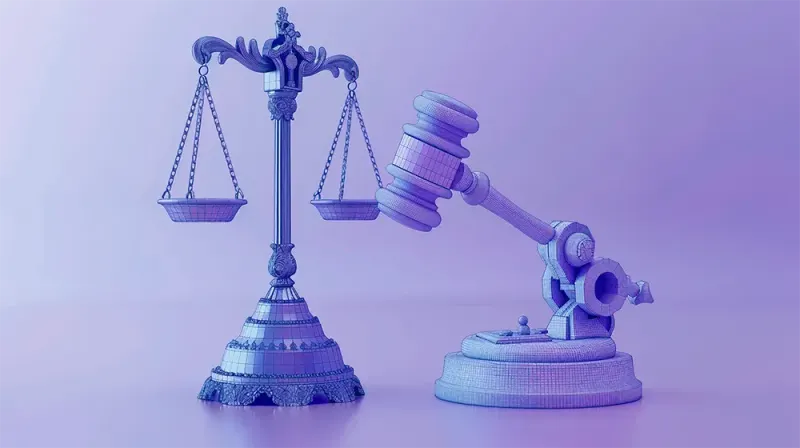
Navigating the Legal Labyrinth: AI's Accountability Conundrum
Are AI developers ready for their day in court? As AI systems transition from tech marvels to potential legal liabilities, the tech industry might be on the verge of its most significant legal battles yet.
Is this the end of innovation or just a new chapter in digital accountability?
In the heart of the digital revolution, AI's ascendancy is being met with a legal reality check. The field of generative AI, responsible for content ranging from the mundane text summary to the groundbreaking videos, now faces scrutiny over its accountability for outputs.
Legal experts predict a tumultuous road ahead for tech giants and startups alike as they grapple with potential liabilities for their AI's actions. While the tech world has marveled at AI's capabilities, a legal iceberg looms, threatening to disrupt the innovation landscape.
The crux of the matter lies in defining the responsibility for AI-generated content — be it erroneous, defamatory, or downright dangerous. With legal protections under Section 230 of the Communications Decency Act now in question, AI companies could find themselves in uncharted waters, facing lawsuits that challenge the very core of their operations.
This paradigm shift underscores a pressing need for a nuanced legal framework that balances innovation with accountability, ensuring that AI advances do not come at the cost of ethical or legal standards, ideally at a global level.
As the legal drama unfolds, one must ponder the broader implications: Will this legal scrutiny stifle AI innovation, or will it pave the way for more responsible and transparent AI development? Amidst the legal debates and courtroom battles, the tech industry must navigate this complex landscape, striking a delicate balance between pushing the boundaries of AI and adhering to evolving legal standards.
Read the full article on The Wall Street Journal.
----
Frequently asked questions
Why are AI developers facing new legal challenges?
As generative AI systems produce content ranging from text summaries to videos, questions have emerged about who bears responsibility when that output is erroneous, defamatory, or dangerous. Legal experts predict a difficult period ahead for both established tech giants and startups as they confront potential liabilities tied to the actions and outputs of their AI systems.
Link to this questionWhat role does Section 230 play in AI accountability?
Section 230 of the Communications Decency Act has traditionally provided legal protections for platforms, but its applicability to AI-generated content is now being questioned. This uncertainty could leave AI companies exposed to lawsuits that challenge the fundamental legal protections they once relied on, pushing them into largely uncharted legal territory.
Link to this questionCould this legal scrutiny slow down AI innovation?
The unfolding legal battles raise a genuine question about whether increased scrutiny will stifle AI innovation or instead encourage more responsible and transparent development practices. The tech industry must find a delicate balance between advancing AI capabilities and adhering to evolving legal standards, rather than treating accountability as an obstacle to progress.
Link to this questionWhat kind of legal framework does AI development need?
There is a pressing need for a nuanced legal framework that balances innovation with accountability, ensuring AI advances do not come at the expense of ethical or legal standards. Ideally, such a framework would be established at a global level so that responsibility for AI-generated content is addressed consistently across different jurisdictions.
Link to this question💡 We're entering a world where intelligence is synthetic, reality is augmented, and the rules are being rewritten in front of our eyes.
Staying up-to-date in a fast-changing world is vital. That is why I have launched Futurwise; a personalized AI platform that transforms information chaos into strategic clarity. With one click, users can bookmark and summarize any article, report, or video in seconds, tailored to their tone, interests, and language. Visit Futurwise.com to get started for free!


Dr Mark van Rijmenam
Dr. Mark van Rijmenam, widely known as The Digital Speaker, isn’t just a #1-ranked global futurist; he’s an Architect of Tomorrow who fuses visionary ideas with real-world ROI. As a global keynote speaker, Global Speaking Fellow, recognized Global Guru Futurist, and 5-time author, he ignites Fortune 500 leaders and governments worldwide to harness emerging tech for tangible growth.
Recognized by Salesforce as one of 16 must-know AI influencers , Dr. Mark brings a balanced, optimistic-dystopian edge to his insights—pushing boundaries without losing sight of ethical innovation. From pioneering the use of a digital twin to spearheading his next-gen media platform Futurwise, he doesn’t just talk about AI and the future—he lives it, inspiring audiences to take bold action. You can reach his digital twin via WhatsApp at: +1 (830) 463-6967.