
Quantum Computing Breakthrough: No More Errors (Well, Almost)
Think quantum computing is too complex for the real world? Microsoft’s latest breakthrough may just prove you wrong — and make your classical computer look like a dinosaur.
Read More
Think quantum computing is too complex for the real world? Microsoft’s latest breakthrough may just prove you wrong — and make your classical computer look like a dinosaur.
Read More
If you think AI can handle your company’s cybersecurity all on its own, think again — hackers are evolving faster than your algorithms.
Read More
If your business isn't using AI-powered digital twins, you might be stuck in the past—while your competitors simulate the future.
Read More
If your AI can’t even spell "strawberry" correctly, can you really trust it with your business decisions?
Read More
Quantum technologies are entering a critical phase where the transition from research to industry is gaining momentum, yet significant challenges remain. A detailed EU workshop report highlights both the promises and the pitfalls of quantum advancements.
Read More
This week’s Synthetic Minds kicks off with an engaging podcast episode featuring Louis Rosenberg on AI’s subtle grip over our decisions. We also dive into AI’s role in reshaping global commerce, the rise of AI-fueled cybercrime, and the looming threat of deepening inequality.
Read More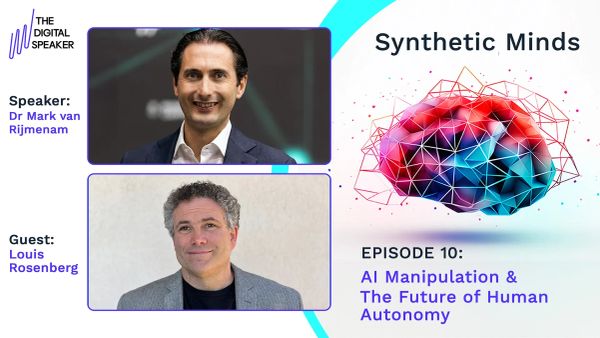
In episode ten of the Synthetic Minds podcast, we delve into the complex and often unsettling relationship between AI and human autonomy. My guest, Dr. Louis Rosenberg, is a pioneer in virtual and augmented reality, and AI.
Read More
Training hundreds of thousands of employees on AI might sound like preparing for mass layoffs — but Infosys insists it's about making people more valuable.
Read More
Think AI is only making the world smarter? It’s also making cybercrime cheaper, faster, and far more dangerous.
Read More
If you think you can still tell what's real online, think again — AI might already be tricking you daily.
Read MoreSomething went wrong
Something went wrong. Please, try again later