Synthetic Minds | The AI Lab Stopped Being A Vendor. It Became A Tenant.
Synthetic Minds | The AI Lab Stopped Being A Vendor. It Became A Tenant.
The Synthetic Minds newsletter offers short daily insights to get you thinking. If you enjoy it, please forward. All signals are powered by Futurwise. If you need more insights, subscribe to Futurwise and get 25% off for the first three months!
I have just launched the Intelligence Age Scorecard! It will help you understand how ready your organization is for the Intelligence Age.
Today’s topic: AI & Automation
The AI Lab Just Moved Into Your Building
In seven days, Anthropic put Claude inside 30,000 retrained PwC consultants, 167,000 Advocate Health teammates, and a disease-modeling pipeline that reaches 4.6 billion people.
The AI lab stopped being a vendor.
That is the shift hiding under this week's headlines. The frontier reasoning model became the tenant inside the institutions that run global health, professional services, ERP, and ride-hailing.
Anthropic and PwC committed to train and certify 30,000 US consultants on Claude. Production is already running across underwriting (ten weeks to ten days), mainframe modernization, HR transformation, and cybersecurity. Advocate Health is building toward full deployment across its 167,000-person workforce.
Anthropic and the Gates Foundation committed 200 million dollars over four years to put Claude inside disease-modeling, vaccine-screening, and treatment-targeting pipelines reaching 4.6 billion people.
SAP put Claude inside Joule as the primary reasoning model across S/4HANA, SuccessFactors, and Ariba, the substrate that runs hundreds of thousands of enterprises.
OpenAI formally launched the Deployment Company with Bain, Capgemini, and McKinsey as named consulting partners. It then bought a firm so 150 of its own engineers can live inside Fortune 500 customers from Day One.
Meanwhile Waymo expanded driverless coverage by an area larger than Rhode Island. Uber walked away from the platform model and committed 10 billion dollars to owning the cars across Rivian, Lucid, Nuro, and Wayve.
That is the institutional-residency story. Here is the signal.
The switching cost used to live in a software contract. This week it moved into the muscle memory of 30,000 retrained consultants and the workflow of 167,000 hospital teammates. Every announcement called itself an alliance, not a critical-vendor agreement.
The question for every board is no longer which model you use. It is who is operating inside your walls, and what it would take, in workforce hours and data exposure, to get them back outside.
The Intelligence Age Scorecard
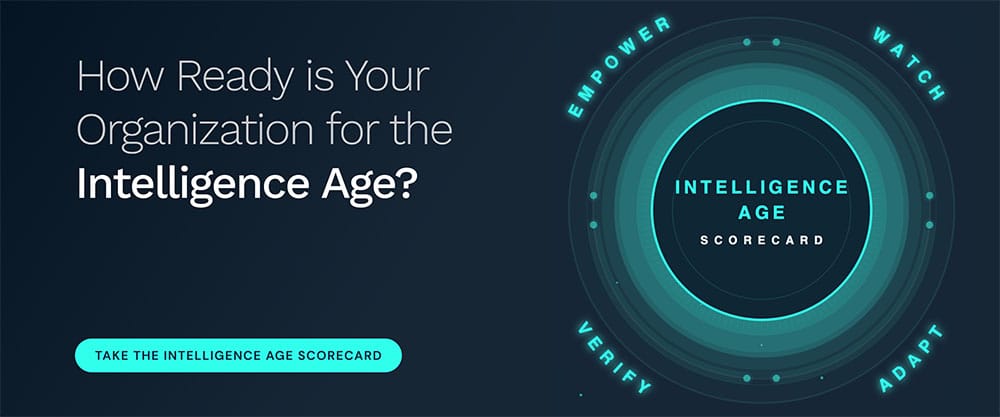
In one week, the two frontier AI labs moved from vendors behind an API to tenants inside the institutions that run global health, ERP, professional services, and ride-hailing, and not one of those agreements was signed as a critical-vendor procurement. WAVE — Watch, Adapt, Verify, Empower — is the question every leadership team owes this pattern: are you still watching which model your teams use, or already verifying which AI lab is operating inside your walls?
Take the Intelligence Age Scorecard to benchmark your readiness for the next two quarters, not the next five years.
If this newsletter was forwarded to you, you can sign up here.
Thank you.
Mark
Frequently asked questions
What does it mean that AI labs became tenants, not vendors?
Instead of selling software accessed through an API, AI labs like Anthropic and OpenAI have embedded themselves directly inside institutions' workflows and workforces. Anthropic trained and certified 30,000 PwC consultants on Claude and is deploying it across Advocate Health's 167,000-person workforce, meaning the AI model now operates within daily operations rather than being called upon as an outside service, changing the nature of dependency from a contract to embedded practice.}
Link to this questionWhat deals were announced involving Anthropic this week?
Anthropic and PwC committed to train and certify 30,000 US consultants on Claude, with production already running in underwriting, mainframe modernization, HR transformation, and cybersecurity. Advocate Health is building toward deploying Claude across its 167,000-person workforce. Anthropic and the Gates Foundation also committed 200 million dollars over four years to embed Claude in disease-modeling, vaccine-screening, and treatment-targeting pipelines reaching 4.6 billion people.
Link to this questionHow is OpenAI positioning itself differently from a typical software vendor?
OpenAI launched its Deployment Company with Bain, Capgemini, and McKinsey named as consulting partners, then bought a firm so that 150 of its own engineers can work directly inside Fortune 500 customers from day one. This mirrors the residency model, placing OpenAI's people and reasoning models inside client organizations rather than simply licensing software to them.
Link to this questionWhy does the shift from vendor to tenant matter for company boards?
Switching costs used to sit in a software contract that could be renegotiated or cancelled. Now they live in the muscle memory of thousands of retrained employees and embedded workflows, making it far harder to remove an AI system once adopted. Boards should no longer just ask which model their teams use, but which AI lab is operating inside their walls and what it would take, in workforce hours and data exposure, to remove them.
Link to this question
Dr Mark van Rijmenam
Dr. Mark van Rijmenam, widely known as The Digital Speaker, isn’t just a #1-ranked global futurist; he’s an Architect of Tomorrow who fuses visionary ideas with real-world ROI. As a global keynote speaker, Global Speaking Fellow, recognized Global Guru Futurist, and 5-time author, he ignites Fortune 500 leaders and governments worldwide to harness emerging tech for tangible growth.
Recognized by Salesforce as one of 16 must-know AI influencers , Dr. Mark brings a balanced, optimistic-dystopian edge to his insights—pushing boundaries without losing sight of ethical innovation. From pioneering the use of a digital twin to spearheading his next-gen media platform Futurwise, he doesn’t just talk about AI and the future—he lives it, inspiring audiences to take bold action. You can reach his digital twin via WhatsApp at: +1 (830) 463-6967.