Synthetic Minds | CRISPR Turns Superbugs Into Editable Software
Synthetic Minds | CRISPR Turns Superbugs Into Editable Software
The Synthetic Minds newsletter is evolving. Short daily insights to get you thinking. If you enjoy it, please forward. If you need more insights, subscribe to Futurwise and get 25% off for the first three months!
Biology is the Ultimate Programmable Medium
For decades, we swung antibiotics like a hammer and bacteria did what evolution does best: adapt with faster evolution, share resistance genes and hide behind thicker walls.
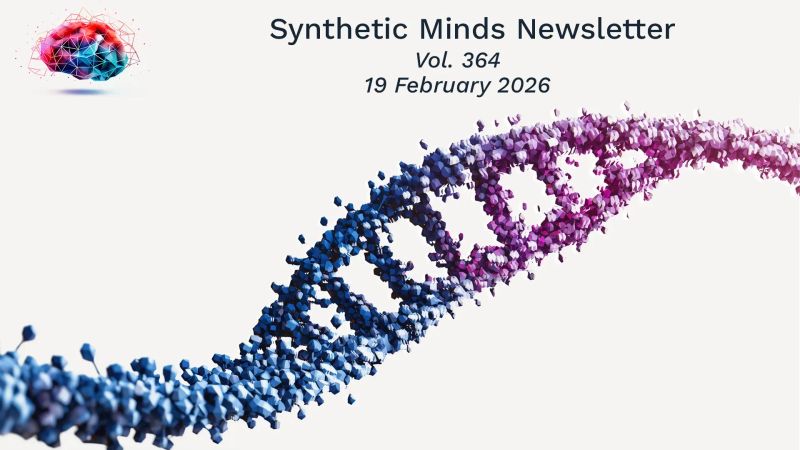
A new UC San Diego “gene-drive-inspired” CRISPR system flips the game: it spreads through bacterial communities and removes antibiotic-resistance elements carried on plasmids, restoring drug sensitivity instead of trying to massacre every cell in sight. It’s population engineering, not whack-a-mole killing.
This is what the next era looks like: AI rewired the information world; synthetic biology will rewire the natural one. The overlooked shift is that “treatment” becomes “re-engineering,” even inside biofilms where resistance normally hides and compounds.
The next great platform shift isn’t another app layer, it’s life itself.
The winners won’t be the teams with the most intelligence, everyone has access to the latest models now, but the teams with the judgment to deploy programmable biology safely, reversibly, and surgically.
Since synthetic biology will be humanity's next major revolution, it is time to start paying attention.
Who should care: public health strategists looking for a tactical reset button for hospital infections; agricultural leaders trying to unwind livestock resistance without mass culls; biotech investors watching a new category of “environment-editing” therapeutics emerge.
More importantly, pharma needs to stop optimising for recurring revenue disguised as “chronic management.” The priority isn’t the most profitable molecule; it’s the intervention that actually deletes the problem.
That means shifting R&D away from endless hunts for new chemical entities with short half-lives in the real world, and toward precision delivery vehicles, including engineered phages, lipid nanoparticles, targeted carriers, that can deliver CRISPR instructions exactly where they’re needed. The payload is no longer chemistry. It’s code.
If we can edit resistance out of ecosystems, what governance standard stops “diplomatic medicine” from becoming biological geopolitics?

'Synthetic Minds' continues to reflect the synthetic forces reshaping our world. Quick, curated insights to feed your quest for a better understanding of our evolving synthetic future, powered by Futurwise:
1. Meta has patented an AI chatbot that can mimic a person's social media activity, including posting and commenting, even after they've died. Is this the future of social media, I surely hope not! (Mashable)
2. The AI's productivity paradox is back! The implementation of AI in various industries has not yet resulted in significant productivity gains or changes in employment, according to a recent study of 6,000 CEOs, CFOs, and other executives. (Fortune)
3. Scientists have developed a robotics and computer vision system, called SMART Plant 1.0, to accelerate plant transformation and improve the efficiency of developing stress-tolerant plants. (The Mirage)
4. In a world divided by nation-states, the introduction of AI poses a significant threat to humanity's survival and prosperity. The current trajectory of AI development, driven by a combination of capitalist and nationalist ideologies, heightens the risk of catastrophic outcomes (Less Wrong)
5. Scientists have developed Neurosim, a high-performance library for robot perception with high-speed simulation at 2700 frames pers second, to train and test neuromorphic perception and control algorithms. (Quantum Zeitgeist)

If you are interested in more insights, grab my latest, award-winning, book Now What? How to Ride the Tsunami of Change and learn how to embrace a mindset that can deal with exponential change.
If this newsletter was forwarded to you, you can sign up here.
Thank you.
Mark
Frequently asked questions
What is the new CRISPR system developed at UC San Diego?
It is a gene-drive-inspired CRISPR system that spreads through bacterial communities and removes antibiotic-resistance elements carried on plasmids. Rather than killing every bacterial cell, it restores drug sensitivity by re-engineering the population, which the article describes as population engineering instead of whack-a-mole killing.
Link to this questionHow does this CRISPR approach differ from traditional antibiotics?
Traditional antibiotics act like a hammer, killing bacteria while they adapt through faster evolution and share resistance genes. This CRISPR system instead spreads through bacterial communities to strip out antibiotic-resistance elements on plasmids, turning treatment into re-engineering, even within biofilms where resistance usually hides and compounds.
Link to this questionWhy should pharma companies change their R&D priorities?
Pharma has optimised for recurring revenue disguised as chronic management rather than pursuing interventions that delete the problem outright. The article argues R&D should shift away from endless searches for new chemical entities with short real-world half-lives, and toward precision delivery vehicles like engineered phages, lipid nanoparticles, and targeted carriers that deliver CRISPR instructions exactly where needed.
Link to this questionWho should pay attention to programmable biology developments?
Public health strategists seeking a tactical reset for hospital infections, agricultural leaders trying to unwind livestock antibiotic resistance without mass culls, and biotech investors watching a new category of environment-editing therapeutics emerge should all care, since synthetic biology is framed as humanity's next major revolution.
Link to this question
Dr Mark van Rijmenam
Dr. Mark van Rijmenam, widely known as The Digital Speaker, isn’t just a #1-ranked global futurist; he’s an Architect of Tomorrow who fuses visionary ideas with real-world ROI. As a global keynote speaker, Global Speaking Fellow, recognized Global Guru Futurist, and 5-time author, he ignites Fortune 500 leaders and governments worldwide to harness emerging tech for tangible growth.
Recognized by Salesforce as one of 16 must-know AI influencers , Dr. Mark brings a balanced, optimistic-dystopian edge to his insights—pushing boundaries without losing sight of ethical innovation. From pioneering the use of a digital twin to spearheading his next-gen media platform Futurwise, he doesn’t just talk about AI and the future—he lives it, inspiring audiences to take bold action. You can reach his digital twin via WhatsApp at: +1 (830) 463-6967.