Synthetic Minds | Icebergs Just Became Measurable
Synthetic Minds | Icebergs Just Became Measurable
The Synthetic Minds newsletter is evolving. Short daily insights to get you thinking. If you enjoy it, please forward. If you need more insights, subscribe to Futurwise and get 25% off for the first three months!
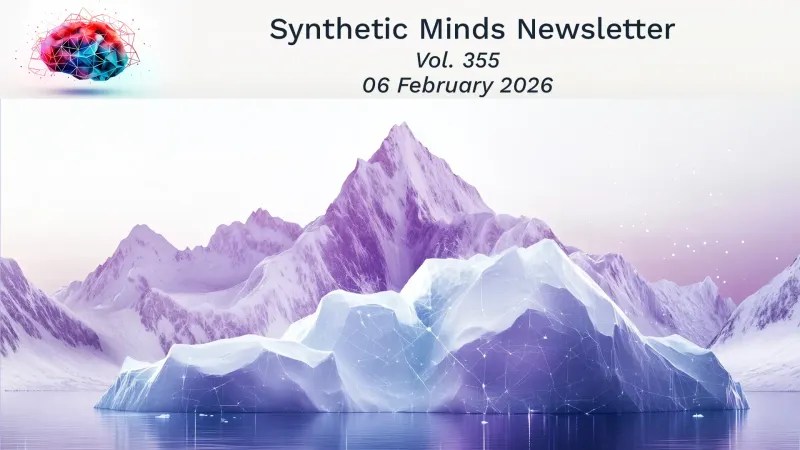
Icebergs Just Became Measurable: AI Maps the Melt
Polar ice loss isn’t a cinematic spectacle of a few giant bergs drifting into the sunset. It’s a constant, granular injection of fresh water into the ocean, fragment by fragment, reshaping currents, ecosystems, and climate dynamics.
Unfortunately, we’ve treated icebergs like drifting headlines: track the big ones, ignore the mess they leave behind. That “mess” is the climate story.
But that is about to change as the British Antarctic Survey just removed a major blind spot: an AI system that tracks an iceberg from “birth” to breakup, then rebuilds its family tree by linking thousands of small child fragments back to the parent using geometric matching on satellite imagery.
That digital jigsaw puzzle turns polar melt from vague observation into traceable attribution
This matters, a lot, because the real impact isn’t the photogenic giant. It’s the precise, distributed injection of fresh water into the ocean as fragments melt, thereby altering currents, marine ecosystems, and climate patterns.
This is what climate intelligence should look like: measuring the faint signals, not just the headline events. Smaller pieces were a blind spot at scale; now they become traceable data that can feed ocean models and the digital twins of planet Earth I shared earlier this week, sharpening our forecasts and improving real-world planning.
The optimistic part: when you can see the system clearly, you can adapt with precision, while we keep fighting to bend the curve of climate change. What other “small” signals are your strategy teams still treating as noise?

'Synthetic Minds' continues to reflect the synthetic forces reshaping our world. Quick, curated insights to feed your quest for a better understanding of our evolving synthetic future, powered by Futurwise:
1. In a move that's sending shockwaves through the tech industry, Anthropic has just launched its Opus 4.6 model, a game-changing frontier model for knowledge work as it can take on entire complex tasks (Anthropic)
2. Voice AI is the next major interface for AI, says ElevenLabs CEO Mati Staniszewski, as models move beyond text and screens. But then again, you would expect the CEO of a Voice AI company to say that! (TechCrunch)
3. As developing regions work to balance rising energy demand with climate commitments, renewable energy has become a strategic priority. The convergence of AI and drones helps address these challenges in novel ways. (TNGlobal)
4. The UK's Great Western Railway has made history by introducing the nation's first-ever battery-only powered train for passenger service. (Interesting Engineering)
5. Traditional career ladders are crumbling in the age of AI, and professionals must adapt to reach senior leadership positions. This includes taking unusual opportunities, showing commitment, staying humble, supporting the next gen, and demonstrating a hands-off style. (ZDNET)

If you are interested in more insights, grab my latest, award-winning, book Now What? How to Ride the Tsunami of Change and learn how to embrace a mindset that can deal with exponential change, or download my news 2026 tech trends report:
If this newsletter was forwarded to you, you can sign up here.
Thank you.
Mark
Frequently asked questions
What did the British Antarctic Survey's new AI system do?
The system tracks an iceberg from its birth through breakup, then rebuilds its family tree by linking thousands of small child fragments back to the parent iceberg using geometric matching on satellite imagery. This turns polar melt from a vague observation into traceable attribution, closing a major blind spot in how scientists monitor ice loss.
Link to this questionWhy does tracking small iceberg fragments matter more than big icebergs?
The real climate impact isn't the photogenic giant iceberg but the precise, distributed injection of fresh water into the ocean as smaller fragments melt. This process alters ocean currents, marine ecosystems, and climate patterns, making the fragments the actual climate story rather than the large bergs that typically capture attention.
Link to this questionHow can this iceberg tracking data improve climate forecasting?
The traceable data on fragment melt can feed into ocean models and digital twins of planet Earth, sharpening forecasts and improving real-world planning. By turning previously invisible small-scale melt into measurable data, scientists gain a clearer picture of the system, enabling more precise adaptation to climate change.
Link to this questionWhat broader lesson does this iceberg tracking system offer for strategy teams?
It shows that climate intelligence, and by extension strategic intelligence, should focus on measuring faint signals rather than only headline events. Small, distributed signals that seem like noise can actually be the most important data, and organizations should ask what similar small signals their own strategy teams might be overlooking.
Link to this question
Dr Mark van Rijmenam
Dr. Mark van Rijmenam, widely known as The Digital Speaker, isn’t just a #1-ranked global futurist; he’s an Architect of Tomorrow who fuses visionary ideas with real-world ROI. As a global keynote speaker, Global Speaking Fellow, recognized Global Guru Futurist, and 5-time author, he ignites Fortune 500 leaders and governments worldwide to harness emerging tech for tangible growth.
Recognized by Salesforce as one of 16 must-know AI influencers , Dr. Mark brings a balanced, optimistic-dystopian edge to his insights—pushing boundaries without losing sight of ethical innovation. From pioneering the use of a digital twin to spearheading his next-gen media platform Futurwise, he doesn’t just talk about AI and the future—he lives it, inspiring audiences to take bold action. You can reach his digital twin via WhatsApp at: +1 (830) 463-6967.