Synthetic Minds | The Robots Arrived. So Did The Resistance.
Synthetic Minds | The Robots Arrived. So Did The Resistance.
The Synthetic Minds newsletter offers short daily insights to get you thinking. If you enjoy it, please forward. All signals are powered by Futurwise. If you need more insights, subscribe to Futurwise and get 25% off for the first three months!
I have just launched the Intelligence Age Scorecard! It will help you understand how ready your organization is for the Intelligence Age.
Today’s topic: AI & Automation
The Humanoid Got Its Order. The Pushback Got Its Order Too.
The humanoid robot stopped being a video. It became a purchase order, a deployment site, an actuator-per-year number, and a labor fight, all in a single cycle.
The deployment graph and the resistance graph crossed.
That is the shift hiding under the May headlines about humanoids. The technology is ready. So is everyone who is going to push back on it.
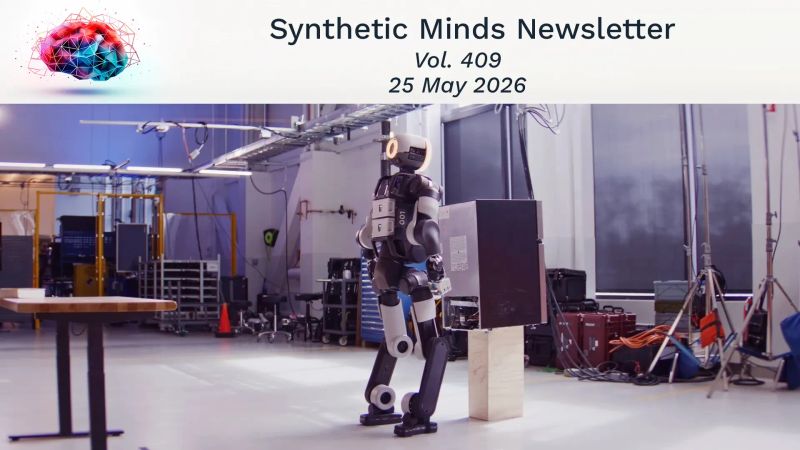
On May 18, Boston Dynamics showed Atlas lifting a 100-pound mini-fridge with whole-body coordination, trained over millions of simulated GPU-hours. That means another job category will come under threat in the years ahead: movers and removalists.
At the same time, Hyundai walked into a JPMorgan investor session and named the number. 25,000 Atlas units across its plants by 2028. 30,000 a year off the line, 300,000 actuators a year built in the US.
Capability, customer, fleet number, deployment site, and price-per-joint, all in one beat.
Then the rest of the world arrived.
The Korean Metal Workers' Union blocked Atlas from any Hyundai or Kia factory floor in Korea without a labor agreement. Hyundai's response was to redirect Atlas to the Georgia Metaplant America in 2028, Kia Georgia in 2029.
Japan Airlines launched a two-year humanoid trial at Tokyo's Haneda Airport using Unitree G1 robots. The bipartisan US House Select Committee on the CCP pushed to add Unitree to federal restricted-supplier lists as it is increasingly deemed a national security threat.
On May 21, Waymo paused robotaxi service in four cities. A software patch shipped to its 3,791-vehicle recall fleet failed when one car drove into a flooded Atlanta intersection.
That's the humanoid-arrived story. Here is the signal.
The robot is ready. The buyer is named. It will land only where labor permits it, where the regulator keeps up, and where the supplier is not on a sanctions list.
The question is no longer when humanoid robots arrive at scale. It is whose jurisdiction, whose union, and whose supplier your fleet plan rides on, because the rollout will route around the ones that say no.
The Intelligence Age Scorecard
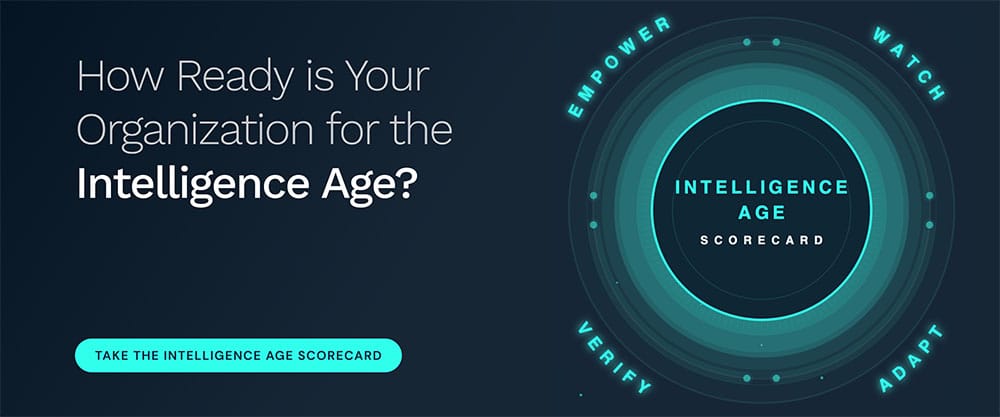
The humanoid robot got its fleet customer, its deployment site, and its first three brakes in the same five days — labor at home, the safety regulator on the highway, and Washington on the Chinese supplier. WAVE — Watch, Adapt, Verify, Empower — is the question every leadership team owes this pattern: are you still watching the demos, or already verifying which jurisdiction, union, and supplier your fleet plan can survive?
Take the Intelligence Age Scorecard to benchmark your readiness for the next two quarters, not the next five years.
If this newsletter was forwarded to you, you can sign up here.
Thank you.
Mark
Frequently asked questions
How many Atlas robots will Hyundai deploy by 2028?
Hyundai told a JPMorgan investor session it plans to deploy 25,000 Atlas units across its plants by 2028, with 30,000 units coming off the line annually and 300,000 actuators built per year in the US, signalling a fully scaled manufacturing and deployment commitment rather than a pilot program.
Link to this questionWhy did the Korean Metal Workers' Union block Atlas robots?
The Korean Metal Workers' Union blocked Atlas from being placed on any Hyundai or Kia factory floor in Korea without a labor agreement in place first. In response, Hyundai redirected its Atlas rollout plans to the Georgia Metaplant America in 2028 and Kia Georgia in 2029, effectively routing deployment around the union's resistance rather than negotiating past it immediately.
Link to this questionWhy is Unitree facing restrictions in the US?
The bipartisan US House Select Committee on the CCP pushed to add Unitree, the maker of the G1 humanoid robots used in Japan Airlines' trial at Haneda Airport, to federal restricted-supplier lists. Unitree is increasingly viewed as a national security threat, showing that supplier nationality has become a barrier to humanoid robot adoption alongside labor and regulatory hurdles.
Link to this questionWhat happened with Waymo's robotaxi fleet in May?
On May 21, Waymo paused robotaxi service in four cities after a software patch shipped to its 3,791-vehicle recall fleet failed when one of its cars drove into a flooded Atlanta intersection. This incident illustrates how safety regulators and real-world failures act as a brake on autonomous and robotic technology deployment, even after capability has been demonstrated.
Link to this question
Dr Mark van Rijmenam
Dr. Mark van Rijmenam, widely known as The Digital Speaker, isn’t just a #1-ranked global futurist; he’s an Architect of Tomorrow who fuses visionary ideas with real-world ROI. As a global keynote speaker, Global Speaking Fellow, recognized Global Guru Futurist, and 5-time author, he ignites Fortune 500 leaders and governments worldwide to harness emerging tech for tangible growth.
Recognized by Salesforce as one of 16 must-know AI influencers , Dr. Mark brings a balanced, optimistic-dystopian edge to his insights—pushing boundaries without losing sight of ethical innovation. From pioneering the use of a digital twin to spearheading his next-gen media platform Futurwise, he doesn’t just talk about AI and the future—he lives it, inspiring audiences to take bold action. You can reach his digital twin via WhatsApp at: +1 (830) 463-6967.