Synthetic Minds | A Second Leapfrog for Africa
Synthetic Minds | A Second Leapfrog for Africa
Synthetic minds is evolving. Short bi-weekly insights to get you thinking. If you enjoy it, please forward. If you need more insights, subscribe to Futurwise and get 25% off for the first three months!
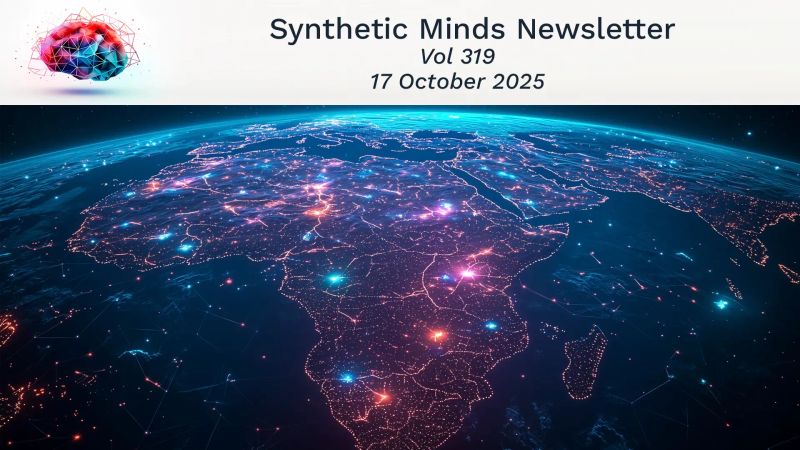
Africa Doesn’t Need to Catch Up, It’s Ready to Leap Again
Earlier this week, I was in Lagos, Nigeria, speaking at the Texcellence Conference, organize by CWG PLC, and what an experience it was. Nigeria is buzzing with energy, ambition, and a sense of urgency to build a future-forward Africa.
Africa doesn’t need to follow the world’s path step by step. It already leapfrogged once with M-Pesa, turning mobile phones into banks and rewriting the rules of financial access.
Now, it’s time for a second leap: one that goes beyond catching up and starts setting the pace for global innovation.
Why? Because Africa’s constraints are its strength. No legacy drag. No sunk costs. Just a chance to build systems fit for the 21st century from the ground up:
- AI on the edge: Affordable devices running models that support farmers, healthcare workers, and public safety.
- Blockchain-backed identity & finance: Secure, sovereign, and scalable trust systems.
- Low-cost autonomous systems: Solar-powered drones and bots serving remote regions with health, food, and logistics.
This isn’t theory, it’s necessity. Climate stress, rapid urbanization, and infrastructure gaps demand solutions that are bold, local, and scalable.
As I explored these ideas in my keynote, the lesson is clear: the future belongs to those who dare to skip the old steps and design on their own terms. Africa has done it before. It can do it again.
My question to you: What would a second leapfrog look like if we designed with Africa, not for Africa?

'Synthetic Minds' continues to reflect the synthetic forces reshaping our world. Quick, curated insights to feed your quest for a better understanding of our evolving synthetic future, powered by Futurwise:
1. Scientists at Penn State just developed the world's first 2D computer using atom-thin materials! This breakthrough could lead to ultra-efficient, miniaturized computing devices. (SciTechDaily)
2. AI royalties are finally on the table for small and midsize publishers. Learn how collective licensing is opening up new revenue streams for niche publishers. (Digiday)
3. AIOps is the future of AI-driven enterprises! Learn how to govern autonomous AI systems and ensure responsible AI deployment. (Arion Research)
4. AI adoption is surging in 2025, with benefits in science and business. But what are the risks of AI and how can they be mitigated? (State of AI)
5. Google Veo 3.1 vs OpenAI Sora 2: In the world of AI video generation, two giants are vying for dominance: Google Veo 3.1 and OpenAI Sora 2. But which one is leading the way? (Tom's Guide)
If you are interested in more insights, grab my latest book Now What? How to Ride the Tsunami of Change and learn how to embrace a mindset that can deal with exponential change.
If this newsletter was forwarded to you, you can sign up here.
Thank you.
Mark
Frequently asked questions
What is Africa's first leapfrog example mentioned?
Africa's first leapfrog was M-Pesa, which turned mobile phones into banks and rewrote the rules of financial access, allowing the continent to skip traditional banking infrastructure entirely and move directly to mobile-based financial systems.
Link to this questionWhy is Africa positioned for a second technological leapfrog?
Africa's constraints are actually its strength because it has no legacy drag and no sunk costs, giving it a chance to build systems fit for the 21st century from the ground up rather than being weighed down by outdated infrastructure that other regions must work around.
Link to this questionWhat technologies could drive Africa's second leapfrog?
Three key technologies could drive this leap: AI on the edge through affordable devices running models that support farmers, healthcare workers, and public safety; blockchain-backed identity and finance systems that are secure and sovereign; and low-cost autonomous systems like solar-powered drones and bots serving remote regions with health, food, and logistics.
Link to this questionWhat challenges make this second leapfrog necessary rather than optional?
Climate stress, rapid urbanization, and infrastructure gaps make this leap a necessity rather than just an interesting theory. These pressing challenges demand solutions that are bold, local, and scalable, rather than simply importing conventional development models from elsewhere.
Link to this question
Dr Mark van Rijmenam
Dr. Mark van Rijmenam, widely known as The Digital Speaker, isn’t just a #1-ranked global futurist; he’s an Architect of Tomorrow who fuses visionary ideas with real-world ROI. As a global keynote speaker, Global Speaking Fellow, recognized Global Guru Futurist, and 5-time author, he ignites Fortune 500 leaders and governments worldwide to harness emerging tech for tangible growth.
Recognized by Salesforce as one of 16 must-know AI influencers , Dr. Mark brings a balanced, optimistic-dystopian edge to his insights—pushing boundaries without losing sight of ethical innovation. From pioneering the use of a digital twin to spearheading his next-gen media platform Futurwise, he doesn’t just talk about AI and the future—he lives it, inspiring audiences to take bold action. You can reach his digital twin via WhatsApp at: +1 (830) 463-6967.