The AI Talent Tug-of-War: A New Global Powerplay
The AI Talent Tug-of-War: A New Global Powerplay
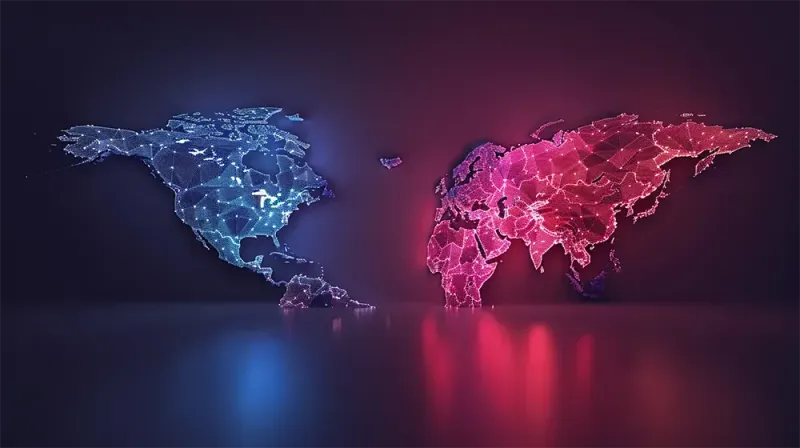
Is the U.S. about to lose its crown as the A.I. superpower? As China surges ahead in the AI talent race, the implications for technological supremacy and geopolitical dynamics could be monumental. But is America ready to pass the baton, or is this just a wake-up call?
In an era where AI is the new battleground for global dominance, a seismic shift is occurring. China, traditionally viewed as trailing behind the U.S. in the cutting-edge realm of AI, has made leaps and bounds in nurturing homegrown talent, thereby altering the global AI landscape.
Recent research reveals that China has outpaced the United States in producing top-tier AI engineers, a development that could tilt the scales of tech superiority. While the U.S. has been a magnet for the brightest minds, including a substantial influx from China, evolving geopolitical tensions and educational initiatives in China threaten to redraw these intellectual migration patterns.
As we stand on the cusp of this transformative phase, we should think about the long-term ramifications. Will this talent shift catalyze a more distributed innovation ecosystem, or could it lead to a technological cold war?
The fabric of global AI leadership is being re-woven, with each nation striving to secure its position in this rapidly evolving tapestry. As China fortifies its educational infrastructure and the U.S. grapples with policy dilemmas, the race for AI supremacy intensifies, compelling us to question: In the quest to nurture and harness AI talent, are we fostering collaboration or sowing the seeds of division?
Read the full article on The New York Times.
----
Frequently asked questions
Why is China's growth in AI talent significant?
China has outpaced the United States in producing top-tier AI engineers, a shift that could tilt the balance of technological superiority. This matters because AI talent underpins innovation capacity, and whichever nation cultivates the strongest pool of engineers is better positioned to lead in AI development and, by extension, global technological and geopolitical influence.
Link to this questionHas the US traditionally relied on foreign AI talent?
Yes, the United States has long been a magnet for the brightest AI minds worldwide, including a substantial influx of talent from China. This reliance on attracting international researchers and engineers has been central to America's AI leadership, but evolving geopolitical tensions and China's own educational initiatives are now threatening to redraw these established migration patterns.
Link to this questionWhat could this AI talent shift mean for global innovation?
The shift raises a key question about whether it will lead to a more distributed innovation ecosystem, where AI progress is shared more broadly across nations, or whether it could instead spark a technological cold war marked by division and competition rather than collaboration between major powers like the US and China.
Link to this questionWhat is driving China's rise in AI talent production?
China's rise stems largely from strengthening its educational infrastructure, actively nurturing homegrown engineering talent rather than depending on migration to other countries. Meanwhile, the United States is grappling with policy dilemmas around talent attraction and retention, a contrast that is intensifying the broader global race for AI supremacy between the two nations.
Link to this question💡 We're entering a world where intelligence is synthetic, reality is augmented, and the rules are being rewritten in front of our eyes.
Staying up-to-date in a fast-changing world is vital. That is why I have launched Futurwise; a personalized AI platform that transforms information chaos into strategic clarity. With one click, users can bookmark and summarize any article, report, or video in seconds, tailored to their tone, interests, and language. Visit Futurwise.com to get started for free!


Dr Mark van Rijmenam
Dr. Mark van Rijmenam, widely known as The Digital Speaker, isn’t just a #1-ranked global futurist; he’s an Architect of Tomorrow who fuses visionary ideas with real-world ROI. As a global keynote speaker, Global Speaking Fellow, recognized Global Guru Futurist, and 5-time author, he ignites Fortune 500 leaders and governments worldwide to harness emerging tech for tangible growth.
Recognized by Salesforce as one of 16 must-know AI influencers , Dr. Mark brings a balanced, optimistic-dystopian edge to his insights—pushing boundaries without losing sight of ethical innovation. From pioneering the use of a digital twin to spearheading his next-gen media platform Futurwise, he doesn’t just talk about AI and the future—he lives it, inspiring audiences to take bold action. You can reach his digital twin via WhatsApp at: +1 (830) 463-6967.