The Death of the Click: How AI Just Erased Journalism’s Business Model

The Death of the Click: How AI Just Erased Journalism’s Business Model
Google didn’t just change how we search, it's quietly vaporising the internet’s biggest business model, and the collapse has already begun.
Publishers built their business models on Google’s search referrals, but those blue links are disappearing fast. Google’s AI Overviews and its new AI Mode now deliver full answers directly, sidelining traditional traffic routes.
The result? HuffPost lost over half its search traffic; Business Insider cut 21% of staff after a 55% drop; and The Atlantic is planning for near-zero Google traffic. It’s not just a dip, it’s a systemic collapse. Leaders like William Lewis (Washington Post) and Nicholas Thompson (The Atlantic) are blunt: adapt fast or fade out.
The story here isn’t about disruption, it’s about disintermediation. AI is severing the link between discovery and destination. Dotdash Meredith lost half its search share since 2021. Even the mighty New York Times saw a steep drop and is now battling OpenAI while licensing to Amazon. WSJ is faring slightly better, but even they’re pivoting toward habit-driven loyalty and trust.
This isn’t a temporary algorithm shift, it’s the beginning of a post-search world:
- AI Mode gives answers, not links.
- Publishers pivot to events, newsletters, and apps.
- Lawsuits and licensing deals scramble to control AI’s training diet.
The question now isn’t whether news will survive, it’s what kind of news ecosystem we’ll have when AI controls the gates. This is exactly the reason why we are building Futurwise, the intelligence layer for the world's trusted information. We are early stage, but we plan to offer publishers a helping hand in this unfair battle.
In a world where attention is currency and curation is automated, will you build trust directly, or be replaced by those who do?
Read the full article on Wall Street Journal.
----
Frequently asked questions
Why is Google's search traffic to publishers declining?
Google's AI Overviews and its new AI Mode now deliver full answers directly within search results, rather than sending users to publisher websites through blue links. This shifts discovery away from destination sites entirely, meaning readers get their information without ever clicking through, which severs the traffic pipeline publishers historically relied on for revenue.
Link to this questionWhich publishers have been hit hardest by AI search changes?
HuffPost lost over half its search traffic, Business Insider cut 21% of staff after a 55% drop, and The Atlantic is planning for near-zero Google traffic. Dotdash Meredith lost half its search share since 2021, and even The New York Times saw a steep drop, prompting it to battle OpenAI legally while also licensing content to Amazon.
Link to this questionHow are news organizations responding to falling search traffic?
Publishers are pivoting toward events, newsletters, and apps to build direct relationships with readers instead of depending on search referrals. Some, like The Wall Street Journal, are focusing on habit-driven loyalty and trust. Others are pursuing lawsuits and licensing deals with AI companies to control how their content is used for training and to secure alternative revenue streams.
Link to this questionWhat does disintermediation mean for the future of journalism?
Disintermediation refers to AI severing the link between discovery and destination, meaning readers get answers directly from AI systems instead of visiting news sites. This raises the question of what kind of news ecosystem will exist when AI controls the gates of information access, forcing publishers to decide whether to build trust directly with audiences or risk being replaced by automated curation.
Link to this question💡 We're entering a world where intelligence is synthetic, reality is augmented, and the rules are being rewritten in front of our eyes.
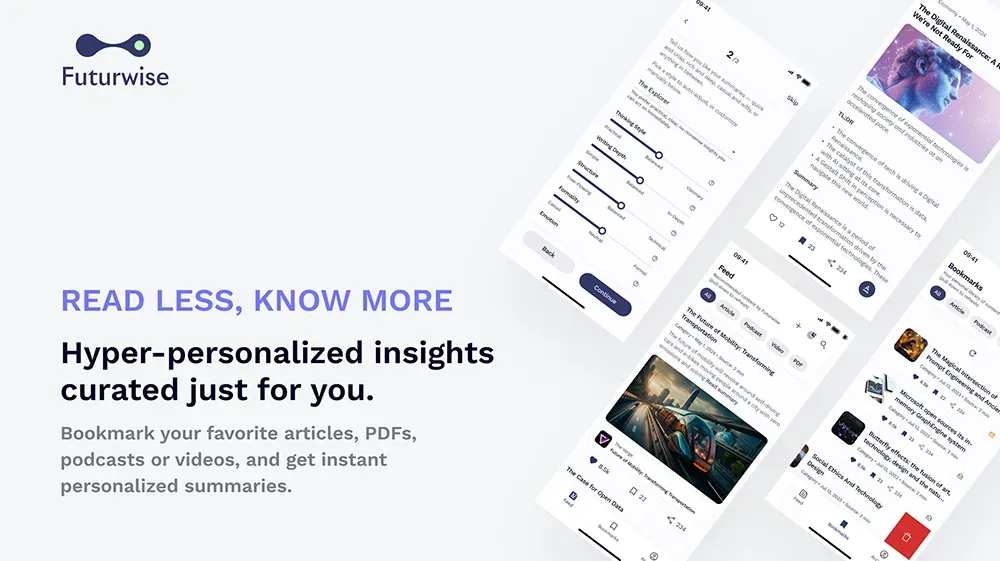
Staying up-to-date in a fast-changing world is vital. That is why I have launched Futurwise; a personalized AI platform that transforms information chaos into strategic clarity. With one click, users can bookmark and summarize any article, report, or video in seconds, tailored to their tone, interests, and language. Visit Futurwise.com to get started for free!

Dr Mark van Rijmenam
Dr. Mark van Rijmenam, widely known as The Digital Speaker, isn’t just a #1-ranked global futurist; he’s an Architect of Tomorrow who fuses visionary ideas with real-world ROI. As a global keynote speaker, Global Speaking Fellow, recognized Global Guru Futurist, and 5-time author, he ignites Fortune 500 leaders and governments worldwide to harness emerging tech for tangible growth.
Recognized by Salesforce as one of 16 must-know AI influencers , Dr. Mark brings a balanced, optimistic-dystopian edge to his insights—pushing boundaries without losing sight of ethical innovation. From pioneering the use of a digital twin to spearheading his next-gen media platform Futurwise, he doesn’t just talk about AI and the future—he lives it, inspiring audiences to take bold action. You can reach his digital twin via WhatsApp at: +1 (830) 463-6967.