When it Comes to AI: Awe Sells, Risk Scales

When it Comes to AI: Awe Sells, Risk Scales
The biggest fans of AI aren’t the experts, they’re the ones who don’t understand it. But should business strategy really be built on mystery and awe?
New research shows a paradox: the less people know about AI, the more likely they are to use it. Across multiple studies, including one where students had to write history papers and love poems, those with low AI literacy embraced AI tools far faster than those who understood the mechanics. Replication across 27 countries held.
Why? Because to them, AI feels magical. It writes, codes, and “thinks” in ways that seem beyond explanation. That wonder breeds adoption.
But here’s the catch: awe without understanding is a liability. The study warns against leaving users in the dark. The right goal is “calibrated literacy,” just enough knowledge to use AI safely, without stripping away the curiosity that drives exploration.
For leaders, this is a balancing act. In my new book Now What? How to Ride the Tsunami of Change, I argue that thriving in exponential times requires curiosity and discipline in equal measure. Awe sparks experimentation, but evidence must shape deployment. That means:
- Teach teams what AI can’t do, not just what it can.
- Run small, safe pilots before scaling use.
- Keep delight alive, but check outputs relentlessly.
Treat delight as a door, not a blindfold. We don’t need louder promises; we need proof under pressure.
If ignorance drives adoption and knowledge drives caution, how will you find the balance inside your organization? The future of AI use may hinge not on its power, but on how we teach people to see it. How do you keep curiosity alive in your teams without letting it cloud judgment?
Read the full article on Wall Street Journal.
----
Frequently asked questions
Why are people with less AI knowledge more likely to adopt it?
Research found that AI feels magical to those who don't understand its mechanics, since it writes, codes, and seems to think in ways beyond explanation. That sense of wonder drives faster adoption, while those who understand how AI actually works tend to be more cautious and slower to embrace the tools.
Link to this questionWhat is calibrated literacy in the context of AI adoption?
Calibrated literacy means giving people just enough knowledge to use AI safely without eliminating the curiosity that drives them to explore it in the first place. It is presented as the right goal for organizations, balancing safety with the wonder that sparks initial experimentation and engagement with AI tools.
Link to this questionWhy is awe about AI considered risky for businesses?
Awe without understanding is described as a liability because it can lead users to trust AI outputs without verifying them. The concern is that leaving users in the dark about AI's limitations means unchecked enthusiasm could drive poor decisions, so evidence and scrutiny must guide how AI is actually deployed.
Link to this questionWhat steps can leaders take to balance curiosity and caution with AI?
Leaders should teach teams what AI cannot do, not just what it can, run small and safe pilots before scaling usage, and keep the sense of delight alive while relentlessly checking outputs. The idea is to treat delight as a door into exploration rather than a blindfold that hides risks.
Link to this question💡 We're entering a world where intelligence is synthetic, reality is augmented, and the rules are being rewritten in front of our eyes.
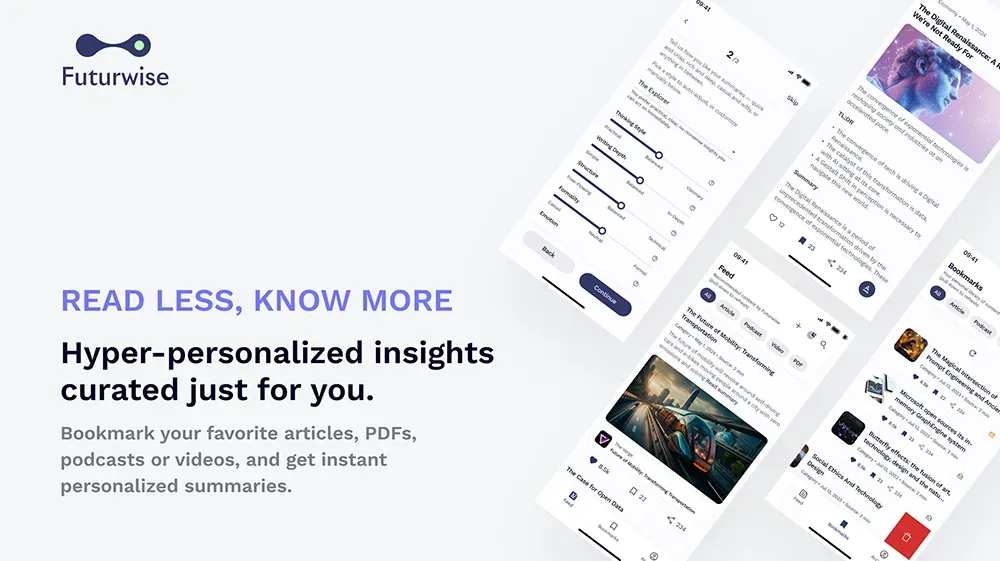
Staying up-to-date in a fast-changing world is vital. That is why I have launched Futurwise; a personalized AI platform that transforms information chaos into strategic clarity. With one click, users can bookmark and summarize any article, report, or video in seconds, tailored to their tone, interests, and language. Visit Futurwise.com to get started for free!

Dr Mark van Rijmenam
Dr. Mark van Rijmenam, widely known as The Digital Speaker, isn’t just a #1-ranked global futurist; he’s an Architect of Tomorrow who fuses visionary ideas with real-world ROI. As a global keynote speaker, Global Speaking Fellow, recognized Global Guru Futurist, and 5-time author, he ignites Fortune 500 leaders and governments worldwide to harness emerging tech for tangible growth.
Recognized by Salesforce as one of 16 must-know AI influencers , Dr. Mark brings a balanced, optimistic-dystopian edge to his insights—pushing boundaries without losing sight of ethical innovation. From pioneering the use of a digital twin to spearheading his next-gen media platform Futurwise, he doesn’t just talk about AI and the future—he lives it, inspiring audiences to take bold action. You can reach his digital twin via WhatsApp at: +1 (830) 463-6967.