Why Your Farm Doesn't Need You Anymore
Why Your Farm Doesn't Need You Anymore
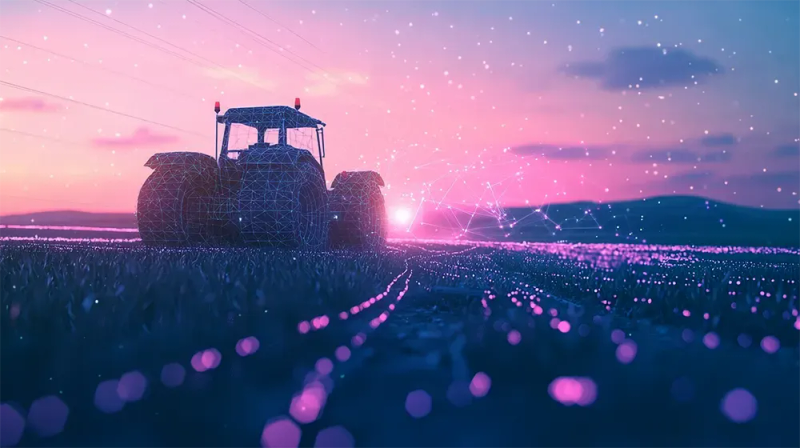
While a $2 million tractor plants wheat across 7,500 acres, the modern farmer of today is on a Zoom call. The steering wheel hasn't been touched in hours.
Welcome to agriculture's extinction event for human labor. Nelson's Washington state farm runs itself; tractors navigate by AI, sensors decide when to spray, cameras identify individual weeds among 750 million plants. McKinsey's data confirms the revolution: 15% of large farms already deploy robots, but that's about to explode. Deere's "See & Spray" tech scans 2,100 square feet per second, slashing herbicide use by two-thirds.
The economics are brutal: Tortuga's strawberry-picking robots work 24/7 without breaks. Israel's Tevel deploys flying robots that harvest fruit autonomously. Yaniv Maor, Tevel's CEO, doesn't mince words: "Growers who don't adopt robotics won't survive, they simply have no choice." Taylor Farms just acquired Farmwise's AI weeders to cut labor costs permanently.
Every component of human farming faces replacement. SoilOptix maps entire fields' microbial health without human sampling. Virtual fences zap cattle who stray from GPS boundaries. Monarch's electric tractors run 14 hours unmanned. Microsoft's Ranveer Chandra envisions farms where "every drone flight updates the farm's unique AI model," learning, adapting, eliminating human judgment.
The barriers crumbling: Connectivity gaps filled by edge computing. Costs plummeting as venture capital floods in. Oishii's vertical farms already run robotic harvesters that handle berries more gently than human hands. The "small army of weeders and pickers" becomes two supervisors watching screens.
- 2/3 of American farms already use digital management systems
- Robots reduce herbicide use by 66%, work 24/7
- 750 million plants per 5,000-acre farm monitored individually
When machines know your soil better than you know your children, are you still a farmer or just a spectator to your own obsolescence?
Read the full article on Wall Street Journal.
----
Frequently asked questions
How do farms use AI and robots to run themselves?
Tractors navigate fields autonomously using AI, sensors decide when to spray crops, and cameras identify individual weeds among hundreds of millions of plants. Systems like Deere's See & Spray scan large areas per second to target herbicide use precisely, while robots handle strawberry picking around the clock and flying robots harvest fruit without human involvement, effectively automating tasks once done by teams of farmworkers.
Link to this questionWhat percentage of large farms already use farm robots?
According to McKinsey's data, 15% of large farms already deploy robots, and this adoption is expected to expand rapidly as costs fall and venture capital investment increases in agricultural robotics and AI technology.
Link to this questionWhy are farmers being pushed to adopt robotics?
The economics favor automation: robots like Tortuga's strawberry pickers work continuously without breaks, cutting labor costs permanently, as seen with Taylor Farms acquiring Farmwise's AI weeders. Tevel's CEO Yaniv Maor bluntly states that growers who don't adopt robotics won't survive, framing automation as a survival necessity rather than an optional upgrade for competitive farms.”
Link to this questionHow much can robotic spraying reduce herbicide use?
Robots equipped with precision spraying technology, such as Deere's See & Spray system, reduce herbicide use by two-thirds because they scan large areas each second and target only the specific weeds identified among the crops, rather than spraying entire fields indiscriminately.
Link to this question💡 We're entering a world where intelligence is synthetic, reality is augmented, and the rules are being rewritten in front of our eyes.
Staying up-to-date in a fast-changing world is vital. That is why I have launched Futurwise; a personalized AI platform that transforms information chaos into strategic clarity. With one click, users can bookmark and summarize any article, report, or video in seconds, tailored to their tone, interests, and language. Visit Futurwise.com to get started for free!


Dr Mark van Rijmenam
Dr. Mark van Rijmenam, widely known as The Digital Speaker, isn’t just a #1-ranked global futurist; he’s an Architect of Tomorrow who fuses visionary ideas with real-world ROI. As a global keynote speaker, Global Speaking Fellow, recognized Global Guru Futurist, and 5-time author, he ignites Fortune 500 leaders and governments worldwide to harness emerging tech for tangible growth.
Recognized by Salesforce as one of 16 must-know AI influencers , Dr. Mark brings a balanced, optimistic-dystopian edge to his insights—pushing boundaries without losing sight of ethical innovation. From pioneering the use of a digital twin to spearheading his next-gen media platform Futurwise, he doesn’t just talk about AI and the future—he lives it, inspiring audiences to take bold action. You can reach his digital twin via WhatsApp at: +1 (830) 463-6967.