
Rethinking social media
The current Cambridge Analytica / Facebook scandal is an outrageous scandal that we should not accept.
Read More
The current Cambridge Analytica / Facebook scandal is an outrageous scandal that we should not accept.
Read More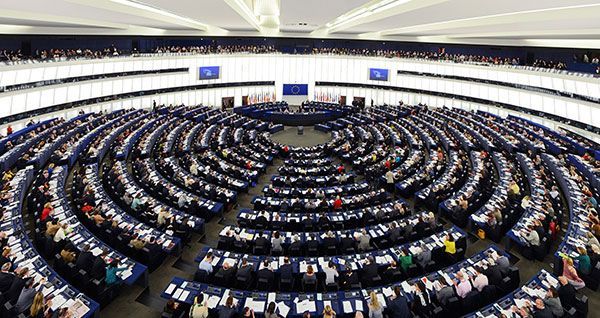
Currently, only 11% of the countries are a full democracy, while 23% is a flawed democracy.
Read More
We live in unprecedented times, where, unfortunately, increasingly things are not what they seem to be or what they should be. We only have been in this situation for less than 18 months, but it is rapidly affecting our lives on a daily basis. I am talking about fake news
Read More
Artificial Intelligence is like Lego; to build something nice, you need to combine the right pieces in the right way.
Read More
A few weeks ago, the Telegram white paper leaked [https://thenextweb.com/hardfork/2018/01/09/telegram-ico-white-paper-leak/]. The white paper discusses Telegram’s plans to build a decentralised [https://www.thedigitalspeaker.com/tokenomics-how-tokens-fuel-the-decentralised-economy/] ecosystem, launch a variety of Blockchain services
Read More
The fast-changing, uncertain and ambiguous environments that organisations operate in today, requires organisations to re-think all their internal business processes and customer touch points. In addition, due to the availability of emerging (information) technologies such as big data, blockchain and artificial intelligence [https://www.thedigitalspeaker.com/future-artificial-
Read More
A few weeks ago, the Telegram white paper leaked. The white paper discusses Telegram’s plans to build a decentralised ecosystem, launch a variety of Blockchain services and, of course, the Telegram Open Network comes with their own cryptocurrency called Gram.
Read More
Many government bodies, regulators, investors and banks see Bitcoin, or even the whole cryptocurrency market, as a speculative bubble. Some say it is a fraud, while others speculate that it will continue to rise in 2018. Earlier, I wrote an article why I believe that Bitcoin will fail [https://datafloq.
Read More
Reputation and shadow reputation are increasingly becoming important in the global village we live. However, trusting people on the internet whom you don’t know has become notoriously difficult.
Read More
Open strategy is the decentralisation of strategy formulation across, previously excluded, internal and external stakeholders. Traditionally, companies [https://sloanreview.mit.edu/article/the-era-of-open-innovation/] focused on control and ownership of an organisation’s assets to ensure competitive advantage. However, this focus on control of resources is no
Read MoreSomething went wrong
Something went wrong. Please, try again later