AI-Generated Art Can Be Copyrighted—If Humans Do the Heavy Lifting
So AI Can Steal Art, But It Can’t Own It?
Read MoreDr. Mark van Rijmenam, CSP, is a world-leading strategic futurist and award-winning global keynote speaker who helps Fortune 500 leadership teams navigate AI and emerging technologies. Recognized by Salesforce as one of 16 global voices shaping the future of AI, he holds a PhD from University of Technology Sydney and is the author of six books on emerging technology and judgment in the AI era, including his latest book: Now What? How to Ride the Tsunami of Change. He is the founder of Futurwise and the developer of the Intelligence Age Scorecard that helps individuals and organizations understand how prepared they are for the future.
His pioneering efforts include the world's first TEDx Talk in VR in 2020. In 2023, he further pushed boundaries when he delivered a TEDx talk in Athens with his digital twin, delving into the complex interplay of AI and our perception of reality. In 2024, he launched a digital twin of himself, offering interactive, on-demand conversations via text, audio, or video in 29 languages, thereby bridging the gap between the digital and physical worlds – another world's first.
Dr. Van Rijmenam is a prolific author and has written more than 1,200 articles and six books in his career. As a corporate educator, he is celebrated for his candid, independent, and balanced insights. He is also the founder of Futurwise, which focuses on elevating global knowledge on crucial topics like technology, healthcare, and climate change by providing high-quality, hyper-personalized, and easily digestible insights from trusted sources.
Below, you can read all his articles.

So AI Can Steal Art, But It Can’t Own It?
Read MoreForget quantum computing, the most unbreakable encryption system ever invented was designed before computers even existed. The one-time pad is a cipher so secure that even an AI with unlimited compute power would hit a dead end.
Read MoreThis week’s Synthetic Minds covers humanoids stepping into real-world roles, AI developing memory, DeepSeek challenging hyperscalers, quantum computing breakthroughs, and self-replicating AI. Are we witnessing innovation—or a future where machines rewrite the rules of intelligence? Let’s explore.
Read MoreSix months ago, AGI (Artificial General Intelligence) was a 2032 problem. Today? The prediction has been pulled forward to 2027, or sooner if you believe Musk.
Read MoreIn a world where AI aces PhD exams and outperforms experts, researchers have one last defense: creating a test so diabolically difficult that no AI can pass it.
Read MoreAI and crypto are teaming up to kick traditional commerce to the curb, promising a decentralized future where goods move seamlessly across global markets, without centralized gatekeepers.
Read MoreSam Altman: “How Dare You Copy Our Copying Machine?”
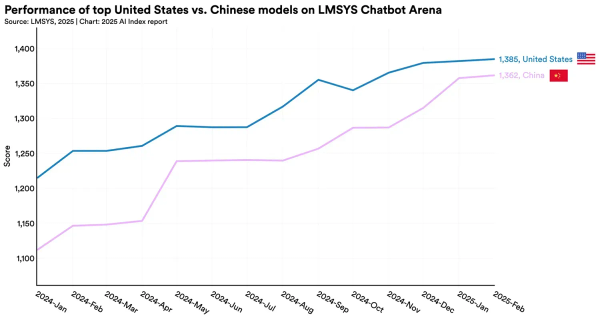
Read MoreDeepSeek, China’s open-source AI disruptor, has shattered expectations, proving that efficiency can trump brute-force compute. Now, the real question: can China replicate this success, or will geopolitical headwinds and restricted innovation hold it back?
Read MoreYou think AI is terrifying? Wait until a spiraling, octopus-inspired robot swoops in to grab you. Meet SpiRobs, a new breed of bioinspired robots designed for precision grasping.
Read MoreWhat if the next breakthrough battery, semiconductor, or carbon-capturing material could be designed rather than discovered? That’s exactly what MatterGen, a generative AI model for materials design, is doing, replacing tedious trial-and-error with direct innovation.
Read MoreSomething went wrong
Something went wrong. Please, try again later