The f(x)=e^x | AI and workplace health and safety
The f(x)=e^x | AI and workplace health and safety
Claude 2's joke of the week:
Why was the AI employee fired? For only working artificially!
The Transformative Role of AI in Revolutionising Workplace Health and Safety
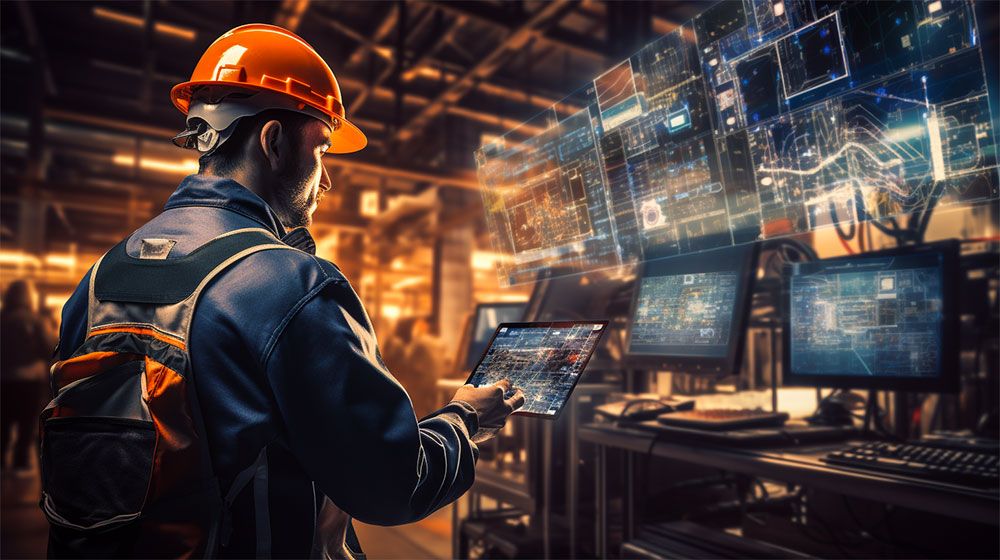
My latest article:
AI is revolutionising workplace health and safety across industries. Applications like predictive modelling identify potential hazards so organisations can take preventive measures.
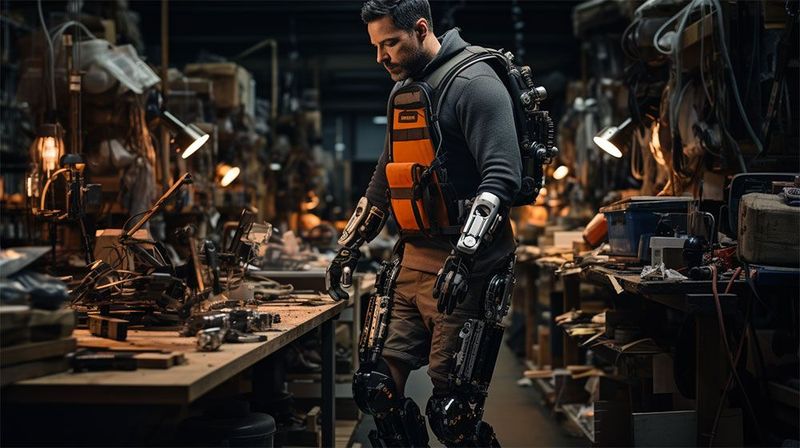
Wearables and sensors enable real-time monitoring of worker health. Computer vision systems detect safety risks and enhance compliance. Collaborative robots automate hazardous tasks to reduce human strain. VR training immerses workers in hazardous scenarios to hone responses. Exoskeletons provide physical support to minimize injuries.
To integrate AI, organisations should assess needs, run pilots, build expertise, establish governance, monitor impact, and continuously improve. With the right strategy, AI leads to safer, more productive environments that protect people.
Feel like the pace of the digital revolution is leaving your business in the dust? I've developed a 3-hour workshop for executive leaders and board members to demystify buzzwords like AI, metaverse, and quantum computing, preparing you to steer your organisation into a confident digital future. Don't be among the 49% of businesses that see digital transformation as a threat - seize the opportunity now!
Useful Nuggets of Information
My weekly tips from around the web to get you thinking.
1. Google's new robots learn from the web.
Google's new AI called RT-2 enables robots to understand concepts and instructions from text and images online. This allows the robots to take on new tasks without training, bringing us closer to adaptable helper robots. (Singularity Hub)
2. Decoding the black box: a gentle guide into LLMs.
Large Language Models are massive black boxes, even for developers and researchers. However, this article peeks under the hood of chatbots like ChatGPT to explain how their mysterious brains actually work. It turns out words become numbers, neurons match patterns, and squirrels adjust valves. Who knew? (Ars Technica)
3. How a sneaky pixel can through image-editing AI off-rails.
Researchers at MIT have developed PhotoGuard, a new technique that subtly tweaks images to confuse AI systems that might otherwise edit them without permission. It adds invisible "perturbations" to throw the AI off the scent. (Engadget)
4. All the hype around AI doesn't mean the metaverse is gone.
AI might push aside the metaverse, but it will still transform how we experience life online through immersive digital experiences. As more daily activities shift to shared digital spaces, the metaverse will influence businesses, brands, shopping, socialising, learning - and maybe one day be bigger than the physical world. (Forbes)
Artificial Escalation
Increasingly, AI is used in warfare, but that is certainly not without risks, as this must-watch short movie shows. The movie explores why we need to avoid accidental conflict escalation at all times. 💣
Join my new masterclass - updated twice a month!
Digital transformation is essential for success in today's fast-paced business landscape, yet many organisations struggle with data literacy. Don’t be left behind but join this unique masterclass that will help you unleash digital innovation in your business. Only $99!
Know someone who needs the f(x) = e^x?
Forward it to someone who might like it too.
Subscribe here if it was forwarded to you.
Frequently asked questions
How is AI improving workplace health and safety?
AI improves workplace health and safety through predictive modelling that identifies potential hazards so organisations can take preventive measures. Wearables and sensors enable real-time monitoring of worker health, computer vision systems detect safety risks and enhance compliance, collaborative robots automate hazardous tasks to reduce human strain, VR training immerses workers in hazardous scenarios, and exoskeletons provide physical support to minimize injuries.
Link to this questionWhat steps should organisations take to integrate AI for safety?
Organisations should assess their needs, run pilots, build expertise, establish governance, monitor impact, and continuously improve. Following this strategy allows AI to be integrated effectively, leading to safer and more productive environments that protect people.
Link to this questionWhat does Google's new RT-2 robot technology do?
Google's new AI called RT-2 enables robots to understand concepts and instructions from text and images found online. This allows robots to take on new tasks without needing specific training, moving closer to the development of adaptable helper robots.
Link to this questionWhat is PhotoGuard and how does it protect images from AI editing?
PhotoGuard is a technique developed by researchers at MIT that subtly tweaks images to confuse AI systems that might otherwise edit them without permission. It works by adding invisible perturbations to the image, which throws AI editing tools off the scent and prevents unauthorized manipulation.
Link to this question
Dr. Mark van Rijmenam
Dr. Mark van Rijmenam is The Digital Speaker, a world-leading futurist and global AI keynote speaker who helps leaders decide what AI, and the technologies that follow it, mean for their business. He speaks to leadership teams at their retreats and to conference audiences worldwide, and his WAVE framework gives them a way of deciding that they keep using long after he has left the room. His Intelligence Age Scorecard measures how ready an organization is across the four WAVE pillars.
He holds a PhD from the University of Technology Sydney, is a Certified Speaking Professional and Global Speaking Fellow, and ranks among the world’s top futurists on the Global Gurus list (#1 in 2025, #3 in 2026). Salesforce named him one of its 16 leading AI voices. He has written six books, most recently Now What? How to Ride the Tsunami of Change, writes the Synthetic Minds newsletter on Substack, and founded Futurwise. Talk to his digital twin on WhatsApp: +1 (830) 463-6967.