A Jury Just Said What Zuckerberg's Own Memos Already Proved
"If we wanna win big with teens, we must bring them in as tweens." That is not a critic's accusation. That is Meta's own internal memo, read aloud to a jury that just found the company liable on every count.
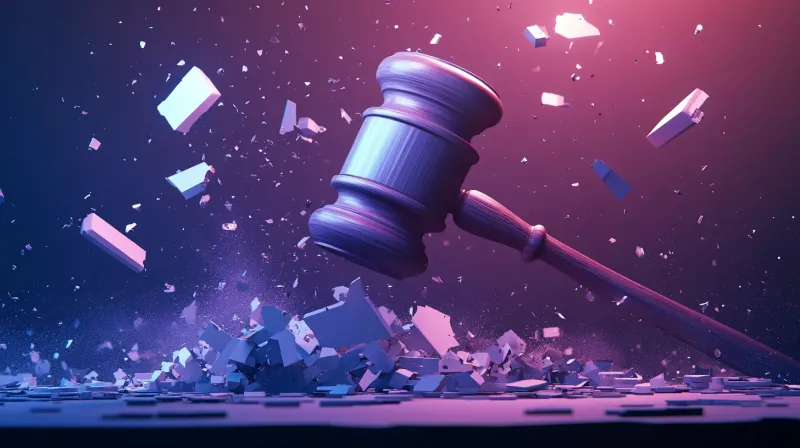
On March 25, a Los Angeles Superior Court jury delivered its verdict after a seven-week trial and eight days of deliberation. Meta and YouTube were found negligent in the design of their platforms, knew their design was dangerous, failed to warn of those risks, and caused substantial harm to the plaintiff, a now-20-year-old woman identified as K.G.M., who developed depression and suicidal ideation as a minor while using Instagram and YouTube.
The jury awarded $3 million in compensatory damages and $3 million in punitive damages, with Meta bearing 70% and YouTube 30%.
Let us be precise about what this verdict establishes. It is not that social media can be harmful, everyone already suspected that. It is that a jury examined internal company documents and concluded these platforms were deliberately engineered to be addictive, that the companies knew this, and that they chose profit over the mental health of children.
The evidence was not circumstantial. It was in their own words: 11-year-olds were four times as likely to keep returning to Instagram than to competing apps, and Meta's leadership treated that as a competitive advantage rather than a warning sign.
The $6 million is irrelevant to companies with these balance sheets. What is not irrelevant: 2,000 pending lawsuits now have a verdict to point to, a trial template to follow, and a set of internal documents that have been read into the public record.
The Big Tobacco comparison that commentators keep reaching for is not hyperbole, it is structural. Tobacco companies also argued for decades that the science was uncertain, that consumers made free choices, and that their products were not designed to addict. They lost.
Meta and YouTube have announced they will appeal. Of course they will, they are corporations protecting shareholder value. But an appeal does not erase what the jury saw.
It does not unsay "bring them in as tweens." And it does not reverse the fact that a court has now established, with punitive damages, that engagement-maximizing design is not just ethically questionable, it is legally negligent when directed at children.
The question for every leader is no longer whether social media harms young people. A jury has answered that. The question is what your organization does with that answer, in your employee wellbeing policies, in your parental leave frameworks, in your corporate responsibility posture, and in how you evaluate the platforms you use to reach your own customers.
Because the next 2,000 verdicts will not all be $6 million. And the companies that built their business models on addiction will eventually face the same reckoning that tobacco did: not a single verdict, but a cascade that restructures an industry.
If Zuckerberg had any instinct for what is coming, he would not be appealing. He would be redesigning. But redesigning would mean sacrificing the engagement metrics that drive Meta's revenue, and history suggests that is not a trade Silicon Valley makes voluntarily. Courts are now making it for them.

Dr Mark van Rijmenam
Dr. Mark van Rijmenam, widely known as The Digital Speaker, isn’t just a #1-ranked global futurist; he’s an Architect of Tomorrow who fuses visionary ideas with real-world ROI. As a global keynote speaker, Global Speaking Fellow, recognized Global Guru Futurist, and 5-time author, he ignites Fortune 500 leaders and governments worldwide to harness emerging tech for tangible growth.
Recognized by Salesforce as one of 16 must-know AI influencers , Dr. Mark brings a balanced, optimistic-dystopian edge to his insights—pushing boundaries without losing sight of ethical innovation. From pioneering the use of a digital twin to spearheading his next-gen media platform Futurwise, he doesn’t just talk about AI and the future—he lives it, inspiring audiences to take bold action. You can reach his digital twin via WhatsApp at: +1 (830) 463-6967.