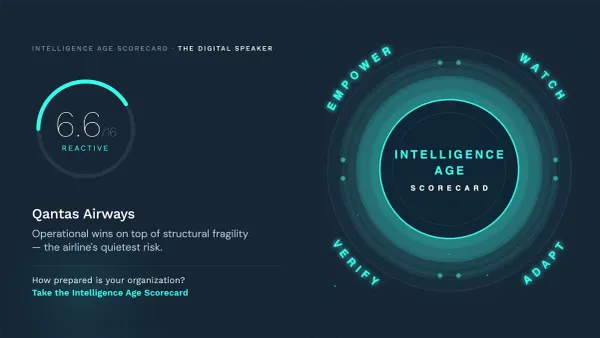
Qantas's AI Readiness: Announced Outcomes, Undisclosed Infrastructure
Qantas is announcing AI outcomes faster than it discloses the governance and workforce infrastructure to substantiate them, a gap visible from outside.
Read More
Qantas is announcing AI outcomes faster than it discloses the governance and workforce infrastructure to substantiate them, a gap visible from outside.
Read More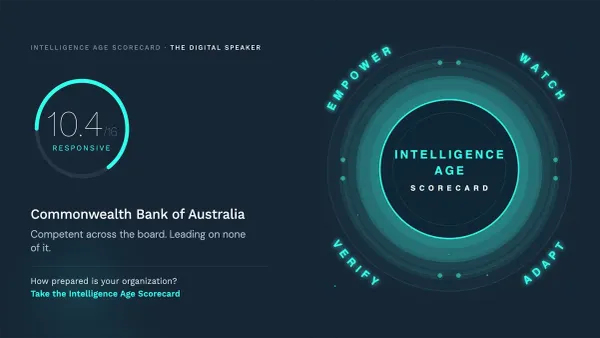
A public-data WAVE assessment of Commonwealth Bank of Australia: where CBA's AI deployment scale outpaces the verification spine regulators now demand.
Read More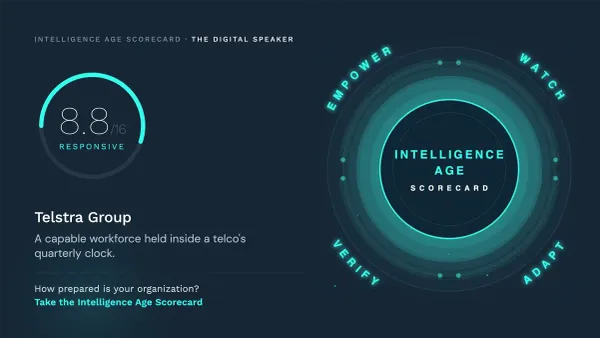
Telstra Group sits at 8.8/16 in WAVE. The public-data gap: a workforce trained for AI, an operating tempo still calibrated to a telco rhythm.
Read More
Deploying AI tools without changing culture is like installing a gym and wondering why nobody gets fitter. The gap between availability and usage is a culture problem, not a technology problem.
Read More
The workshop that changes behavior starts with data. Have every participant complete an assessment before the session. Build the conversation around actual scores. End with 90-day commitments, not vague action items.
Read More
Amazon's researchers found a flaw in Anthropic's most powerful AI. Amazon CEO Andy Jassy phoned the US Treasury Secretary Scott Bessent. The Commerce Department then ordered Anthropic to switch off its two best AI models for everyone outside America. Amazon funds Anthropic and hosts it on its cloud.
Read More
CTO wants to experiment faster. General Counsel wants tighter governance. CHRO wants workforce preparation. They're prioritizing different capabilities without a shared framework. Name the conflict, and it resolves.
Read More
Effective AI policies are co-created with practitioners, written in plain language, focused on practical scenarios, and enforced through workflow integration — not annual sign-offs.
Read More
Most AI risk registers are created once and forgotten. A living register organizes risk across four areas: what you're not scanning for, where pivots will fail, governance gaps, and workforce deficits.
Read More
Your employees are using ChatGPT, Copilot, Claude for work — entering customer data, drafting contracts — without governance. Banning doesn't work. The only path: structured transition from shadow to sanctioned.
Read MoreSomething went wrong
Something went wrong. Please, try again later