Synthetic Minds | From Chatbots to Robots: AI Gets Physical
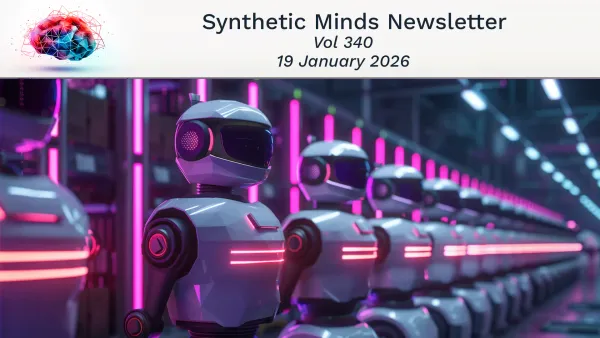
Forget chat-only AI. In 2026, physical AI — robots that sense, reason, and act — enters factories, logistics and real workflows, redefining work and automation.
Read MoreForget chat-only AI. In 2026, physical AI — robots that sense, reason, and act — enters factories, logistics and real workflows, redefining work and automation.
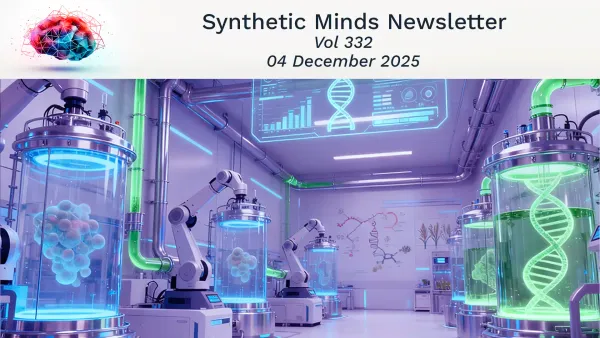
Read MoreTwo breakthroughs reveal the same truth: biology is becoming computable. With AI now able to design, test and learn from experiments directly, drug discovery shifts from slow trial-and-error to continuous, intelligent iteration. This is a phase change for medicine.
Read MoreAs oil shaped the twentieth century, energy networks will shape the twenty-first. The EV battle won’t be won at chargers, but in the invisible layer where electrons, software, and strategy converge. By the time this is obvious, the advantage will already be locked in.
Read MoreEV charging is no longer about plugs and locations. Battery breakthroughs, megawatt demand, fleets, and autonomy are turning mobility into an energy network problem. The real value is shifting behind the meter, into orchestration, flexibility, and grid intelligence.
Read MoreGeopolitics is being rewritten. Nations are no longer competing primarily on values or markets, but on access to energy, critical resources, and strategic infrastructure. The winners of the next decade will be those who secure the foundations of power before the rest of the world notices.
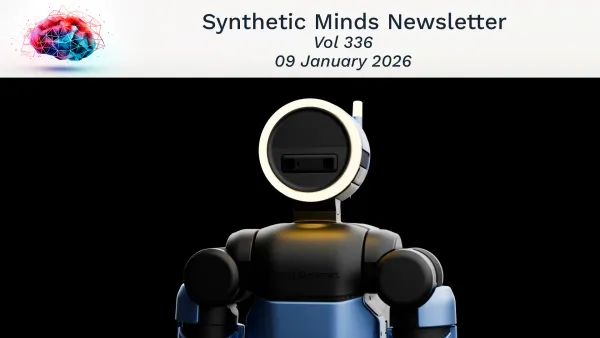
Read MoreBoston Dynamics didn’t just upgrade a robot. Atlas signals the moment physical labor becomes programmable. As humanoid robots connect to shared world models and learn from millions of real-world interactions, factories turn into training grounds and reality itself becomes data.
Read MoreBigger models are no longer better. By 2026, AI advantage comes from Small Language Models: fast, local, and sovereign. Intelligence shrinks, spreads to the edge, and becomes embedded in devices, factories, hospitals, and vehicles. The era of one giant brain is over.
Read MoreChina’s fusion of AI, chips, and manufacturing is no longer catch-up, it’s structural advantage. In 2026, cost curves collapse, capability spreads fast, and global power realigns. Here’s what leaders must understand, and how to respond.
Read MoreChina’s fusion of AI, chips, and manufacturing is no longer catch-up, it’s structural advantage. In 2026, cost curves collapse, capability spreads fast, and global power realigns. Here’s what leaders must understand, and how to respond.
Read MoreSynthetic biomanufacturing is becoming China’s next strategic frontier, enabling food and materials made by engineered microbes at a fraction of the land, water, and emissions. While the West hesitates, China is scaling fast, positioning itself to dominate the biology-based economy of the future.
Read More