Smart Glasses: A Real-Life Black Mirror Episode?
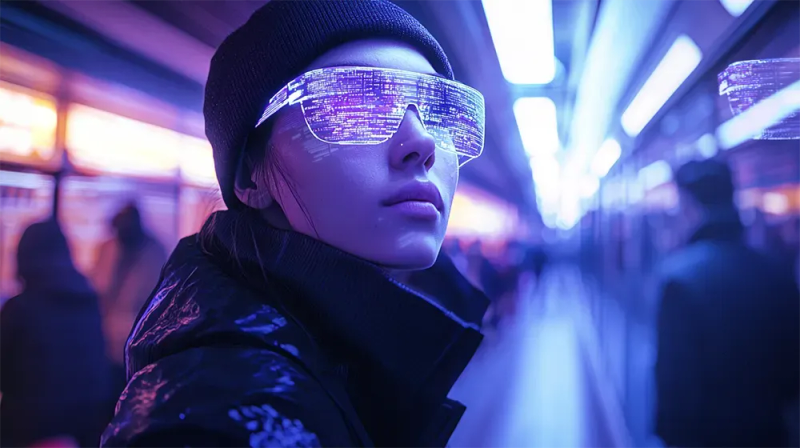
Smart Glasses: A Real-Life Black Mirror Episode?
What if a pair of glasses could expose your name, address, and phone number with just a glance? Welcome to the future of privacy invasion—straight out of Black Mirror.
Two Harvard students, AnhPhu Nguyen and Caine Ardayfio, recently developed “I-XRAY,” a tool that uses Meta’s Ray-Ban smart glasses in combination with facial recognition technology to dox people in real-time. By pairing the glasses with PimEyes, a reverse face search engine, and public databases like FastPeopleSearch, I-XRAY can instantly pull up personal details, including home addresses and family information. They provided detailed instructionson in how they developed the system.
Are we ready for a world where our data is exposed at a glance? @CaineArdayfio and I offer an answer to protect yourself here:https://t.co/LhxModhDpk pic.twitter.com/Oo35TxBNtD
— AnhPhu Nguyen (@AnhPhuNguyen1) September 30, 2024
It’s unsettlingly reminiscent of the Black Mirror episode “Nosedive,” where everyone’s social status is publicly rated through an app, creating a world where privacy is nonexistent and personal data is weaponized.
While the students claim their goal is to raise awareness about privacy concerns, the technology itself highlights the growing risks of our increasingly interconnected and exposed digital lives. The ability to identify strangers instantly takes the familiar "doxxing" phenomenon to a whole new level. In a world where smart glasses blend seamlessly into everyday fashion, people may be unaware that they’re being recorded, let alone having their personal information scraped and analyzed.
The Black Mirror comparison is not far-fetched. In "Nosedive," the protagonist lives in a world where personal interactions are constantly rated, reducing everyone’s identity to a score. Similarly, with I-XRAY, strangers can know intimate details about you in seconds, without consent. The power of this tech doesn’t just lie in its novelty but in its potential for misuse. The implications are far-reaching: stalkers, identity thieves, and anyone with malicious intent could exploit these tools, making the simple act of walking down the street a risky venture.
Meta’s Ray-Ban glasses do include a privacy light designed to signal when they’re recording, but as the article notes, the light is barely noticeable in bright environments, and many people don’t realize they’re being filmed. The potential for abuse is enormous, especially when combined with widely available facial recognition technology and AI tools like large language models (LLMs) that can automate data extraction.
The rise of such technology should prompt serious discussions about the limits of surveillance and the right to privacy. Are we willing to sacrifice anonymity for convenience, or are we entering a world where privacy is a privilege of the past?
Read the full article on 404 Media.
----
Frequently asked questions
What is I-XRAY and how does it work?
I-XRAY is a tool developed by two Harvard students, AnhPhu Nguyen and Caine Ardayfio, that pairs Meta's Ray-Ban smart glasses with facial recognition technology. It uses PimEyes, a reverse face search engine, alongside public databases like FastPeopleSearch to instantly pull up personal details about a stranger, including their name, home address, and family information, just from a glance.},{
Link to this questionWhy did students create this doxxing tool?
The students who built I-XRAY claim their goal was to raise awareness about privacy concerns rather than to enable malicious use. They published detailed instructions on how they developed the system so that people could understand how easily smart glasses combined with facial recognition and public data could be used to identify and expose strangers in real-time.
Link to this questionHow does this compare to the Black Mirror episode Nosedive?
In Nosedive, personal interactions are constantly rated through an app, reducing everyone's identity to a public score with no privacy. I-XRAY creates a similarly unsettling reality where strangers can learn intimate personal details about you within seconds and without your consent, turning everyday encounters into moments of exposed, weaponized personal data.
Link to this questionDoes Meta's smart glasses have any privacy safeguards?
Meta's Ray-Ban glasses include a privacy light meant to indicate when they are recording. However, this light is barely noticeable in bright environments, meaning many people do not realize they are being filmed. This weak safeguard, combined with accessible facial recognition and AI tools that automate data extraction, creates significant potential for abuse.
Link to this question💡 We're entering a world where intelligence is synthetic, reality is augmented, and the rules are being rewritten in front of our eyes.
Staying up-to-date in a fast-changing world is vital. That is why I have launched Futurwise; a personalized AI platform that transforms information chaos into strategic clarity. With one click, users can bookmark and summarize any article, report, or video in seconds, tailored to their tone, interests, and language. Visit Futurwise.com to get started for free!


Dr Mark van Rijmenam
Dr. Mark van Rijmenam, widely known as The Digital Speaker, isn’t just a #1-ranked global futurist; he’s an Architect of Tomorrow who fuses visionary ideas with real-world ROI. As a global keynote speaker, Global Speaking Fellow, recognized Global Guru Futurist, and 5-time author, he ignites Fortune 500 leaders and governments worldwide to harness emerging tech for tangible growth.
Recognized by Salesforce as one of 16 must-know AI influencers , Dr. Mark brings a balanced, optimistic-dystopian edge to his insights—pushing boundaries without losing sight of ethical innovation. From pioneering the use of a digital twin to spearheading his next-gen media platform Futurwise, he doesn’t just talk about AI and the future—he lives it, inspiring audiences to take bold action. You can reach his digital twin via WhatsApp at: +1 (830) 463-6967.