Synthetic Minds | AI Didn't Design a Cancer Vaccine, It Broke Pharma's Gate
The Synthetic Minds newsletter offers short daily insights to get you thinking. If you enjoy it, please forward. If you need more insights, subscribe to Futurwise and get 25% off for the first three months!
I turned my book into an interactive masterclass, built entirely with AI. Read how I did it here, or start using it for free.
Today’s topic: AI & Automation
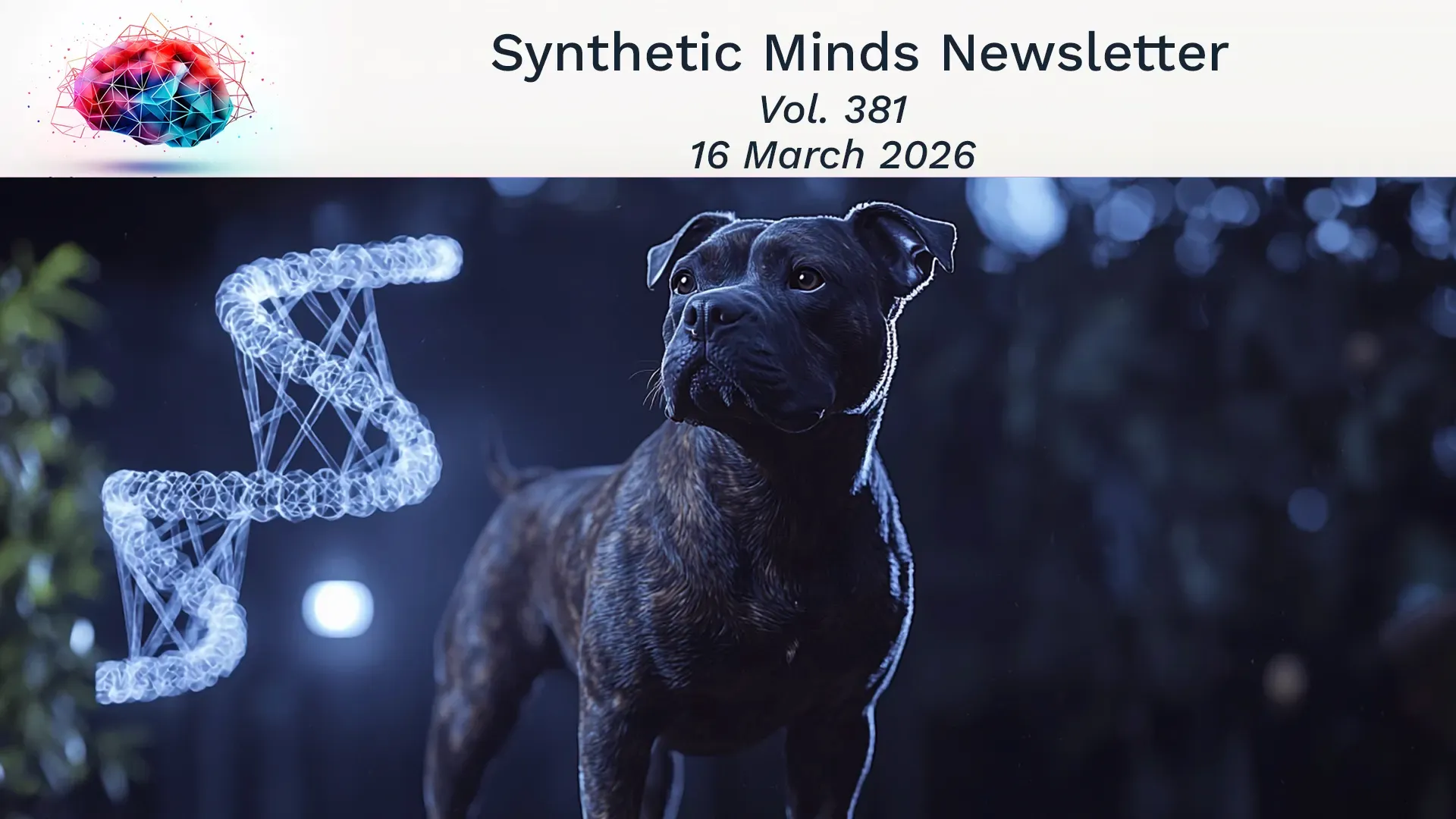
Your Dog Can Get a Custom Cancer Vaccine. You Can't.`
A man with no biology degree used AI to build a cancer vaccine pipeline for his dog. It worked. The real story is why you can't do the same.
A Sydney tech entrepreneur with no biomedical training used ChatGPT to navigate cancer genomics, AlphaFold to model mutated proteins, and custom algorithms to select vaccine targets, and then handed his analysis to UNSW's RNA Institute, which manufactured a bespoke mRNA vaccine.
His dog Rosie's primary tumor has roughly halved in size. AI designed the blueprint. Scientists turned it into medicine. Both halves matter.
That's the headline story. Here is the signal.
The convergence of commercially available AI tools is democratising access to pipelines gated behind years of specialist training.
ChatGPT navigated literature a PhD would spend months surveying. AlphaFold predicted protein structures that once required dedicated labs. Even in biology, the expertise barrier is compressing.
But the noise matters. The vaccine was designed and manufactured by academic experts at UNSW.
That is not a flaw, it is the point. When AI hands non-specialists tools this powerful, you want credentialed scientists between the algorithm and the patient.
If this pipeline scales, pharma's gatekeeping model faces pressure it was never built to absorb. FDA approval assumes mass-produced treatments. Personalised medicine at AI speed breaks that assumption. We will see more cases like this, each one widening the crack.
Big pharma's moat was never the science. It was the complexity of the science.
AI is draining that moat, not by replacing experts, but by letting everyone else into the room where they work.

'Synthetic Minds' continues to reflect the synthetic forces reshaping our world. Quick, curated insights to feed your quest for a better understanding of our evolving synthetic future, powered by Futurwise:
1. While Washington debates deepfakes and Silicon Valley obsesses over LLMs that write poetry, the rest of the world has shifted to the AI that really matters: physical AI. (Fortune)
2. As AI chatbots become increasingly prevalent, concerns are rising about their potential to introduce or reinforce paranoid or delusional beliefs in vulnerable users, leading to potential violence. (TechCrunch)
3. The U.S. labor market's exposure to AI has been analyzed by OpenAI cofounder Andrej Karpathy, who used AI to gauge which professions are most vulnerable to automation, and it is not looking good. (Fortune)
4. Meta is planning to lay off up to 20% of its global staff to offset costly investments in AI infrastructure and automate business processes with AI-powered workers. The Great Displacement has begun. (Silicon Angle)
5. AI social platforms like Moltbook are potential accelerators of existential risk and should be regulated as critical infrastructure as they can lead to the loss of human control and agency. (The Bulletin)

If you are interested in more insights, grab my latest, award-winning, book Now What? How to Ride the Tsunami of Change and learn how to embrace a mindset that can deal with exponential change.
If this newsletter was forwarded to you, you can sign up here.
Thank you.
Mark