Synthetic Minds | The Brain’s Save Button
The Synthetic Minds newsletter is evolving. Short daily insights to get you thinking. If you enjoy it, please forward. If you need more insights, subscribe to Futurwise and get 25% off for the first three months!
The Brain’s Save Button Forces a Healthcare Pivot
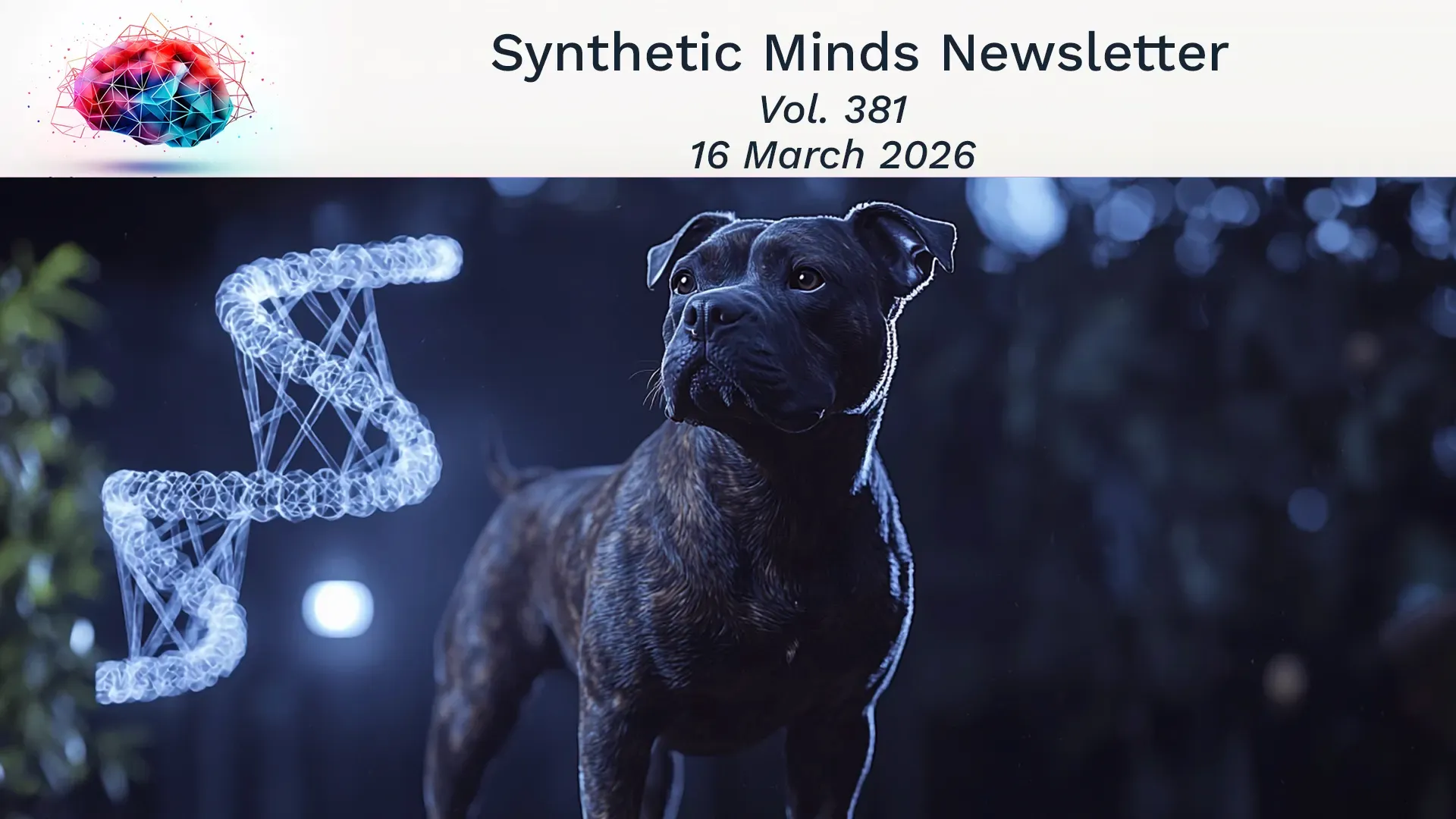
For 30 years, we’ve treated amyloids like garbage and built a billion-dollar “cleanup” industry around them. Then the researchers found a chaperone protein they named Funes that controls when a memory protein assembles into a functional amyloid, turning long-term memory formation on or off in living models. That’s not plaque; that’s biology using a precision tool.
This is where AI collides with biology in a way boards and insurers can’t ignore: the competitive edge shifts from destructive neuro-medicine (clear everything) to constructive chaperone therapy (guide assembly, preserve function).
AI can increasingly predict molecular interactions and accelerate engineered biology, making “programming protein states” a plausible R&D direction rather than sci-fi.
Insurance is the silent kingmaker here. If you keep paying for late-stage rescue, you’ll keep getting late-stage rescue outcomes.
However, if you underwrite prevention-first “biological asset management,” you pull the whole system toward preserving what’s healthy, using the body’s own mechanisms to prevent decline. And along the way, you will save society trillions of dollars.
So who will fund the switch from clearing brains to stabilizing minds?

'Synthetic Minds' continues to reflect the synthetic forces reshaping our world. Quick, curated insights to feed your quest for a better understanding of our evolving synthetic future, powered by Futurwise:
1. Microsoft has introduced Maia 200, a breakthrough AI inference accelerator designed to improve the economics of AI token generation. (Microsoft)
2. The Technology Innovation Institute is advocating for a shift in focus towards building trusted systems in deep tech, rather than just individual breakthroughs. System-level thinking is the key to trust in deep tech. (Quantum Zeitgeist)
3. Researchers designed a virus, named Evo-Φ2147, entirely by AI and assembled it from scratch in a laboratory, marking a significant milestone in synthetic life. This achievement raises profound questions about the intersection of biotechnology, governance, and human restraint. (The Blogging Hounds)
4. Researchers have developed a new method to identify and monitor small mammals by analyzing their footprints with AI, achieving accuracy rates of up to 96% in distinguishing between two nearly indistinguishable species of sengi. (ScienceDaily)
5. Blockchain technology is set to face a maturity test in 2026, where its real-world viability will be assessed, although blockchain replacing existing systems is still some time away. (PYMNTS)

If you are interested in more insights, grab my latest, award-winning, book Now What? How to Ride the Tsunami of Change and learn how to embrace a mindset that can deal with exponential change, or download my news 2026 tech trends report:
If this newsletter was forwarded to you, you can sign up here.
Thank you.
Mark