Synthetic Minds | Capital Chose Renewables, Politics Is Playing Catch-Up
The Synthetic Minds newsletter offers short daily insights to get you thinking. If you enjoy it, please forward. If you need more insights, subscribe to Futurwise and get 25% off for the first three months!
I turned my book into an interactive masterclass, built entirely with AI. Read how I did it here, or start using it for free.
Today’s topic: Climate & Energy
Capital Chose Renewables, Politics Is Playing Catch-Up
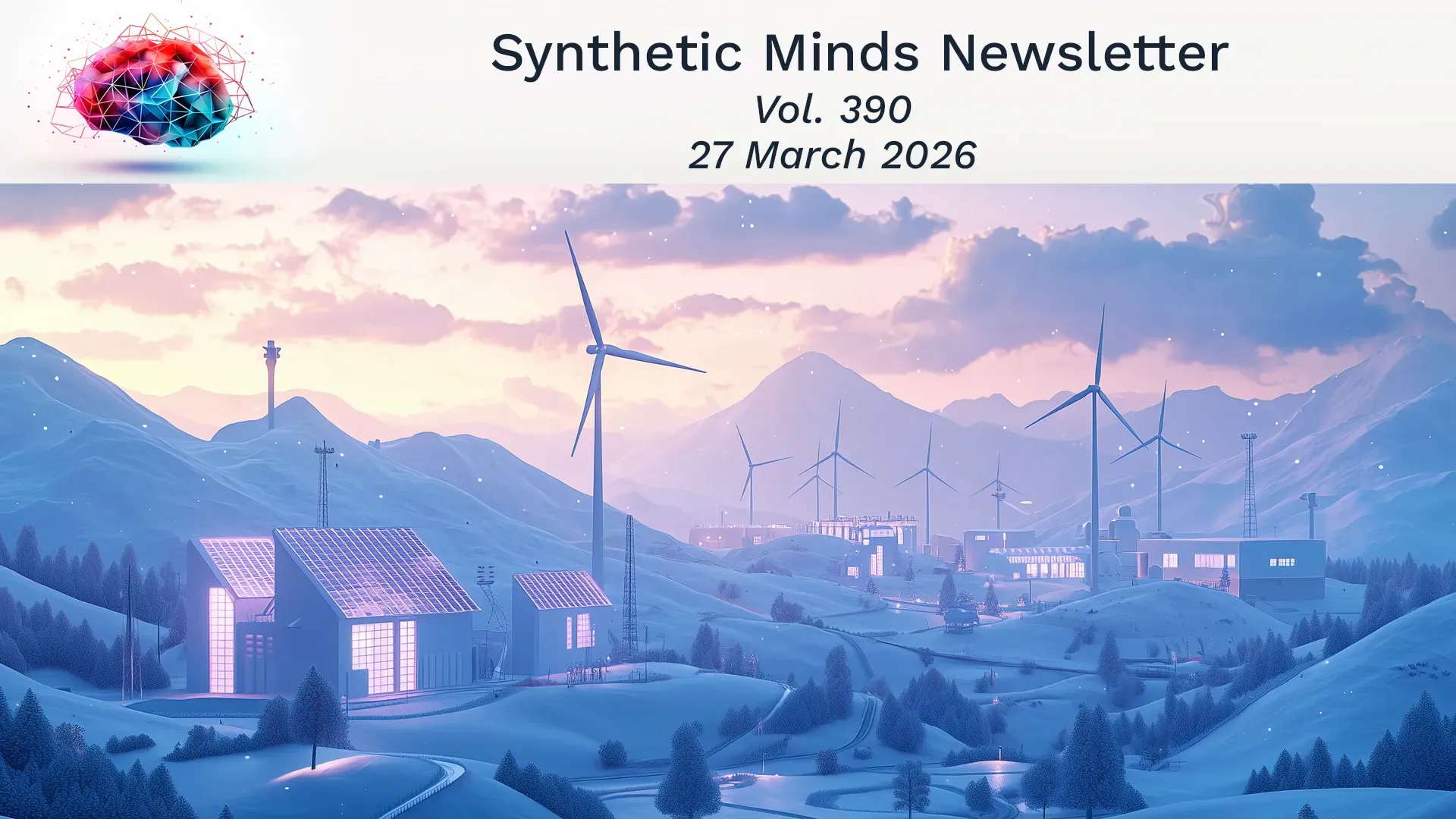
The best argument for renewable energy was never climate. It was economics and resilience, and this week, the data proved both.
While the Trump administration doubles down on fossil fuels, capital markets are doing the opposite.
The US EIA projects a record 86 gigawatts of new generating capacity in 2026.
- Solar: 51%.
- Battery storage: 28%.
- Wind: 14%.
Fossil fuels? Net negative, i.e. more retired than built. Capital does not care about ideology. It follows returns.
Globally, the world installed 814 GW of new solar and wind in 2025, 17% more than the year before, pushing total capacity past 4 terawatts. In the US alone, renewables now generate 17% of all electricity, with solar growing 34% year-over-year.
Now consider the context. The IEA reports over 40 energy assets across nine Middle Eastern countries severely damaged. It is the biggest oil supply disruption in history. If your energy strategy still depends on stable fossil fuel supply chains, you are planning for a world that no longer exists.
Meanwhile, CATL captured 50.1% of China's EV battery market in Q1. One company, one country, half the batteries powering the electrification thesis.
The transition is not waiting for political permission. It is following capital, physics, and the cold logic of resilience. The only question left: are you building with the new grid, or betting against it?

'Synthetic Minds' continues to reflect the synthetic forces reshaping our world. Quick, curated insights to feed your quest for a better understanding of our evolving synthetic future, powered by Futurwise:
1. Fusion research has entered a new competitive phase, with China’s 15th Five‑Year Plan spotlighting nuclear fusion alongside AI and quantum technology. (ChinaTalk)
2. Google's Michigan data center is a model for clean energy use in data centers. It can reduce power demand during high usage periods. (Inside Climate News)
3. Space propulsion company Pulsar Fusion, announced a milestone on March 26, 2026, when its Sunbird nuclear fusion rocket achieved its first plasma confinement in an exhaust test system. (Gizmodo)
4. In the evolving energy landscape, small nuclear reactors are emerging as a flexible, efficient complement to renewables, offering a pathway to reduce fossil fuel dependence while addressing safety and scalability concerns. (Popular Mechanics)
5. In a groundbreaking discovery, scientists hav identified a new type of nickel compound with switchable quantum properties, potentially revolutionizing the field of materials science and technology. (AZO Materials)

If you are interested in more insights, grab my latest, award-winning, book Now What? How to Ride the Tsunami of Change and learn how to embrace a mindset that can deal with exponential change.
If this newsletter was forwarded to you, you can sign up here.
Thank you.
Mark