Synthetic Minds | Davos 2026: The Perfect Storm Becomes Policy
The Synthetic Minds newsletter is evolving. Short daily insights to get you thinking. If you enjoy it, please forward. If you need more insights, subscribe to Futurwise and get 25% off for the first three months!
Davos 2026: The Perfect Storm Becomes Policy
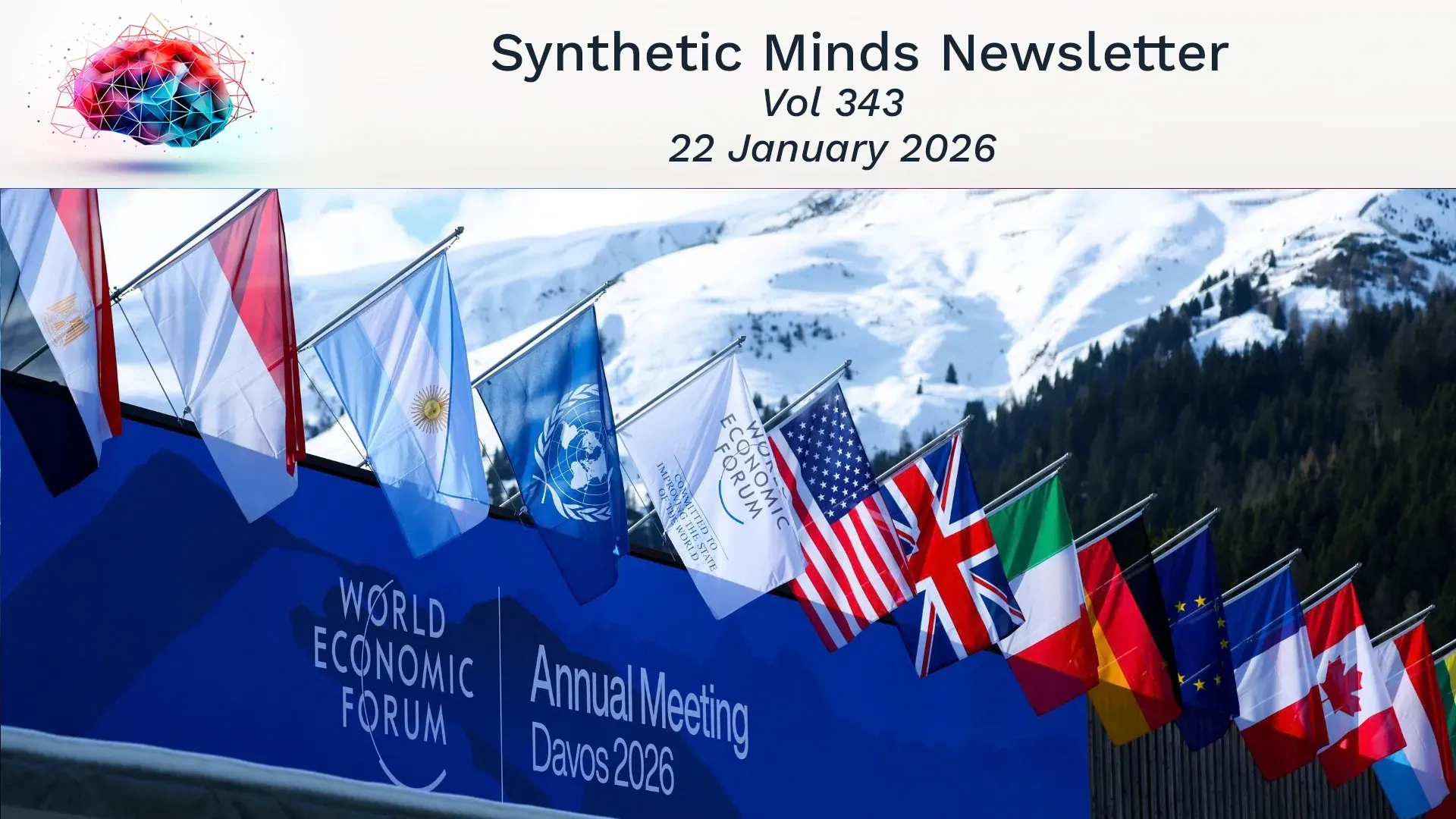
The annual World Economic Forum happening in Davos feels different this year. It feels more like a systems briefing for a world that just snapped into a new shape, than a conference for the elite.
The forum revealed that technology, geopolitics, and economic strategy are now inseparable forces shaping the decade ahead. It is a perfect storm of technological, geopolitical and ecological disruption that will fundamentally reshape our society before the end of this decade.
Start with Europe. Ursula von der Leyen framed competitiveness as legal infrastructure: “EU Inc” (the “28th regime”), a single optional EU-wide company structure designed to make Europe the easiest place to start, fund, and scale a tech company. That’s not paperwork; it’s power. And in a world of geopolitical tensions and immigration challenges in the USA could turn out to become a power move that gives entrepreneurs easy access to a market of 450 million consumers.
Then the AI reality check landed. PwC Chairman Mohamed Kande noted over 50% of companies still see no tangible AI benefits, not because the models fail, but because organisations refuse to rebuild workflows, governance, and skills. Satya Nadella sharpened the risk: AI turns into a speculative bubble if benefits stay concentrated and adoption remains uneven. And Anthropic CEO Dario Amodei went straight for the jugular: Silicon Valley can become “decoupled” from society, with massive unemployment, and he thinks AI could do most end-to-end software engineering work in 6–12 months.
Underneath it all sits the unglamorous constraint: energy and grid capacity, the physical limits that will decide which AI ambitions scale and which die in slide decks.
And then came Mark Carney, Canada's Prime Minister, with something Davos rarely delivers: moral clarity in plain language. He called it a “rupture” in the world order, invoked Václav Havel’s The Power of the Powerless, and stated that middle powers must build strength and new alliances, while backing Greenland and Denmark’s sovereignty.
This is the decade’s defining pattern: technological acceleration, geopolitical stress, and ecological constraints are colliding fast—and society is being reordered without waiting for permission.
Managing AI as a pilot, geopolitics as “someone else’s problem,” and energy as a footnote is exactly how organisations get blindsided. The winners won’t be the ones with the best models. They’ll be the ones who can run a single operating system across policy, talent, infrastructure, and trust—so progress is measurable, resilient, and legitimate.
The real question is not whether your organisation is “doing AI.” It’s whether you’re building the capability to stay coherent when alliances shift, regulations harden, supply chains fracture, and power grids hit limits, all at the same time.
When the next shock hits, energy, security, or market access, what breaks first in your organisation: your technology stack, your operating model, or your legitimacy?

'Synthetic Minds' continues to reflect the synthetic forces reshaping our world. Quick, curated insights to feed your quest for a better understanding of our evolving synthetic future, powered by Futurwise:
1. In a shocking case of deepfake voice fraud, a Swiss businessman was duped into transferring millions, highlighting the need for effective deepfake detection and fraud prevention. (Biometric Update)
2. As the threat of quantum computing looms on the horizon, Coinbase is taking proactive steps to prepare for its impact on blockchain security. (Fortune)
3. As we navigate the complexities of AI development, we must prioritize caution and consider the long-term implications of our actions. AI is coming, but will it be a blessing or a curse for humanity? (LessWrong)
4. The biotech industry has become increasingly dependent on China, which has developed into a critical back office for the global biotech supply chain. (Forbes)
5. As AI continues to infiltrate our lives, its environmental impacts are becoming increasingly concerning, particularly when it comes to water scarcity and pollution. (Aljazeera)
If you are interested in more insights, grab my latest, award-winning, book Now What? How to Ride the Tsunami of Change and learn how to embrace a mindset that can deal with exponential change, or download my news 2026 tech trends report:
If this newsletter was forwarded to you, you can sign up here.
Thank you.
Mark