Synthetic Minds | Finance Stopped Being Understandable. Energy Is Next.
Synthetic Minds | Finance Stopped Being Understandable. Energy Is Next.
The Synthetic Minds newsletter offers short daily insights to get you thinking. If you enjoy it, please forward. All signals are powered by Futurwise. If you need more insights, subscribe to Futurwise and get 25% off for the first three months!
I built the Intelligence Age Scorecard! It will help you understand how ready your organization is for the Intelligence Age.
Today’s topic: Energy
Energy Systems Are Outgrowing the People Running Them
A state-owned utility mispriced a national electricity market for eight months. One defect in its bidding software, roughly AU$9.5 million added to wholesale costs, and nobody read the code closely enough to catch it.
Set that beside three unrelated institutional actions and something uncomfortable becomes visible. The energy system has crossed the point where the people accountable for it can no longer explain how it works.
Western Australia's market regulator has fined the state utility Synergy AU$1.2 million over that error, and ordered the fix opened to independent audit.
North America's grid reliability body has issued its most urgent class of instruction because AI data centers swing a thousand megawatts within seconds, and most developers cannot supply a load profile at all.
Washington has reclassified grid inverters, transformers and batteries as remote-access risks, on the stated grounds that their makers can operate them from a distance.
And the forecast renewable operators dispatch against has moved to a model trained on raw satellite pixels and developed by Google, shipped inside a search engine, carrying a disclaimer that it is not the official forecast.
That's the infrastructure story. Here is the signal.
Software has always been important in running complex systems. What has changed is that the more complex our systems become, the more we have to rely on software to get it right.
That means handing over decisions to the machines that most likely should remain with humans, or at least with a human in the loop.
Finance went first. It became so complex that only a few people in the world understand it, and maybe soon nobody will understand it. Energy is walking the same road with better press.
The dependency runs deeper than it looks. A utility owns the inverter bolted to its substation while the manufacturer abroad keeps the ability to reach in and operate it. An operator dispatches turbines it paid for against a forecast owned by a search company that disclaims responsibility for it.
In the past a CEO would understand how the company would work. That is no longer reliably true, and a board approving what it cannot evaluate is not exercising judgment.
Both of these are true, and they pull against each other. Keep a human in the loop. Then accept that a human in a loop will struggle to understand the system is the world we live in today, not a safeguard.
The scarce asset in the energy system has moved again, from the wire to the logic running on it.
So the question your board should be arguing is not whether your energy strategy is sound. It is whether anyone in the room can still explain how it reaches a decision.
We are building systems that affect people who were never involved in the decision. We must build the capability to read them, and keep the choices that matter where a human can still defend them.
The Intelligence Age Scorecard
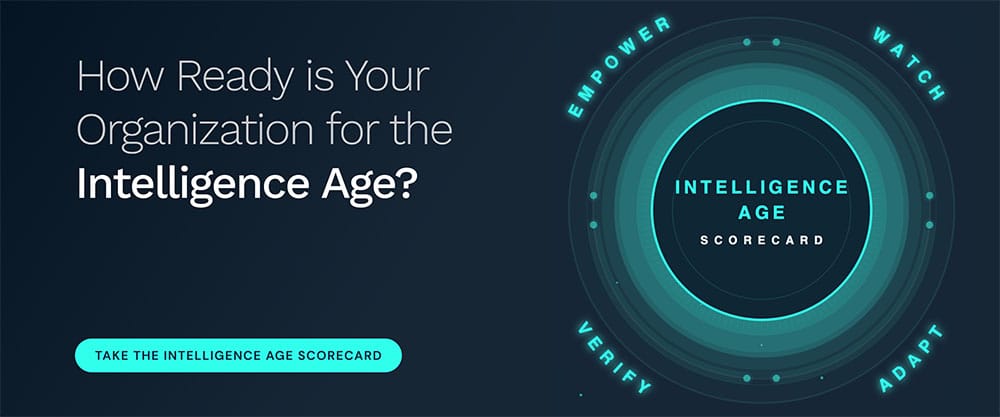
A bidding defect priced a national electricity market wrongly for eight months, and the institutions responding to it have all landed on the same problem: the systems have outgrown the people accountable for them. Under WAVE (Watch, Adapt, Verify, Empower), this is a Verify moment, because the assumptions your energy strategy rests on are written in code nobody in your leadership team has read.
Benchmark your readiness for the next two quarters, and the next five years, with the Intelligence Age Scorecard.
If this newsletter was forwarded to you, you can sign up here.
Thank you.
Mark
Frequently asked questions
What caused the AU$9.5 million electricity market pricing error?
A state-owned utility's bidding software contained a defect that mispriced a national electricity market for eight months, adding roughly AU$9.5 million to wholesale costs. Nobody read the code closely enough to catch the mistake before it caused significant financial damage, prompting regulatory intervention afterward.
Link to this questionWhy did Western Australia's regulator fine Synergy?
Western Australia's market regulator fined the state utility Synergy AU$1.2 million over the software defect that mispriced the electricity market for eight months. The regulator also ordered that the fix be opened to independent audit, reflecting concern that the underlying problem needed outside verification rather than internal assurance alone.
Link to this questionWhy is AI data center demand a grid reliability concern?
North America's grid reliability body issued its most urgent class of instruction because AI data centers can swing a thousand megawatts within seconds, creating sudden demand shifts. Most developers of these data centers cannot even supply a load profile, making it difficult for grid operators to plan for or manage these rapid fluctuations.
Link to this questionWhy did Washington reclassify grid inverters and transformers?
Washington reclassified grid inverters, transformers and batteries as remote-access risks because their manufacturers, often based abroad, retain the ability to operate them remotely. This means a utility may own the physical equipment bolted to its substation while a foreign company keeps the capability to reach in and control it.
Link to this question
Dr. Mark van Rijmenam
Dr. Mark van Rijmenam is The Digital Speaker, a world-leading futurist and global AI keynote speaker who helps leaders decide what AI, and the technologies that follow it, mean for their business. He speaks to leadership teams at their retreats and to conference audiences worldwide, and his WAVE framework gives them a way of deciding that they keep using long after he has left the room. His Intelligence Age Scorecard measures how ready an organization is across the four WAVE pillars.
He holds a PhD from the University of Technology Sydney, is a Certified Speaking Professional and Global Speaking Fellow, and ranks among the world’s top futurists on the Global Gurus list (#1 in 2025, #3 in 2026). Salesforce named him one of its 16 leading AI voices. He has written six books, most recently Now What? How to Ride the Tsunami of Change, writes the Synthetic Minds newsletter on Substack, and founded Futurwise. Talk to his digital twin on WhatsApp: +1 (830) 463-6967.