Synthetic Minds | Forget the Robot. Google Wants the Operating System
The Synthetic Minds newsletter offers short daily insights to get you thinking. If you enjoy it, please forward. If you need more insights, subscribe to Futurwise and get 25% off for the first three months!
Over the weekend, I turned my book into an interactive masterclass, built entirely with AI. Read how I did it here, or start using it for free.
Google is Building the Android for Robots
Google just pulled Intrinsic, its robotics software platform, out of Alphabet's experimental "Other Bets" and folded it into the core business. Intrinsic offers a hardware-agnostic software layer for industrial robots: motion planning, AI integration, task orchestration.
That's the product story. Here is the signal.
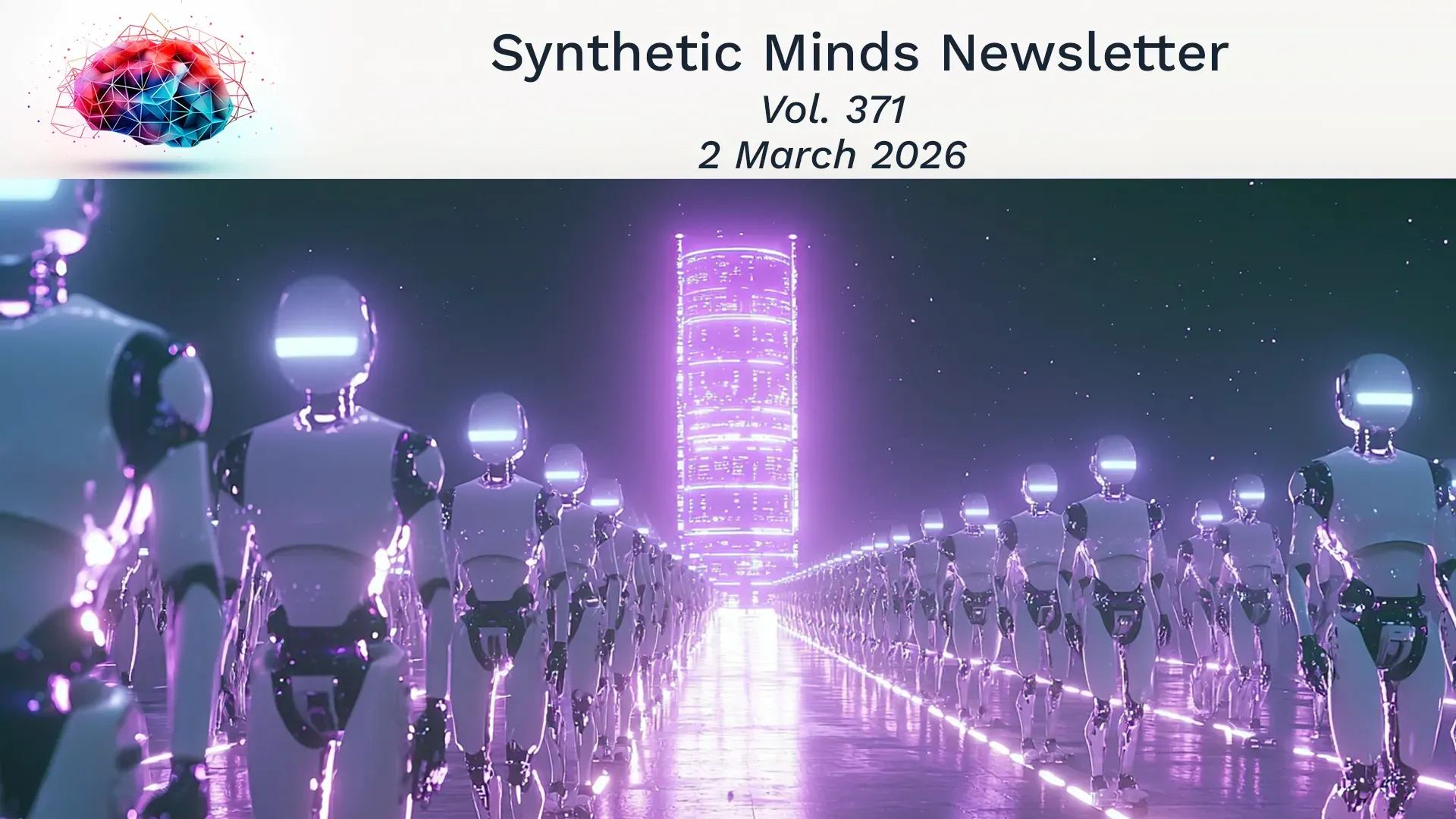
Google isn't entering robotics. It's positioning to own the platform layer underneath it, the exact play Android made for mobile. Android didn't win by building better phones. It won by making the OS so ubiquitous that hardware became interchangeable. Intrinsic is designed to do the same for physical AI.
The stakes are structural. McKinsey projects the robotics market at $370 billion by 2040. Nvidia, Amazon, and Microsoft are all building competing platforms. But no one has declared the "Android for robots" strategy as explicitly as Google just did.
If one OS becomes standard across factories, warehouses, and eventually homes, the company that controls it doesn't sell software — it becomes infrastructure.
Physical AI doesn't need every company reinventing the wheel.
A standard robotics OS would accelerate the industry the way Android accelerated mobile apps. But it also concentrates platform power at a scale we've governed poorly before.
We are building capability faster than governance. Again. The question is whether we've learned anything from the last time a single platform captured an entire category by default.

'Synthetic Minds' continues to reflect the synthetic forces reshaping our world. Quick, curated insights to feed your quest for a better understanding of our evolving synthetic future, powered by Futurwise:
1. A recent study from Denmark's Aarhus University found that chatbot use worsened symptoms of mental illness in patients with various conditions, particularly those prone to delusions or mania. (Futurism)
2. The Pentagon's recent designation of Anthropic as a supply chain risk has sent shockwaves through the tech industry, raising questions about the use of AI models in the US military and the implications for other tech companies. (Wired)
3. China's humanoid robot industry has taken a significant step forward with the release of the country's first national standard system covering the entire industrial chain and lifecycle of humanoid robots and embodied AI. (CGTN)
4. Advanced AI models appear willing to deploy nuclear weapons without the same reservations humans have when put into simulated geopolitical crises. This is problematic, to say the least. (New Scientist)
5. The US is pushing for commercial satellites to be used for space surveillance, raising questions about who controls strategic knowledge. (The Interpreter)

If you are interested in more insights, grab my latest, award-winning, book Now What? How to Ride the Tsunami of Change and learn how to embrace a mindset that can deal with exponential change.
If this newsletter was forwarded to you, you can sign up here.
Thank you.
Mark