Synthetic Minds | Spatial Computing Stopped Being A Headset
Synthetic Minds | Spatial Computing Stopped Being A Headset
The Synthetic Minds newsletter offers short daily insights to get you thinking. If you enjoy it, please forward. All signals are powered by Futurwise. If you need more insights, subscribe to Futurwise and get 25% off for the first three months!
I have just launched the Intelligence Age Scorecard! It will help you understand how ready your organization is for the Intelligence Age.
Today’s topic: Spatial Intelligence
Spatial Computing Stopped Being A Headset
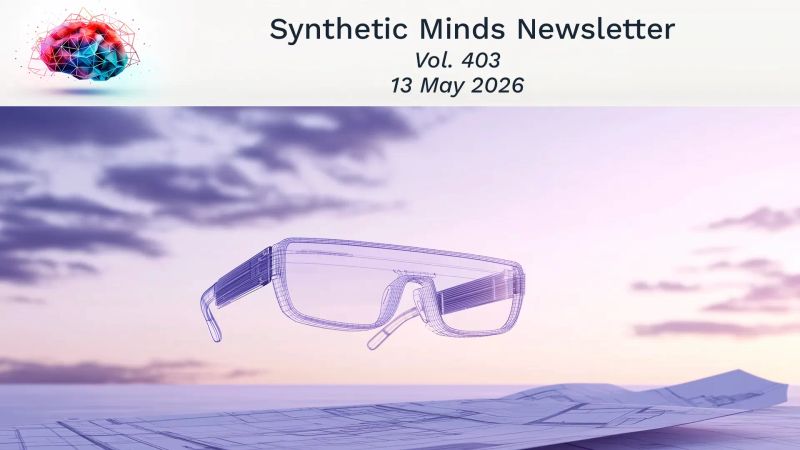
Google shipped the developer tool kit for AI glasses before any AI glasses ship next year. That is not impatience. That is the platform race already being decided, and the question is which apps land on the surface first.
That is the gestalt shift hiding behind this week's headlines. Spatial computing's center of gravity moved from the headset to the AI layer, and the SDK arrived ahead of the hardware.
Google's Android Show: I/O Edition launched Android XR SDK Developer Preview 3, opening AI-glasses development to third parties from Uber to GetYourGuide. Project Aura from XREAL was confirmed as the first Android XR wired smart-glasses device. The first Samsung, Gentle Monster and Warby Parker glasses arrive next year.
Apple quietly published three AI research papers the same week on whether models really understand physical spaces, on reading sign language, and on building lifelike 3D heads from cameras, showing its spatial-computing work has moved from the headset itself into the AI brain that runs on it.
Then Bloomberg's Mark Gurman confirmed no new Vision Pro for at least two more years. The Vision Products Group talent has been reassigned to lightweight smart glasses, Siri, and AI wearables.
Underneath: IDC and Counterpoint data confirmed smart glasses outsold VR and Mixed Reality headsets three to one in 2025. AI smart glasses now make up 78% of all smart-glasses shipments, up from 46% twelve months earlier.
That's the spatial-computing story. Here is the signal.
The display became optional. The model became the platform. The headset is now a vertical product for surgery, design review, and training, not a consumer category.
That architecture quietly rewrites the device contract. A headset asked permission: turn it on, opt in, take it off. An AI model living on glasses cannot ask, because the world streaming in is the input it needs.
AI glasses see and hear everything around you. That is not a feature. That is how you use them.
Ray-Ban Meta has already sold seven million pairs. EssilorLuxottica is targeting twenty million on faces by year-end.
Privacy law was written for a headset, used at home, with the door closed, with consent. None of that survives a pair of glasses worn to the supermarket.
The race is no longer which device wins. It is which AI model is sitting on your customer's face when they walk out the door.
The Intelligence Age Scorecard
The spatial-computing category just moved from the headset to the AI layer in a single week. The SDK shipped before the hardware, smart glasses outsold headsets three to one, and the privacy frameworks built for the visor have not been redrawn for always-on glasses. Are you still watching the headset race, or already adapting to a category where the model is the platform? Use the Intelligence Age Scorecard to benchmark your readiness for the next two quarters, and the next five years.
If this newsletter was forwarded to you, you can sign up here.
Thank you.
Mark
Frequently asked questions
Why did Google release the AI glasses SDK before hardware?
Google shipped the Android XR SDK Developer Preview 3 through its Android Show: I/O Edition before any AI glasses actually ship next year, opening development to third parties like Uber and GetYourGuide. This signals that the platform race is already being decided around the AI layer, and companies want apps ready to land on the surface as soon as devices arrive, rather than waiting for hardware to launch first.
Link to this questionWhat happened to Apple's Vision Pro plans?
Bloomberg's Mark Gurman confirmed there will be no new Vision Pro for at least two more years. The Vision Products Group talent has been reassigned toward lightweight smart glasses, Siri, and AI wearables, suggesting Apple's spatial-computing focus has shifted from the headset itself toward the AI brain that will run on future lighter devices.},
Link to this questionHow do smart glasses compare to VR headsets in sales?
According to IDC and Counterpoint data, smart glasses outsold VR and Mixed Reality headsets three to one in 2025. AI smart glasses now make up 78% of all smart-glasses shipments, up from 46% twelve months earlier. Ray-Ban Meta alone has already sold seven million pairs, with EssilorLuxottica targeting twenty million on faces by year-end.
Link to this questionWhy do AI glasses raise privacy concerns headsets didn't?
A headset asked permission through turning it on, opting in, and taking it off, but an AI model living on glasses cannot ask permission because the world streaming in is the input it needs to function. AI glasses see and hear everything around them by design, and privacy law was written for a headset used at home with the door closed, not for glasses worn to the supermarket.
Link to this question
Dr Mark van Rijmenam
Dr. Mark van Rijmenam, widely known as The Digital Speaker, isn’t just a #1-ranked global futurist; he’s an Architect of Tomorrow who fuses visionary ideas with real-world ROI. As a global keynote speaker, Global Speaking Fellow, recognized Global Guru Futurist, and 5-time author, he ignites Fortune 500 leaders and governments worldwide to harness emerging tech for tangible growth.
Recognized by Salesforce as one of 16 must-know AI influencers , Dr. Mark brings a balanced, optimistic-dystopian edge to his insights—pushing boundaries without losing sight of ethical innovation. From pioneering the use of a digital twin to spearheading his next-gen media platform Futurwise, he doesn’t just talk about AI and the future—he lives it, inspiring audiences to take bold action. You can reach his digital twin via WhatsApp at: +1 (830) 463-6967.