Synthetic Minds | We Discover AI, Not Invent It
Synthetic Minds | We Discover AI, Not Invent It
Synthetic minds is evolving. Short bi-weekly insights to get you thinking. If you enjoy it, please forward. If you need more insights, subscribe to Futurwise and get 25% off for the first three months!
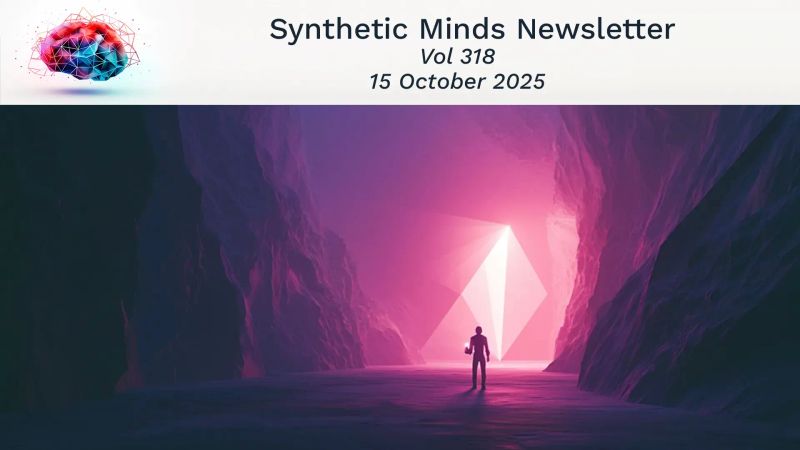
𝗪𝗲 𝗮𝗿𝗲 𝗻𝗼𝘁 𝗶𝗻𝘃𝗲𝗻𝘁𝗶𝗻𝗴 𝗔𝗜, 𝘄𝗲 𝗮𝗿𝗲 𝗱𝗶𝘀𝗰𝗼𝘃𝗲𝗿𝗶𝗻𝗴 𝗶𝘁. And that distinction matters more than most admit.
For 80 years, progress has been uneven. Breakthroughs. Hype. Then long winters where little moved forward. That pattern alone should remind us: we are not in full control. And if control is an illusion, shouldn’t caution be our compass?
The truth is unsettling. Much of AI operates as a black box. We can observe patterns, test boundaries, even peek inside. But the deeper logic, the 𝙬𝙝𝙮 behind decisions, remains hidden. We’re advancing at breakneck speed without understanding the core mechanics of what we’re building.
It seems like humanity is driving a supercar at 200 mph, blindfolded, with no clear idea where the finish line lies. We call it “innovation.” But in reality, it’s a race we don’t fully comprehend, one where the risks may outpace the rewards.
Maybe the real finish line isn’t about being first. Maybe it’s about ensuring that when we arrive, the technology we’ve built uplifts humanity, not just a handful of tech bros.
That requires shifting from competition to collaboration, from secrecy to shared responsibility. Because discovery, unlike invention, is not ours alone to own.
So here’s my question: if AI is discovery rather than invention, how do we build the guardrails to ensure what we find doesn’t destroy what we value most?

'Synthetic Minds' continues to reflect the synthetic forces reshaping our world. Quick, curated insights to feed your quest for a better understanding of our evolving synthetic future, powered by Futurwise:
1. Sydney students fixed the James Webb Space Telescope's blurry images using Aussie software! Unlocking its full potential in detecting Earth-like planets. (Brisbane Times)
2. Don't let AI Slop kill creativity! Support human-made content and join the movement to preserve the integrity of human knowledge. (Kurzgesagt)
3. China's export controls could pop the AI bubble, affecting the global economy. What are the implications? (BIG by Matt Stoller)
4. Bhutan adopts Ethereum for decentralized identity, marking a significant step towards a more secure digital future. (Cryptoslate)
5. Solar 'tornadoes' could wreak havoc on Earth's magnetic field! Learn more about the impact of geomagnetic storms on our planet's infrastructure. (Science Alert)
If you are interested in more insights, grab my latest book Now What? How to Ride the Tsunami of Change and learn how to embrace a mindset that can deal with exponential change.
If this newsletter was forwarded to you, you can sign up here.
Thank you.
Mark
Frequently asked questions
Why does the article say AI is discovered, not invented?
The article argues that progress on AI has been uneven for 80 years, marked by breakthroughs, hype, and long winters where little moved forward. This pattern suggests humanity is not fully in control of the technology, but rather uncovering something that already exists, much like a discovery, rather than deliberately engineering it from scratch as an invention.
Link to this questionWhat does the article mean by AI being a black box?
It means that much of AI operates in ways we cannot fully understand. We can observe patterns, test boundaries, and even peek inside the systems, but the deeper logic, the actual reasoning behind decisions, remains hidden. This means we are advancing rapidly without truly understanding the core mechanics of what we are building.
Link to this questionWhy does the article compare AI progress to driving blindfolded?
The article uses this image to describe humanity racing ahead with AI at extreme speed, calling it innovation, while not actually understanding where the technology is headed or where the finish line lies. It suggests the risks of this uncontrolled race may outpace the rewards, since we lack a clear grasp of the mechanics driving the progress.
Link to this questionWhat kind of guardrails does the article suggest we need for AI?
It calls for shifting from competition to collaboration and from secrecy to shared responsibility, since discovery, unlike invention, is not something to be owned by one party alone. The goal should be ensuring that when the technology matures, it uplifts humanity broadly rather than benefiting only a small group of technology leaders.
Link to this question
Dr Mark van Rijmenam
Dr. Mark van Rijmenam, widely known as The Digital Speaker, isn’t just a #1-ranked global futurist; he’s an Architect of Tomorrow who fuses visionary ideas with real-world ROI. As a global keynote speaker, Global Speaking Fellow, recognized Global Guru Futurist, and 5-time author, he ignites Fortune 500 leaders and governments worldwide to harness emerging tech for tangible growth.
Recognized by Salesforce as one of 16 must-know AI influencers , Dr. Mark brings a balanced, optimistic-dystopian edge to his insights—pushing boundaries without losing sight of ethical innovation. From pioneering the use of a digital twin to spearheading his next-gen media platform Futurwise, he doesn’t just talk about AI and the future—he lives it, inspiring audiences to take bold action. You can reach his digital twin via WhatsApp at: +1 (830) 463-6967.