10 Technology Trends for 2027: The Year of Societal Rewiring
10 Technology Trends for 2027: The Year of Societal Rewiring
Across 10 technology trends and one outlier scenario runs a single question: who is accountable when systems change faster than the institutions that oversee them?
By Dr. Mark van Rijmenam, strategic futurist and author
Every source and forecast test is in the full white paper: [URL: white paper landing page].
Pure water can be cooled below its freezing point and stay liquid, looking calm and giving no warning. Then a single disturbance arrives, a knock or a seed crystal, and ice begins to spread through the container. The system had been loaded past the point where its old state could hold.
I read 2027 the same way, because the load is already there: people who must supervise AI agents, communities contesting data centers and laws being drafted for software-run companies. This year my signals point less at new tools and more at the structures around them.
AI Is Rewiring the Systems Society Runs On
Disruption describes a product, a business model or an industry being displaced. Rewiring is something less visible and more consequential: the connections between people, organizations, markets, institutions and infrastructure get rerouted, so that control, accountability, trust and money start to flow along different paths.
When an organization buys its own servers instead of renting intelligence from a cloud provider, the control of data is rewired. When one manager supervises a portfolio of AI agents instead of a team of people, the organization is rewired. When a state commission drafts legislation for a company whose operator is software, the legal architecture of the economy starts to move, even though a draft is not yet a law.
AI is no longer merely changing what we do. It is changing the systems through which society does things.
Below you will find 10 trends and one outlier, a low-probability scenario I hope never arrives. Each trend gives you a signal that the change is under way, my forecast for the technology trends for 2027, the test that would prove me wrong, what follows and a question to put to your board.
Last year's forecast scored 64.5 out of 100
Every year, I score my own predictions from the year before. I audited the 10 predictions in Ten Technology Trends for 2026 against what happened, checked every claim against primary sources and scored the report 64.5 out of 100, with every source shown so you can check me. I was right about where things were heading far more often than about when they would arrive, and my weakest calls needed a chain of uncertain steps to finish inside a single year.
Two misses taught me the most. The AI-enhanced metaverse was a clear miss: it did not return and earned four out of 10, but its machinery did. Simulation and digital twins, virtual replicas of real places and machines, became strategic, and the trend on how robots learn builds on them.
On jobs I forecast that AI-powered job losses would hit escape velocity: wrong for the economy as a whole, right about the tech-sector fault line. So far the visible effect looks more like slower hiring of junior people than mass redundancy, although how much of that AI causes remains contested.
That record is why this report forecasts specific, checkable events and not a mood. Let's dive into the ten technology trends for 2027.
Check your inbox
The report is on its way to . After that you get one email about the 2027 Webinar Pack and one about the Intelligence Age Scorecard.
The 2027 Ten Technology Trends
These are the 10 trends through which I expect AI and its neighboring technologies to rewire society in 2027, plus one outlier scenario. Each trend comes with a forecast and a test that could prove me wrong. Select a title to jump straight to its section, or keep reading from the top.
- Enterprise Sovereign AI
- Cybersecurity Chaos
- The Reckoning of Middle Management
- Humanoids Hit the Economic Breaking Point
- AI Brain Fry
- Longevity Breakthrough
- AIC Delaware and AI-Native Companies
- Pro-Climate Regulation of Data Centers
- AI and Quantum Convergence
- Virtual Training Grounds, Spatial Intelligence and Physical AI
- The outlier: societal unrest
1. Enterprise Sovereign AI

Enterprises, not nations, will take control of their sensitive AI workloads
A law firm's chief information officer said some client information is too sensitive to put with any cloud vendor. So Latham & Watkins bought Nvidia servers and put them in leased data center space only its staff can access. It is fine-tuning (further training) open-weight models, which anyone can download and run on their own hardware.
By sovereign AI I mean an organization controlling its own computing power, model and data, not a nation building its own leading model. Capability makes that realistic: Epoch AI, an independent research group, puts the average gap between the best open-weight models and the leading closed models since January 2026 at about four months.
Trust is the other force. Two mathematicians who had used OpenAI's Codex tool on unpublished work asked whether it had helped OpenAI solve a closely related problem. OpenAI said no specific user data was accessed but cannot rule out that de-identified (anonymized) data from their usage helped improve its models, which it called unlikely. That does not show enterprise data was used, but the question has moved from whether data is safe to who learns from it.
My forecast: data-sensitive organizations will run their sensitive AI workloads on hardware they control, using open-weight models, and keep the leading cloud models for less sensitive or more demanding work. By the end of 2027, named organizations in at least three data-sensitive sectors, such as law, finance, health or government, will publicly describe production workloads on infrastructure they control.
I am wrong if the open-weight gap widens materially, if cloud providers earn back trust with guarantees that buyers can verify, or if organizations that bought their own AI chips (GPUs) move the workloads back.
Large organizations can afford control, while smaller ones depend on the cloud's promises, so trust becomes a privilege of scale. Which of your workloads are too sensitive to rest on a vendor's promise, and what would it take to control them?
2. Cybersecurity Chaos

AI assisted cyber attacks will cause chaos. At least one attack with credible evidence of AI involvement will disrupt people beyond its victim
Starting overnight on 11 October 2026, attackers reportedly used the management interfaces of refrigeration systems at roughly 700 retail locations in France to change temperature and defrost settings. Food spoiled, and at least 15 fires were reported. France's cyber agency pointed to exposed administration interfaces and weak passwords.
On 16 November the European Central Bank concluded that low-cost AI agents let less sophisticated attackers run operations that once needed specialist expertise. Defenders, it added, are structurally disadvantaged, at least in the near term.
The same day, Google's threat intelligence group reported its first identified case of attackers using software built on AI language models to find and exploit weaknesses with no human directing each step. That is one documented case, from a vendor's own data, but it marks a step from assistance toward autonomy.
I forecast that AI-assisted tooling will appear in a growing share of documented intrusions, and that researchers will document more cases of AI acting with little or no human direction. By the end of 2027, at least one attack on an essential civilian service in Europe or North America will disrupt people beyond its victim, with credible evidence of AI involvement. Food retail, energy, water, health or banking would qualify. These attacks will make 2027 feel chaotic.
I am wrong if the Google case stays isolated, if defenders use AI to fix weaknesses faster than attackers exploit them, if incidents like the French refrigeration attacks stay rare and prove to depend on basic hygiene failures that ordinary discipline would have closed, or if disruption stays confined to the victim.
When skill is cheap, attackers can afford to target the many instead of the few. A small supplier becomes a viable target, and it is often the way into a large customer. If an attack reached you at machine speed, who could stop a payment or pause an agent without waiting for permission?
3. The Reckoning of Middle Management
Management will be redefined before it disappears
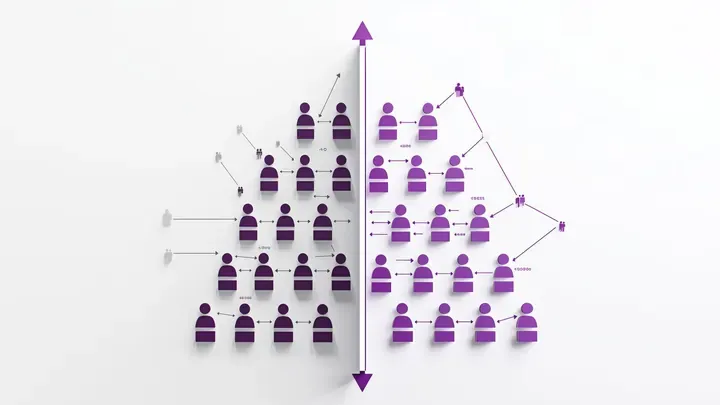
Who manages 150,000 AI agents? Gartner predicts that by 2028 the average global Fortune 500 enterprise will have more than 150,000 of them in use, up from fewer than 15 in 2025. That is a forecast, not a count, but someone has to manage those agents, and increasingly that someone is a manager whose own work is being automated too.
EY surveyed 202 senior AI executives at large US public companies, and 91% said their organization uses AI agents in pilots or deployment. Of those, 49% said their governance has not been updated for the risks agents bring, and 26% said they cannot detect unauthorized agents operating inside the organization.
Stanford researchers estimate that employment of 22- to 25-year-olds in AI-exposed jobs is 19% below what it would be had it kept pace with less-exposed jobs, though they call this an early, descriptive indicator and not a causal estimate. The St. Louis Fed attributes the largest share of the weakening for young workers to weaker overall labor demand, so how much of it is AI remains contested.
My forecast: the pyramid-shaped organization does not end in 2027, but it begins to flatten and the career ladder starts to split, with fewer entry-level rungs. Layers will be removed or not backfilled, and the remaining managers will be responsible for sets of AI agents, covering permissions, quality and exceptions, as well as for people. By the end of 2027, several large employers will publicly and explicitly tie flatter structures or more direct reports per manager to agent deployment. Some will create senior specialist roles whose main job is directing agents.
I am wrong if manager-to-employee ratios stay flat in AI-intensive firms through 2027, or if the weak entry-level market proves cyclical and recovers.
The cost arrives later: organizations that cut layers without redesigning how people learn are spending their future talent to fund this year's margin. If agents take over the work through which junior people learn, where will your next generation of managers learn judgment?
Check your inbox
The report is on its way to . After that you get one email about the 2027 Webinar Pack and one about the Intelligence Age Scorecard.
4. Humanoids Hit the Economic Breaking Point

Cost parity will arrive for a few roles in a few places
How many people does it take to fill one job that never closes? Covering one post around the clock takes 8,760 hours a year, and one employee works about 2,080, so continuous coverage takes 4.2 people before leave. With leave, by my estimate, the honest number is about five people in the US and above five in Europe.
McKinsey's October 2025 benchmark put prototype humanoids at about $150,000 to $500,000 per unit and estimated that mainstream use against human labor needs roughly $20,000 to $50,000. It is more than a year old, so it shows the size of the gap, not a current price list.
A Reuters report from a training center in southern China quoted a staff member saying the robots completed simple tasks at roughly 20% of a human's speed. A slower robot needs backup: at full availability (no downtime), covering one post at that speed takes five robots, and at 50%, two.
My forecast: parity arrives role by role, not all at once. By the end of 2027, at least one named operator will publish, or have independently verified, a fully loaded cost per hour or per completed task for a robot in a defined role in a real workplace. The method will be disclosed, with every cost line counted, and in at least one location the robot, humanoid or not, will cost no more than the human alternative. General parity, mass replacement of workers and humanoids in ordinary homes are not 2027 stories, and adoption stays at pilots and early deployments in structured environments.
I am wrong if a year passes with announcements but no disclosed, independently checked cost comparison, or if the pilots depend on hidden human effort that wipes out the savings.
In my analysis, hardware is priced in a global market while human labor is not, so the comparison tips first where labor is expensive or scarce. What would a current cost model say about your three to five hardest-to-staff roles?
5. AI Brain Fry
The bottleneck moves from the machine to the human
I run many agents at once: coding agents and content agents. Sometimes it fries my brain. I have more than once pasted the answer from one session into another, and the agents produce so much that I skim. That is a small, personal version of a problem many organizations will meet.
The limiting factor for AI at work is shifting from what a machine can produce to what a human can inspect and answer for. By brain fry, a working term and not a medical diagnosis, I mean that burden, not the flood of low-quality AI content online. When an agent finishes a task, a new one appears: read the result, recover the context, approve the next step and stay responsible for errors.
In March 2026 a Boston Consulting Group team defined AI brain fry in Harvard Business Review as mental fatigue from using or overseeing AI beyond a person's cognitive capacity. The authors link it to more errors, decision fatigue and a higher intention to quit.
My forecast: more organizations will find that agents moved work from producing outputs to reviewing and authorizing them, and some will cap the agents or approvals per person. Further studies of agent-supervision fatigue will appear beyond the Harvard Business Review work, and at least one publicly reported incident during 2027 will be traced to approval without meaningful review. Most knowledge workers will not manage dozens of agents in 2027, and those who do will show the strain first.
I am wrong if cheap, standard logging and spot checks cut the review burden, or if studies of heavy agent users find no rise in errors or fatigue.
Accountability becomes a legal and insurance question before it becomes a management one. When an agent's output is approved without real review and goes wrong, who answers: the person who clicked approve, the manager who set the targets or the company behind the agent? Has your organization decided?
6. Longevity Breakthrough
Targeted victories will arrive; a general breakthrough in aging will not
On 22 October Merck and Moderna released detailed results of a Phase 3 trial, the stage that tests a treatment against the current standard in a larger group. The patients had high-risk, surgically removed melanoma. A personalized mRNA cancer therapy given with the immunotherapy Keytruda cut their risk of recurrence or death by 42% in relative terms, against Keytruda alone. Overall survival data are not yet mature and the therapy remains investigational.
That is one result, in one cancer, and it says nothing about slowing aging. I keep two ideas apart: disease-specific progress, which can extend healthy life without touching aging, and intervention in aging itself, a much earlier frontier.
In a small, company-funded Phase 1 to 2 study of an islet cell therapy for type 1 diabetes, 10 of the 12 participants given the full dose were off insulin after a year, though all took drugs that suppress the immune system. A trial of partial cellular reprogramming, which pushes old cells toward a younger state, has treated its first participant, but that is not evidence it works in people.
My forecast: by the end of 2027, I expect at least one new controlled readout for a personalized cancer therapy and at least one larger or longer islet dataset. I do not expect a measurable change in population life expectancy, proof of rejuvenation, a general anti-aging treatment or a cure for cancer or diabetes.
I am wrong if the Phase 3 benefit proves small, fades or fails to translate into longer survival, or if the islet results do not hold in larger groups. A missing readout would count against my timing, not necessarily my direction.
A treatment that works for one group will be described as a cure for everyone, and organizations that set benefits, insurance or pensions on headlines will decide badly. Ask of every claim which condition, how many people, what stage and which endpoint, the main result the trial was designed to measure. Is your planning built on trial evidence or on headlines?
7. AIC Delaware and AI-Native Companies
More drafts and sandboxes, not an AI economy, and no AI personhood in major jurisdictions
A Delaware state commission has drafted legislation for a new type of company, the Artificial Intelligence Company, or AIC, in which an AI agent runs daily operations. As of 30 October it was still a draft, not yet sent to the governor or the legislature. On 26 October the chair of the US House Oversight Committee wrote to Delaware's governor that the proposal "may soon result in new state law." The letter warns that it could be used to protect powerful AI companies and their investors from responsibility for reckless harmful actions.
AI is not about to become a legal person. The draft covers a company started by a human and operated by AI, so the legal person remains the company. An AI starting a company on its own would be a far more radical step. The real contest will be over accountability: who answers when a company run by software causes harm, and who can stop it.
An AIC's owner is not personally liable merely for owning it, but stays liable for fraud and willful violations of law, among other things. The first AICs would run in a 30-month sandbox, a supervised space with special rules. They could pursue any lawful purpose except financial services and could not serve the general public. Argentina has a bill for AI-run companies that would require a human administrator.
My forecast: at least one jurisdiction will have enacted a law or opened a sandbox for AI-managed entities by the end of 2027. At least one more will have published a new concrete proposal during 2027, but no major jurisdiction will grant an AI system legal personhood in its own right.
I am wrong if Delaware's draft is withdrawn or stalls and no other jurisdiction moves.
Counterparties will need to know whether software runs a company before contracting with it. How do your contracts and onboarding find out whether a counterparty is managed by software, who owns it and who can stop it?
Check your inbox
The report is on its way to . After that you get one email about the 2027 Webinar Pack and one about the Intelligence Age Scorecard.
8. Pro-Climate Regulation of Data Centers
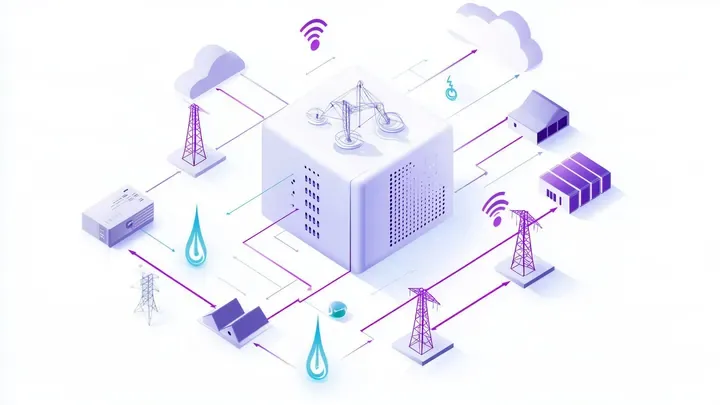
Conditions, not bans: binding rules on energy, water and grid costs in a few jurisdictions
The cloud has a street address, and communities are pushing back. On 6 November more than 100 activists gathered at a Microsoft data center construction site in Amsterdam. Some entered the site and climbed a crane, raising concerns about electricity and water consumption.
The protests were planned across Europe around a demand for a moratorium on large-scale data center developments. The question about AI infrastructure is moving from how fast it can be built to the terms on which communities and governments will allow it.
Governments have started writing those terms down. Australia's consultation paper proposes mandatory national standards for large data centers. They include matching electricity demand with new renewable supply and covering the network costs the centers create. Companies are moving too: on 5 November OpenAI published a community compact promising to pay the full cost of the power and grid infrastructure its future campuses need.
My forecast: Australia will have published a decision on its national standards by the end of 2027. At least two further national or state governments will have adopted binding conditions on energy sourcing, water use or grid-cost recovery. At least one major project will be delayed, relocated or canceled with local opposition or permit conditions publicly cited.
No universal net-positive mandate, a duty to give back more than a data center takes, will appear, and voluntary pledges will outnumber binding rules.
I am wrong if protesters win moratoria instead of conditions, if governments loosen their terms in a race for investment, or if pledges like OpenAI's never become binding. My weakest link is the belief that clear rules calm the backlash, because the demand in the streets is a pause, not a better deal.
Conditions add cost and pull siting toward places with spare grid capacity and water, and those costs will pass through to buyers of AI. Where do your AI workloads physically run, and what happens to your plans if power or water at that site becomes conditional?
9. AI and Quantum Convergence

AI will help run quantum machines, but no verified, commercially useful fault-tolerant computation will run in 2027
AI is becoming a tool inside quantum labs, but 2027 will not bring a commercially useful quantum computer.
In July, Google researchers reported in Nature that an AI system that improves by trial and error cut the error rate of a quantum processor's logical qubits, reliable units built from many fragile physical ones, by a further 20%. The test ran across thousands of repetitions of a short circuit, and steering one continuous computation was shown only in simulation. That gap is the trend: AI is becoming part of the toolkit that keeps quantum computers stable, and the influence runs from AI to quantum, not the reverse.
My forecast: AI will work inside the control loop, the feedback system that keeps a quantum processor tuned, but no machine will be fault-tolerant, meaning it corrects errors faster than they accumulate. By the end of 2027, at least one peer-reviewed paper or independently documented demonstration will show a machine-learning system recalibrating a quantum machine or reading its error checks during a continuous error-corrected computation, not only repeated short tests. No independently verified, commercially useful fault-tolerant computation will have run, and no major vendor will have brought its fault-tolerance date forward from 2029, the date IBM targets for its Starling machine.
I am wrong if progress comes mainly from conventional decoders and better physics, as with IBM's dedicated decoder chip, if AI methods cannot run fast enough in real time, or if quantum arrives sooner than I expect: a verified fault-tolerant demonstration before 2029.
Vendor claims will multiply, and a larger chip count in 2027 is not a machine that can run long computations correctly. When a vendor claims a breakthrough, who on your team checks whether it is demonstrated or planned, on hardware or in simulation?
10. Virtual Training Grounds, Spatial Intelligence and Physical AI
The training layer for robots will mature faster than real-world deployment
The people teaching the machine are, in principle, the people it could one day replace. In India, the start-up Human Archive records gig workers in homes, hotels and restaurants through camera-equipped caps, and the footage trains robots. It pays workers a base rate of one dollar an hour.
Robots will increasingly learn in simulation and from recorded human work before they touch the physical world. Physical AI means AI that acts through robots and machines, and spatial intelligence means understanding objects and movement in three-dimensional space. The catch is the sim-to-real gap, the difference between a simulated and a real environment that makes a skill learned in one fail in the other. A recent review still calls it one of the most pressing challenges in robotics. The evidence is thin: when a Stanford and Caltech robot built a virtual replica of an unfamiliar kitchen, the researchers reported no success rate or number of trials.
That matters for robot economics, because faster robots mean fewer robots needed for the same role.
My forecast: by the end of 2027, at least one robotics developer will publish independently checkable results, with trial counts and success rates, for a skill learned mainly in simulation or on generated data. The task will be contact-rich, meaning it involves sustained physical contact with objects, in an environment the robot never saw in training. At least one government will also publish rules or guidance on capturing worker data for robot training. Simulation alone will not deliver reliable general-purpose robots.
I am wrong if transfer stalls and real-world success rates stay low.
Workers who generate demonstration data are paid by the hour for work that may later be automated. It is unclear what they are told about how their footage is used. Before you record your own people to train a machine, have you settled who owns the footage, how long you keep it and whether they can say no?
Check your inbox
The report is on its way to . After that you get one email about the 2027 Webinar Pack and one about the Intelligence Age Scorecard.
The outlier: societal unrest

A low-probability, high-impact scenario, not a prediction
In July, more than 100 activists marched through San Francisco. In November, about 200 arts-school students in New Haven walked out of an assembly and demanded that administrators and teachers stop using AI. None of these is a movement, but the pressures behind them could converge.
The cascade has five links, each testable. First, a disruption hits many people at once, and second, rumor fills the gap because nobody can quickly settle what happened. Third, layoffs, or the belief in them, add economic grievance; fourth, slow institutions lose legitimacy; and fifth, a state response such as surveillance or censorship deepens the distrust it was meant to contain. No single link is established; the scenario is that they reinforce one another. Trust in news is already low: across the 48 markets the Reuters Institute surveys, 37% of people say they trust news overall, the lowest figure since it began measuring in 2015.
I separate real grievance from adversarial amplification, meaning a hostile actor deliberately magnifying it, which needs its own evidence of coordination. Treating all opposition as foreign manipulation would be wrong and deepen the distrust. I would count the scenario as unfolding if several of these happen within the next 12 months. These thresholds are my own, and I will score them next year:
- sustained protests in several cities or countries, tied explicitly to AI-related job loss, education, surveillance or infrastructure, going beyond today's single-site actions;
- repeated attacks on essential civilian services, with credible state-linked attribution, that cause disruption beyond the victim organization;
- verified evidence from authorities or independent researchers that a coordinated influence operation amplified or triggered protest;
- political violence, casualties, sustained strikes or emergency public-order measures connected to AI-related grievances or AI-enabled disruption;
- emergency restrictions, internet shutdowns, mass surveillance or automated censorship deployed in response;
- independent evidence of a measurable fall in trust in institutions or essential services, beyond general anxiety about AI.
If you announced a restructuring tomorrow, could you explain it honestly, and could those affected be heard and appeal AI decisions?
What connects the 10 shifts, and what to do about it
The shared fault line is accountability
The 10 trends do not move at the same speed, and 2027 is the year each shift becomes visible, not the year it completes. I do not force them into one storyline, but most of them push on the same question, each in its own system:
- Sovereign AI: who controls the model and learns from the data?
- Cyber attacks: who is responsible when no human launched them?
- Management and brain fry: who answers for an agent's output?
- Humanoids: who is liable when a robot causes harm?
- Data centers: who pays for the power and the water?
- AI-native companies: who can be sanctioned when software runs a firm?
- Robot training: whose consent covers the footage?
Longevity and quantum fit the pattern less well, because they are mostly about capability arriving at different speeds. A forecast that cannot be checked is an opinion, so next year I will score every forecast above out of 10 in public, with the misses next to the hits, as I did with last year's report. A call that is right in direction but wrong in timing will be marked as exactly that.
What to do: WAVE: Turning Foresight Into Action
The practical response is the WAVE framework from my book Now What? How to Ride the Tsunami of Change: Watch, Adapt, Verify, Empower. It is a cycle, not a ladder, and the white paper applies it to each trend.
- Watch: measure your own situation, not the headline.
- Adapt: change the structure, not the tool, because most adaptations are decisions about decision rights, contracts and budgets.
- Verify: replace claims with evidence, and ask which stage a claim has reached, from a laboratory result to scaled adoption, and who checked it.
- Empower: give people the authority to stop, because if humans cannot interrupt agents that work continuously, human control exists only on paper.
The rewiring is already under way. The same technologies that extend healthy life and lift productivity can concentrate power and overload human attention, and which outcome prevails depends on decisions that organizations, governments and citizens are making now.
A first move for the next 90 days: on Monday, write down who can pause an agent, stop a payment or refuse a data capture, then test that they can do it.
Next steps
- Read the full white paper: [URL: white paper landing page]
- Apply the trends to your organization with the webinar pack, a 45-minute webinar and 12 short videos on applying the trends: [URL: webinar pack]
- See where you stand against the four WAVE pillars with the Intelligence Age Scorecard, a structured readiness assessment: [URL: Intelligence Age Scorecard]
- For boards, ask about a Readiness Briefing, a session that helps a leadership team interpret its readiness gaps and decide what to do next: [URL: Readiness Briefing]

Dr. Mark van Rijmenam
Dr. Mark van Rijmenam is The Digital Speaker, a world-leading futurist and global AI keynote speaker who helps leaders decide what AI, and the technologies that follow it, mean for their business. He speaks to leadership teams at their retreats and to conference audiences worldwide, and his WAVE framework gives them a way of deciding that they keep using long after he has left the room. His Intelligence Age Scorecard measures how ready an organization is across the four WAVE pillars.
He holds a PhD from the University of Technology Sydney, is a Certified Speaking Professional and Global Speaking Fellow, and ranks among the world’s top futurists on the Global Gurus list (#1 in 2025, #3 in 2026). Salesforce named him one of its 16 leading AI voices. He has written six books, most recently Now What? How to Ride the Tsunami of Change, writes the Synthetic Minds newsletter on Substack, and founded Futurwise. Talk to his digital twin on WhatsApp: +1 (830) 463-6967.