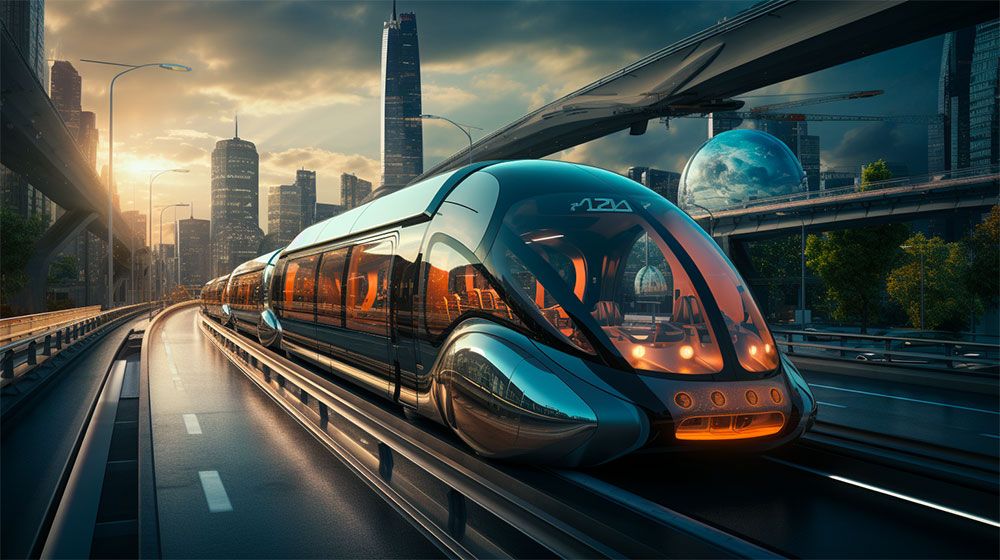
Why Electric Mobility Is Becoming an Energy Network Problem
For years, the future of mobility has been framed as a simple infrastructure challenge. More chargers. Faster chargers. Better locations. Bigger subsidies.
That mental model is rapidly becoming obsolete as the world moves forward.
What we need now is not a denser web of public chargers, but an entirely new energy nervous system for mobility, one that blends vehicles, batteries, grids, fleets, software, and markets into a single adaptive network.
This shift matters because increasingly value will no longer be created at the plug. Instead, it will be created in how energy is routed, timed, stored, priced, and negotiated across the system. Charging stations are becoming commodities. Energy intelligence is becoming strategy.
Battery Chemistry Is Collapsing Old Assumptions
The first structural break comes from battery chemistry. Sodium-ion and semi-solid state batteries are reaching commercialization in 2026-2027, with solid-state batteries following later in the decade. Together, they will fundamentally alter charging dynamics. Charging sessions compress from 30–40 minutes to as little as 5–15 minutes, while peak power demand escalates into the megawatt range.
This creates a counterintuitive reality that many underestimate: faster charging does not reduce grid stress. It concentrates it. When vehicles charge less frequently but at dramatically higher power levels, the system no longer rewards charger density. It rewards orchestration.
When the limiting factor is not charger availability, but grid coordination, the bottleneck shifts upstream. In this new regime, intelligence about timing, load shaping, and flexibility becomes more valuable than hardware itself.
Behind-the-Meter Is Where Margins Are Moving
As battery performance improves and autonomous EVs are taking over the streets, public fast charging will quietly lose its dominance as the primary value driver. The economic center of gravity will move behind the meter. Factories, logistics hubs, EV depots, retail centers, and residential complexes are turning into energy assets, combining on-site generation, stationary storage, smart charging, and flexibility services.
In early-mover markets, charging will no longer be sold per session. It will be bundled into long-term energy contracts, fleet optimization agreements, and availability guarantees. Energy is priced not just by volume, but by timing, predictability, and grid contribution.
This will flip the business model. Success no longer comes from deploying more chargers, but from routing kilowatt-hours optimally and monetizing flexibility. Operators who reposition toward grid optimization and vehicle-to-grid participation by 2027 will capture the majority of value by 2030. Those who cling to a pure infrastructure mindset will face margin compression as behind-the-meter solutions absorb most incremental demand.
Heavy Transport Is Forcing the Transition
If passenger vehicles represent gradual change, heavy transport represents structural pressure. Battery-electric trucks have moved from near zero market share in 2020 to double-digit penetration in parts of China by 2024–2025, overtaking LNG trucks and rapidly eroding diesel dominance. Similar dynamics are beginning to appear elsewhere.
This acceleration is not driven by smaller batteries, but by different energy delivery models. Battery swapping corridors, depot-based megawatt charging, and energy-per-kilometer pricing decouple vehicle ownership from battery ownership. Fleets stop buying energy. They buy uptime.
As a result, OEMs, battery manufacturers, utilities, and charging operators are converging into vertically integrated energy platforms. In China, battery companies are no longer suppliers; they are infrastructure owners, software providers, and grid participants. Once that convergence occurs, the strategic question is no longer where vehicles charge, but who controls the energy contract that moves freight.
Mobility Becomes a Software-Defined Load
Autonomy will accelerate this transition further. Autonomous shared EVs reduce per-capita energy consumption through electrification efficiency, smoother driving profiles, and right-sized vehicles. More importantly, autonomy turns vehicles into programmable energy nodes.
Autonomous fleets do not search for chargers. They are routed to optimal energy points based on workload forecasts, grid conditions, and price signals. Charging becomes a background process, settled machine-to-machine, authenticated by vehicle identity rather than drivers.
This will shift the customer from individuals to fleet operators and shifts value from charger owners to energy orchestrators. Platforms capable of authenticating vehicles, optimizing depots, forecasting demand, coordinating grid services, and settling transactions in real time become the strategic layer of mobility.
Charging stops being an event. It becomes an invisible function inside a larger system.
The Grid Is No Longer Passive
All of this collides with grids that were never designed for synchronized megawatt-scale demand. Simultaneous fleet charging introduces industrial-scale loads into urban and regional networks. Without orchestration, grids will destabilize. With it, they become more resilient.
Vehicles will evolve from liabilities into distributed energy assets. Their batteries absorb excess generation, discharge during peaks, and provide frequency and voltage support. Stored energy becomes tradable. Flexibility becomes a market.
This will transform the grid from a one-way delivery system into a negotiated marketplace. Energy data becomes strategic intelligence. Session duration, dwell time, load displacement, and arbitrage signals become leading indicators of structural change, not operational metrics.
Energy Is the New Strategic Layer
Zooming out, the pattern becomes unavoidable. The future of electric mobility is inseparable from energy geopolitics. China’s advantage is not just manufacturing scale, but energy abundance combined with coordinated industrial policy. Cheap power, integrated planning, and rapid deployment allow it to scale compute, manufacturing, and electrified transport simultaneously. The rest of the world should take notice.
The West still treats energy, transport, and digital infrastructure as separate policy domains. That separation no longer reflects reality. Compute, autonomy, and mobility all collapse onto the same constraint: access to reliable, affordable energy at scale.
As oil shaped the twentieth century, energy networks will shape the twenty-first. Only this time, electrons move faster than tankers, and orchestration matters more than ownership.
What Leaders Must Do Now
For executives, the implications are immediate and practical. Stop optimizing for charger density and start optimizing for energy intelligence. Treat battery chemistry as a demand-shaping force, not a procurement variable. Design systems for fleets and autonomy before they dominate the market. Embed grid participation and flexibility into long-term strategy rather than treating them as optional add-ons.
Most importantly, recognize that competitive advantage will not come from owning hardware, but from orchestrating systems. The organizations that win will understand mobility not as a product, but as a living energy network: adaptive, predictive, and negotiated in real time.
The future of electric mobility will not be decided at the charging station. It will be decided in the invisible layer where energy, software, and strategy converge. And by the time that becomes obvious, the advantage will already be locked in.

Dr Mark van Rijmenam
Dr. Mark van Rijmenam, widely known as The Digital Speaker, isn’t just a #1-ranked global futurist; he’s an Architect of Tomorrow who fuses visionary ideas with real-world ROI. As a global keynote speaker, Global Speaking Fellow, recognized Global Guru Futurist, and 5-time author, he ignites Fortune 500 leaders and governments worldwide to harness emerging tech for tangible growth.
Recognized by Salesforce as one of 16 must-know AI influencers , Dr. Mark brings a balanced, optimistic-dystopian edge to his insights—pushing boundaries without losing sight of ethical innovation. From pioneering the use of a digital twin to spearheading his next-gen media platform Futurwise, he doesn’t just talk about AI and the future—he lives it, inspiring audiences to take bold action. You can reach his digital twin via WhatsApp at: +1 (830) 463-6967.