12 Algorithms Every Data Scientist Should Know

12 Algorithms Every Data Scientist Should Know
Algorithms have become part of our daily lives and they can be found in almost any aspect of the business. Gartner calls this the algorithmic business and it is changing the way we (should) run and manage our organizations. There are all kinds of algorithms and for each aspect of your business, there are different algorithms, which nowadays you can even buy at an algorithm marketplace. Algoritmia provides developers with over 800 algorithms in the fields of audio and visual processing, machine learning and computer vision, saving developers precious time and money.
However, the algorithms available on the Algoritmia marketplace might not be suitable for your particular need. After all, for different circumstances, you require different algorithms and the same algorithm in a different environment can produce different results. In fact, there are many different variables that determine which algorithm to be used and how the algorithm will perform. These variables include the type and volume of the data, the industry the algorithm will be applied to, the application it will be used for etc.
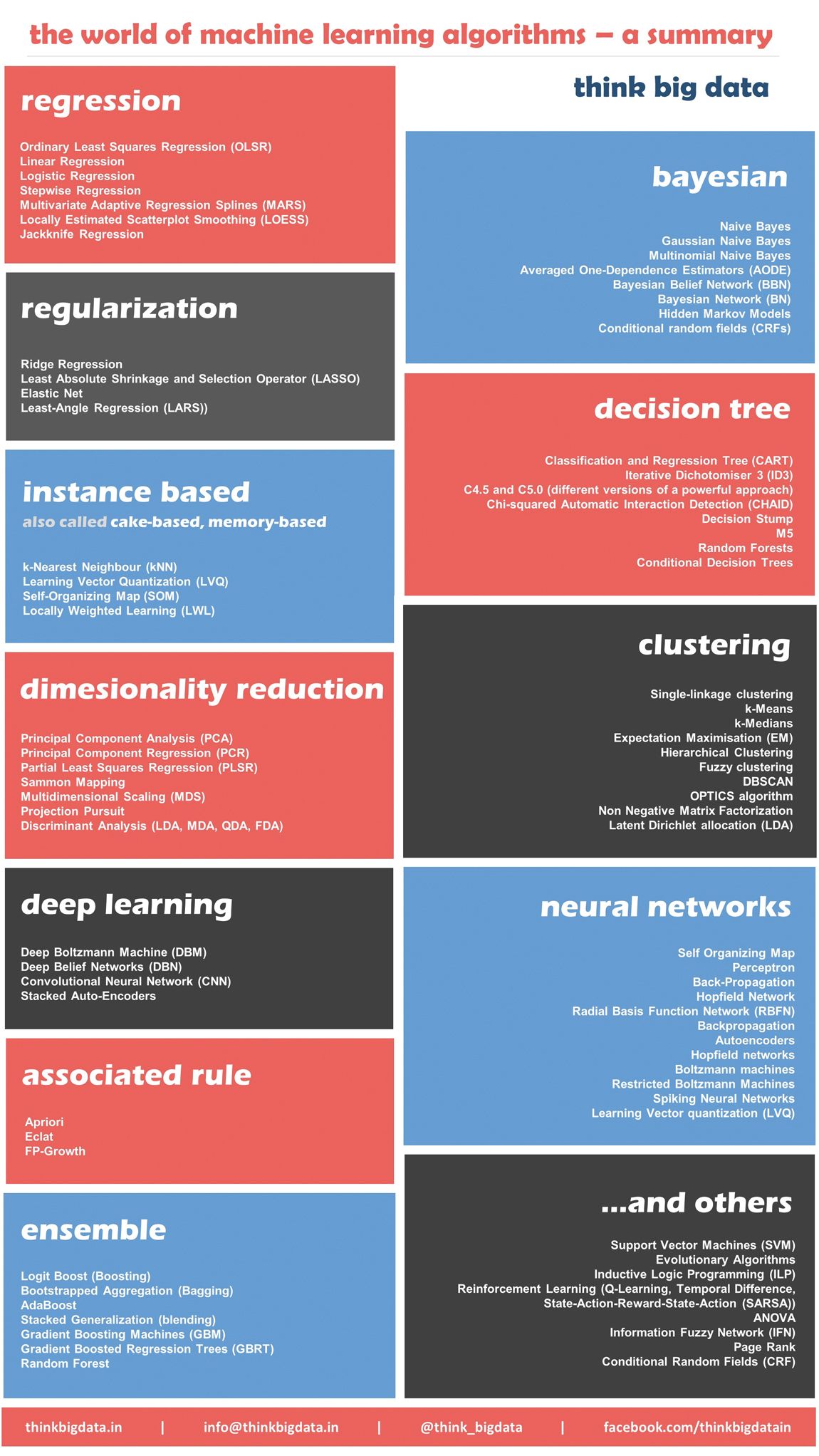
Therefore, sometimes buying an off-the-shelve algorithm and then tweaking it might not be the best option. Data scientists should still educate themselves in the most important algorithms; how are the algorithms developed and for what purpose can you use which algorithm? The guys from Think Big Data developed an infographic showing the 12 most important algorithms, segregated by their application intent, that should still be in the repertoire of every big data scientist:
Frequently asked questions
What is algorithmic business?
Algorithmic business is a term used by Gartner to describe how algorithms have become embedded in almost every aspect of business, changing the way organizations should be run and managed. It reflects a shift where algorithms drive core business processes rather than simply supporting them, making algorithmic literacy increasingly important for organizations across industries.
Link to this questionCan you buy algorithms instead of building them?
Yes, algorithms can be purchased through an algorithm marketplace. Algoritmia, for example, provides developers with over 800 algorithms covering audio and visual processing, machine learning and computer vision, which saves developers time and money compared to building algorithms from scratch.
Link to this questionWhy might a purchased algorithm not work well?
An algorithm bought off-the-shelf may not suit a particular need because different circumstances require different algorithms, and the same algorithm can produce different results in different environments. Factors such as the type and volume of data, the industry it is applied to, and the specific application all influence which algorithm should be used and how well it performs.
Link to this questionWhy should data scientists still learn algorithms themselves?
Even though algorithms can be bought ready-made, simply purchasing and tweaking one is not always the best option. Data scientists should understand how algorithms are developed and know for what purpose each type can be used, so they can apply the right algorithm to their specific data, industry and application rather than relying solely on off-the-shelf solutions.
Link to this question
Dr Mark van Rijmenam
Dr. Mark van Rijmenam, widely known as The Digital Speaker, isn’t just a #1-ranked global futurist; he’s an Architect of Tomorrow who fuses visionary ideas with real-world ROI. As a global keynote speaker, Global Speaking Fellow, recognized Global Guru Futurist, and 5-time author, he ignites Fortune 500 leaders and governments worldwide to harness emerging tech for tangible growth.
Recognized by Salesforce as one of 16 must-know AI influencers , Dr. Mark brings a balanced, optimistic-dystopian edge to his insights—pushing boundaries without losing sight of ethical innovation. From pioneering the use of a digital twin to spearheading his next-gen media platform Futurwise, he doesn’t just talk about AI and the future—he lives it, inspiring audiences to take bold action. You can reach his digital twin via WhatsApp at: +1 (830) 463-6967.