
The Internet of Vulnerable Things?
The Internet of Things is coming. Unfortunately, connected devices have a variety of vulnerabilities and almost any smart device is a vulnerable device.
Read More
The Internet of Things is coming. Unfortunately, connected devices have a variety of vulnerabilities and almost any smart device is a vulnerable device.
Read More
When the web was developed over 25 years ago, the technologies in place significantly lowered the cost of building a global company. Thanks to the internet, it has become possible to reach a large part of the global population simply from behind your computer. Those companies who first understood the
Read More
This week's f(x) = e^x newsletter discusses the launch of INATBA, how AI can diagnose eye diseases and a snapshot of when the world changed.
Read More
On March 18, 2019, I was notified by the University of Technology Sydney that I had officially completed my PhD (yay!). As a result, I now hold a PhD in management. During my PhD, I researched how emerging information technologies such as big data analytics, blockchain and artificial intelligence, challenge
Read More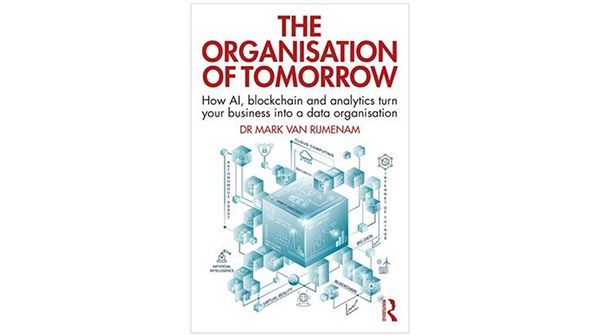
This week's f(x) = e^x newsletter discusses my third book which is now available as well as luxury brands embracing blockchain.
Read More
Organisations adopting blockchain technologies can be viewed as Human-Machine Networks (HMNs), where combinations of humans and machines interact with each other. The more an organisation moves towards a ‘Decentralised Autonomous Organisation’ (DAO) design, the more efficient and autonomous it will become. Ultimately, organisations can operate completely independently using a
Read More
When organisations incorporate blockchain technology and use smart contracts, they move towards becoming a decentralised and/or autonomous organisation.
Read More
The organisation of tomorrow will be built around data. This will require smart algorithms to make sense of all that data. AI will enable organisations to leverage data and embed smartness in every process and customer touchpoint. When you put smartness to work, it will empower your employees and customers
Read More
The organisation of tomorrow is built around data. It will require smart algorithms to make sense of all that data. This will enable organisations to embed smartness in every process and customer touchpoint.
Read More
This week, the University of California announced that they cancelled the Elsevier subscription for academic journals. Elsevier refused to lower their fees and make UC articles open access available. This is a significant move as the University of California is one of the biggest producers of academic articles – with 50.
Read MoreSomething went wrong
Something went wrong. Please, try again later