
The Fast-Changing World Requires Us to Change
The world around us is changing faster than ever before.
Read More
The world around us is changing faster than ever before.
Read More
With the number of cameras drastically increasing in our world, facial recognition is rapidly taking flight. Facial recognition is a biometric faceprint, where artificial intelligence maps an individual’s face mathematically. This faceprint is then stored in data. Later, the stored data can be compared with a live or digital
Read More
With the number of cameras drastically increasing in our world, facial recognition is rapidly taking flight. Facial recognition is a biometric faceprint, where artificial intelligence maps an individual’s face mathematically.
Read More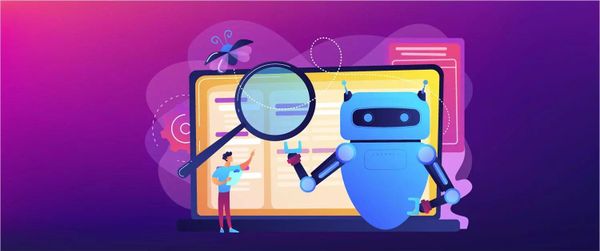
The organisation of tomorrow will be built around data, and it will require artificial intelligence to make sense of all that data. Artificial intelligence is a broad discipline with the objective to develop intelligent machines. AI consists of several subfields: Machine learning (ML), a subset of AI that enables machines
Read More
With the attention for AI growing, also the call for ethical AI is growing. This is not surprising seeing the many problems we have encountered already.
Read More
The increasingly digital economy requires boards and executives to have a solid understanding of the rapidly changing digital landscape. Naturally, artificial intelligence (AI) is an important stakeholder. Those organisations that want to prepare for an automated future should have a thorough understanding of AI. However, AI is an umbrella term
Read More
The increasingly digital economy requires boards and executives to have a solid understanding of the rapidly changing digital landscape.
Read More
The blockchain ecosystem is rapidly expanding. New blockchains or different consensus mechanisms are announced continuously, resulting in a more mature ecosystem. For blockchain technology to achieve wide-scale adoption, a decentralised ecosystem has to be developed. To achieve a decentralised society, many more components need to be built, requiring global
Read More
The blockchain ecosystem is rapidly expanding. New blockchains or different consensus mechanisms are announced continuously, resulting in a more mature ecosystem.
Read More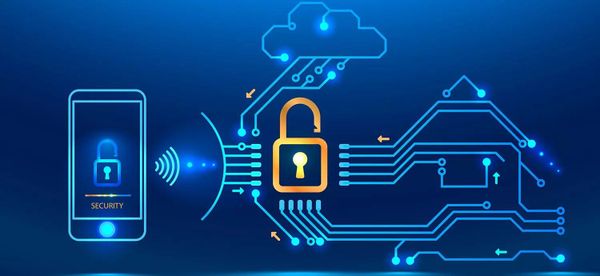
The Internet of Things is coming. Unfortunately, connected devices have a variety of vulnerabilities and almost any smart device is a vulnerable device. Security issues include technical problems (outdated software, insecure data transmissions, etc.) and people problems (simple and default passwords, public Wi-Fi, etc.). As more devices connect to
Read MoreSomething went wrong
Something went wrong. Please, try again later