The Fast-Changing World Requires Us to Change
The Fast-Changing World Requires Us to Change
Good Day! This is my weekly newsletter, with a dose of insights into the future. The topic of this newsletter is the exponential times we live in, hence the title of f(x) = e^x, which is the (natural) exponential function.
Recently, I launched my new concept The Digital Speaker and you can now book me as an avatar or hologram. Also, my tech trend prediction for 2021 is out, read it here!
Why Our Fast-Changing World Requires Us to Change How We Collaborate
My latest article:
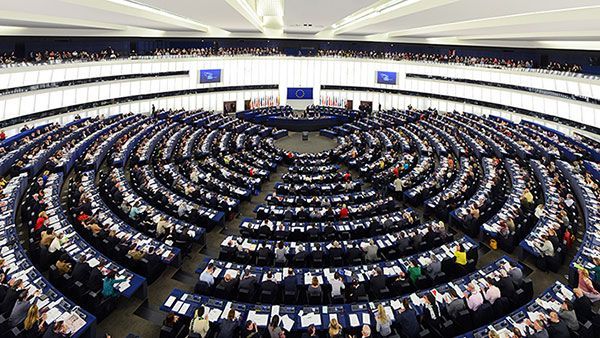
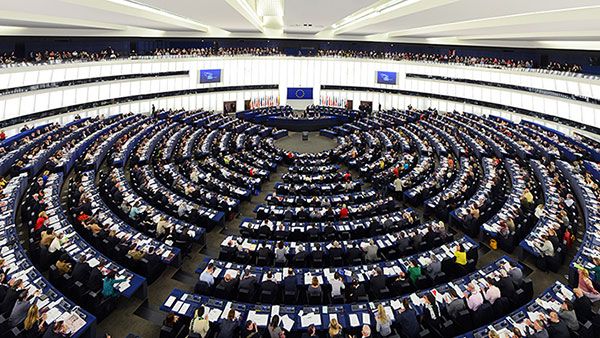
The world around us is changing faster than ever before. It is changing politically (Brexit), socially (generation Z), technologically (AI, quantum computing, blockchain and IoT coming our way), economically (continuous trade wars between the USA and China and the upcoming economic powerhouse China) as well as environmentally (climate change). This is a significant challenge for citizens to deal with. With the upcoming European elections, we have a chance to embrace this change and work together instead of seeking isolation. If we embrace change, we can build a stronger Europe, which undoubtedly will have a positive effect on nation-states as well as the global economy.
Three Useful Nuggets of Information
My weekly tips from around the web to get you thinking.
1. Machine learning can help combat climate change.
Artificial Intelligence can help handle severe weather caused by climate change. Not only can it assess the damage from extreme weather, but it can also help produce genetically-enhanced crops that can better deal with the changing climate. (NYT)
2. The first fully digital generation is here: Generation Z.
The first generation to grow up entirely in the 21st century will never remember a time before smartphones, fast computers and interconnectedness. They have a fundamentally different perspective of the world than the baby boomers, and this will change society. Fortunately, with technologies affecting our world, Generation Z knows how to keep up. (Singularity Hub)
3. The internet is disintegrating. What is next?
The Splinternet is here. Russia and China are developing a different internet than the West. However, also in the Western world, the idea of one internet is slowly disappearing. Whether governments or companies create borders, the open internet, as envisioned by its founders, is gone. (BBC)
Frequently asked questions
What kinds of change are affecting society today?
Society is being reshaped across multiple dimensions at once: politically through events like Brexit, socially through the rise of Generation Z, technologically through AI, quantum computing, blockchain and IoT, economically through trade wars between the USA and China and China's rise as an economic powerhouse, and environmentally through climate change. Together these shifts represent a significant challenge for citizens trying to keep up.
Link to this questionHow can Europe respond to this rapid change?
With the European elections approaching, there is an opportunity to embrace change and collaborate rather than retreat into isolation. Choosing cooperation over isolation could help build a stronger Europe, which would in turn have a positive effect on nation-states and the global economy more broadly.
Link to this questionHow is Generation Z different from previous generations?
Generation Z is the first generation to grow up entirely in the 21st century, meaning they have never known a time without smartphones, fast computers and constant interconnectedness. This gives them a fundamentally different worldview compared to baby boomers, and because they have grown up alongside rapidly changing technology, they are well equipped to keep pace with it.
Link to this questionWhat is the Splinternet and why is it happening?
The Splinternet refers to the internet fragmenting into separate versions rather than remaining one unified global network. Russia and China are already building different internets from the West, and even in Western countries the idea of a single open internet is fading as governments and companies erect their own borders and boundaries online, moving away from the internet's original open vision.
Link to this question
Dr Mark van Rijmenam
Dr. Mark van Rijmenam, widely known as The Digital Speaker, isn’t just a #1-ranked global futurist; he’s an Architect of Tomorrow who fuses visionary ideas with real-world ROI. As a global keynote speaker, Global Speaking Fellow, recognized Global Guru Futurist, and 5-time author, he ignites Fortune 500 leaders and governments worldwide to harness emerging tech for tangible growth.
Recognized by Salesforce as one of 16 must-know AI influencers , Dr. Mark brings a balanced, optimistic-dystopian edge to his insights—pushing boundaries without losing sight of ethical innovation. From pioneering the use of a digital twin to spearheading his next-gen media platform Futurwise, he doesn’t just talk about AI and the future—he lives it, inspiring audiences to take bold action. You can reach his digital twin via WhatsApp at: +1 (830) 463-6967.