Synthetic Minds | Five Tech Giants Just Split Drug Discovery
Synthetic Minds | Five Tech Giants Just Split Drug Discovery
The Synthetic Minds newsletter offers short daily insights to get you thinking. If you enjoy it, please forward. If you need more insights, subscribe to Futurwise and get 25% off for the first three months!
I have just launched the Intelligence Age Scorecard! It will help you understand how ready your organization is for the Intelligence Age. Take it today, it takes 15 minutes and you are prepared for what is to come.
Today’s topic: Health & Longevity
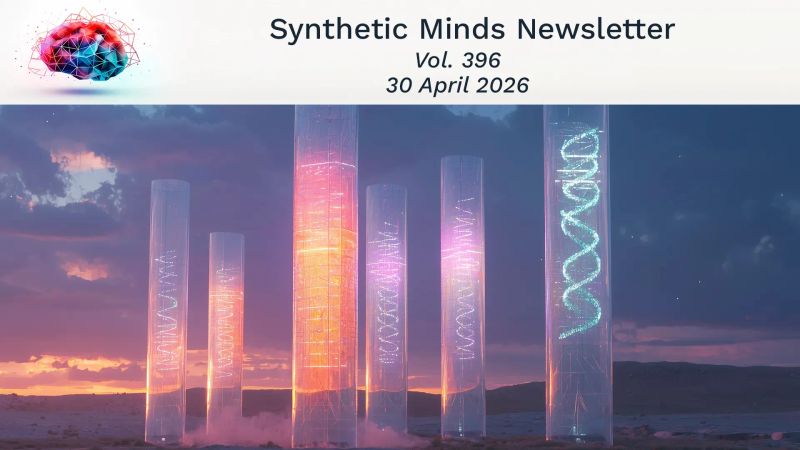
Five Tech Giants Just Split Drug Discovery in Five
Two weeks ago, OpenAI shipped GPT-Rosalind, its first life sciences model, and signed Novo Nordisk as its launch partner. Amazon released Bio Discovery, an agentic platform with 40-plus biological foundation models and integrated wet-lab partners.
That was the opening move. Within days, every major technology company had staked a position.
GPT-Rosalind posted the top BixBench score (0.751), beating GPT-5.4 and Gemini 3.1 Pro. Biotech service stocks fell three to five percent. Anthropic appointed Novartis CEO Vas Narasimhan to its board and acquired Coefficient Bio for 400 million dollars.
Amazon's platform let Memorial Sloan Kettering generate 300,000 antibody candidates and route the top 100,000 to Twist Bioscience for synthesis — compressing a year into weeks. Google's Isomorphic Labs built the world's best AI-designed drug lab, and Lilly built its own AI factory: 1,016 NVIDIA Blackwell GPUs.
That is the signal.
Five architectures, five owners, zero interoperability.
OpenAI sells the model. Anthropic buys the expertise. Amazon sells the workflow. Isomorphic keeps the engine and designs the drugs itself. Lilly builds its own factory.
Here is what it means. The platform you choose determines who owns the intelligence beneath your science. None of these architectures is compatible with the others. Switch later and you leave the data, the fine-tuning, and the institutional knowledge behind.
That is not a technology decision. It is a governance decision. And right now, no one is writing the rules.

'Synthetic Minds' continues to reflect the synthetic forces reshaping our world. Quick, curated insights to feed your quest for a better understanding of our evolving synthetic future, powered by Futurwise:
1. Imagine a world where surfaces can kill viruses on contact, reducing the spread of disease in shared spaces. Researchers at RMIT University have made this vision a reality with their breakthrough nanotextured material. (New Atlas)
2. Evolving AI (eAI) systems that can undergo Darwinian evolution are projected to appear before artificial general intelligence, raising significant control and alignment challenges. (TechXplore)
3. The rise of AI has brought about a new era of security challenges, as AI-powered attacks become increasingly sophisticated and difficult to detect, which is especially relevant for the healthcare sector. (SiliconAngle
4. Taylor Swift has filed three trademark applications to protect her image and voice amid rising AI deepfake threats. The filings cover a famous pink‑guitar photo from her Eras tour and two sound marks. (Wired)
5. AI chatbots are increasingly engineered to sound warm and empathetic, yet a recent Oxford study reveals that this cosmetic friendliness can erode factual accuracy and amplify misinformation, especially when users feel vulnerable. (Neuroscience)

If you are interested in more insights, grab my latest, award-winning, book Now What? How to Ride the Tsunami of Change and learn how to embrace a mindset that can deal with exponential change.
If this newsletter was forwarded to you, you can sign up here.
Thank you.
Mark
Frequently asked questions
What are the five different drug discovery platforms from tech giants?
OpenAI sells GPT-Rosalind as a life sciences model with Novo Nordisk as launch partner. Anthropic bought expertise by acquiring Coefficient Bio and appointing Novartis CEO Vas Narasimhan to its board. Amazon sells a workflow through Bio Discovery, an agentic platform with over 40 biological foundation models. Google's Isomorphic Labs keeps its engine and designs drugs itself. Eli Lilly built its own AI factory using 1,016 NVIDIA Blackwell GPUs.
Link to this questionWhy does the choice of AI drug discovery platform matter so much?
The platform chosen determines who owns the intelligence beneath a company's science. None of the five architectures from OpenAI, Anthropic, Amazon, Isomorphic Labs, and Lilly are compatible with one another. Switching platforms later means leaving behind data, fine-tuning, and institutional knowledge, making this fundamentally a governance decision rather than a simple technology choice.},{
Link to this questionHow did Amazon's Bio Discovery platform speed up antibody research?
Amazon's Bio Discovery platform allowed Memorial Sloan Kettering to generate 300,000 antibody candidates and route the top 100,000 to Twist Bioscience for synthesis. This process compressed what would normally take a year into just weeks, demonstrating how agentic AI platforms integrated with wet-lab partners can dramatically accelerate the drug discovery timeline.},{
Link to this questionHow did GPT-Rosalind perform compared to other AI models?
GPT-Rosalind, OpenAI's first life sciences model, posted the top BixBench score of 0.751, beating both GPT-5.4 and Gemini 3.1 Pro. Following this announcement and the broader wave of tech giants entering drug discovery, biotech service stocks fell three to five percent, signaling market concern about disruption to traditional biotech service providers.
Link to this question
Dr Mark van Rijmenam
Dr. Mark van Rijmenam, widely known as The Digital Speaker, isn’t just a #1-ranked global futurist; he’s an Architect of Tomorrow who fuses visionary ideas with real-world ROI. As a global keynote speaker, Global Speaking Fellow, recognized Global Guru Futurist, and 5-time author, he ignites Fortune 500 leaders and governments worldwide to harness emerging tech for tangible growth.
Recognized by Salesforce as one of 16 must-know AI influencers , Dr. Mark brings a balanced, optimistic-dystopian edge to his insights—pushing boundaries without losing sight of ethical innovation. From pioneering the use of a digital twin to spearheading his next-gen media platform Futurwise, he doesn’t just talk about AI and the future—he lives it, inspiring audiences to take bold action. You can reach his digital twin via WhatsApp at: +1 (830) 463-6967.