Synthetic Minds | Vibe Coding Works. If You Have the Discipline.
Synthetic Minds | Vibe Coding Works. If You Have the Discipline.
The Synthetic Minds newsletter offers short daily insights to get you thinking. If you enjoy it, please forward. If you need more insights, subscribe to Futurwise and get 25% off for the first three months!
The past few weeks, I took a pause with my newsletter to build something meaningful. Below a sneak preview of what is coming and how I built it.
Today’s topic: AI & Automation
Vibe Coding Works. If You Have the Discipline.
Five weeks ago, a single AI coding session destroyed three weeks of my work.
I'm not a developer. I was vibe coding the Intelligence Age Scorecard, my upcoming AI readiness diagnostic, in Claude Code. I'd shipped a prototype in three sessions. Stripe checkout. An assessment engine. A working report. I remember thinking: this is the leverage story of the decade.
Then one prompt, six unrelated "improvements," and the thing collapsed. Database drift. A migration ran in the wrong order. Customer pages blank for hours. No tests caught any of it.
I didn't blame the tool. I blamed myself.
The model had done exactly what I asked. No constraints, no guardrails, no explicit scope. It had optimized for helpfulness. I had optimized for speed. The collision was inevitable.
Then I found gstack, Garry Tan's engineering workflow for Claude Code. The CEO of Y Combinator calls it "exactly my setup for agentic engineering." I installed it. Everything changed.
Five weeks later, I've shipped production software without writing a line of code. No engineers. No dev shop. Just me, Claude Code, and a discipline I had to learn the hard way.
The patterns that separate vibe coding from vibe chaos aren't what most executives think. Most of them I learned by breaking something first.
Most people who've tried vibe coding have already lived version one of my story. Very few have lived version two.
I wrote down the full blueprint.
The Scorecard launches this week.
The leverage is in the judgment. It always is.

'Synthetic Minds' continues to reflect the synthetic forces reshaping our world. Quick, curated insights to feed your quest for a better understanding of our evolving synthetic future, powered by Futurwise:
1. OpenClaw emerges from a personal journey of a developer who, after a decade of building software and a period of existential doubt, discovered the transformative potential of AI coding agents. Here is Peter Steinberger's, founder of OpenClaw, TED talk. (YouTube)
2. In a Beijing half‑marathon held on April 19, 2026, a Chinese autonomous‑navigation robot named Lightning, developed by Honor, finished in 50 minutes and 26 seconds, eclipsing the fastest human time of 57 minutes and 20 seconds. (New Atlas)
3. Teenagers today engage with AI chatbots in ways that extend far beyond the popular narrative of digital companionship. While media headlines often focus on emotional support, the reality shows a broader spectrum of uses. (Techxplore)
4. The era of corporate AI theater is ending, and the next corporate divide will be between firms that wire AI into workflows and management routines and those that keep mistaking access for transformation. (CEO World)
5. In the world of language models, fine-tuning is the key to unlocking their full potential. But what does it take to fine-tune LLMs in 2026? (Daily Dose of Data Science)
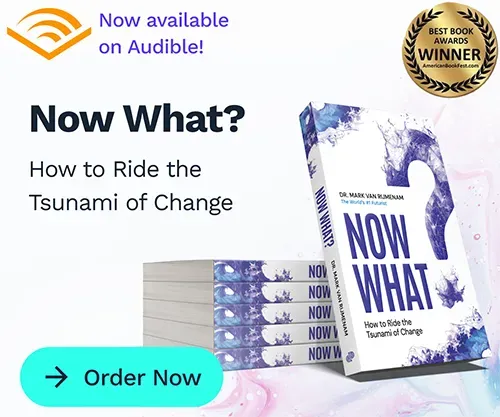
If you are interested in more insights, grab my latest, award-winning, book Now What? How to Ride the Tsunami of Change and learn how to embrace a mindset that can deal with exponential change.
If this newsletter was forwarded to you, you can sign up here.
Thank you.
Mark
Frequently asked questions
What went wrong with the vibe coding project?
A single AI coding session in Claude Code destroyed three weeks of work. After a prototype had been shipped in three sessions with Stripe checkout, an assessment engine, and a working report, one prompt led to six unrelated 'improvements' that caused database drift, a migration running in the wrong order, and customer pages going blank for hours, with no tests catching any of it.
Link to this questionWhy did the AI coding session collapse?
The model had done exactly what was asked, but there were no constraints, guardrails, or explicit scope defined. The AI optimized for helpfulness while the person directing it optimized for speed, and that collision was inevitable. The failure was attributed to a lack of discipline in how the AI was directed, not to the tool itself.
Link to this questionWhat changed after discovering gstack?
After finding gstack, Garry Tan's engineering workflow for Claude Code, everything changed. Five weeks later, production software was shipped without writing a line of code and without hiring engineers or a dev shop, relying instead on Claude Code combined with discipline that had to be learned the hard way after the earlier failure.
Link to this questionWhat is the main lesson from this vibe coding experience?
The key lesson is that vibe coding works only with discipline, and that the real leverage lies in judgment rather than speed. Most people who try vibe coding experience the chaotic failure first, but few go on to learn the patterns and constraints needed to turn it into reliable, production-ready results.
Link to this question
Dr Mark van Rijmenam
Dr. Mark van Rijmenam, widely known as The Digital Speaker, isn’t just a #1-ranked global futurist; he’s an Architect of Tomorrow who fuses visionary ideas with real-world ROI. As a global keynote speaker, Global Speaking Fellow, recognized Global Guru Futurist, and 5-time author, he ignites Fortune 500 leaders and governments worldwide to harness emerging tech for tangible growth.
Recognized by Salesforce as one of 16 must-know AI influencers , Dr. Mark brings a balanced, optimistic-dystopian edge to his insights—pushing boundaries without losing sight of ethical innovation. From pioneering the use of a digital twin to spearheading his next-gen media platform Futurwise, he doesn’t just talk about AI and the future—he lives it, inspiring audiences to take bold action. You can reach his digital twin via WhatsApp at: +1 (830) 463-6967.