Synthetic Minds | The Industrial Metaverse Finally Grew Up
The Synthetic Minds newsletter is evolving. Short daily insights to get you thinking. If you enjoy it, please forward. If you need more insights, subscribe to Futurwise and get 25% off for the first three months!
The Metaverse’s Killer App Is Factory Judgment
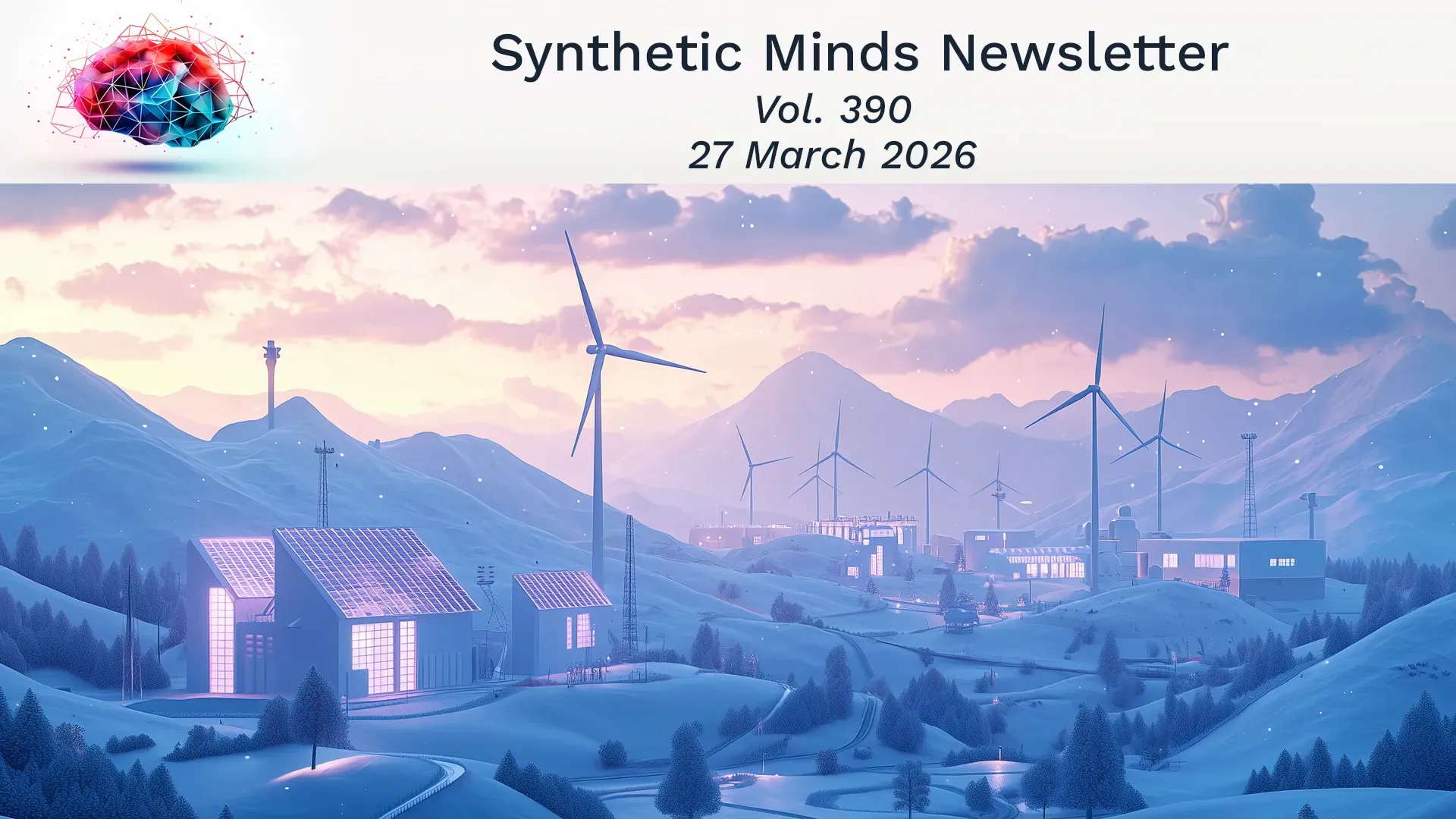
Zuckerberg didn’t waste $70B on the metaverse; he wasted it on the wrong metaverse. Pixelated avatars were never the point. The industrial metaverse is.
When a digital twin ingests real-time high-quality sensor data and can be stress-tested by AI agents inside a physics-accurate environment, manufacturing stops “trying things” and starts deciding things.
Siemens’ Digital Twin Composer pushes factories from representative twins to operational ones: a secure, managed, photorealistic scene built on NVIDIA Omniverse libraries, where design, simulation, and operations finally share the same reality model.
The first PepsiCo deployment by Siemens of high-fidelity 3D digital twins is the tell: physics-level recreation of machines, conveyor flows, pallet routes, and operator paths, used to surface issues before physical change, alongside reported throughput gains and CapEx reductions.
That’s not a prettier dashboard; it’s a different cost function for failure.
This forces a leadership upgrade. Intelligence is cheap now. The scarce asset is judgment: which signals matter, which simulations are valid, what you automate, and what you refuse to optimize because the externalities are unacceptable.
CapEx will shift from steel-and-concrete prototyping to compute-and-orchestration. “Synthetic Environment Orchestrator” becomes a real job title.
Trial-and-error is dying. What will you do when your factory can rehearse every decision before you make it?

'Synthetic Minds' continues to reflect the synthetic forces reshaping our world. Quick, curated insights to feed your quest for a better understanding of our evolving synthetic future, powered by Futurwise:
1. Scientists have developed a novel analytical approach to evaluate visual representations for robots operating in complex environments, improving efficiency and generalizability. (Quantum Zeitgeist)
2. Researchers have developed a method for measuring time at the quantum scale, allowing for the measurement of ultra-short events lasting just attoseconds (equal to one-quintillionth of a second, or one-billionth of a billionth of a second). (The Debrief)
3. The recent trend of layoffs in companies, despite rising profits, has sparked concerns among workers about the impact of AI on job security. A survey of nearly 5,000 Americans found that 71% are worried that AI will lead to permanent job losses. (Fortune)
4. The analysis of samples from asteroid Bennu has led to a significant discovery about the origin of amino acids, the building blocks of life. These amino acids likely formed in the frozen outer reaches of the early Solar System, rather than in the warm interiors of asteroids as previously thought. (Study Finds)
5. Google's research has made a groundbreaking discovery that could revolutionize the way transportation agencies identify and fix the most dangerous stretches of road. (WPN)

If you are interested in more insights, grab my latest, award-winning, book Now What? How to Ride the Tsunami of Change and learn how to embrace a mindset that can deal with exponential change, or download my news 2026 tech trends report:
If this newsletter was forwarded to you, you can sign up here.
Thank you.
Mark