Synthetic Minds | Surgery, Drugs and Biosecurity Share the Same Brain
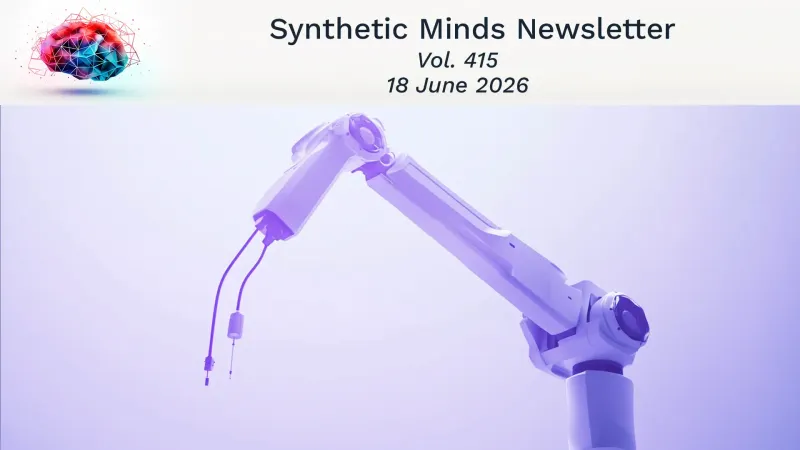
Synthetic Minds | Surgery, Drugs and Biosecurity Share the Same Brain
The Synthetic Minds newsletter offers short daily insights to get you thinking. If you enjoy it, please forward. All signals are powered by Futurwise. If you need more insights, subscribe to Futurwise and get 25% off for the first three months!
I have just launched the Intelligence Age Scorecard! It will help you understand how ready your organization is for the Intelligence Age.
Today’s topic: Health
Pharma Has Rented Its Discovery Lab To AI
A chip company has shipped the AI brain that controls a surgical robot. Two of the world's largest drug makers have rented the AI brain that designs their next cancer drugs.
Surgery, drug discovery, and biosecurity are no longer different industries. They are renting the same brain from a handful of suppliers.
- Nvidia has shipped GR00T-H-N1.7: the first surgical AI model any robot maker can legally deploy. It was trained on 770 hours of operating-room video from Johns Hopkins, Stanford, Northwell, and the robot makers themselves.
- CMR Surgical donated close to 500 hours of its own Versius procedures. Every competitor can download what CMR's data trained.
- Jazz Pharmaceuticals has committed up to $2.46 billion to AbCellera's AI to discover cancer drugs Jazz does not yet have.
- Merck has signed a $510 million pact with Protillion for the same outsourced discovery engine, a chip that designs proteins by the million.
- BARDA, the US biosecurity buyer, has done the same for AI antivirals against Ebola and Marburg.
That is the technology story. Here is the signal.
The data moat in surgical robotics did not exist six months ago. Every robot maker treated its operating-room video as competitive advantage. CMR has donated 500 hours to Nvidia's open library ; the advantage has migrated to whichever competitor can clear FDA fastest.
The same migration has happened at the molecule layer. Two of the world's largest drug makers have rented their antibody discovery to AI platforms in two days.
The industry no longer runs this work in-house. It rents access from suppliers it does not own.
The argument that medicine had split into two opposite product economics for the same aging body named the customer. The substrate beneath them has been named too: a commercially licensed AI brain that the robot maker, the pharma industry, and the federal biosecurity office all rent from one thin supplier base.
The last time a substrate change of this size moved through a sector, the internet rewrote the cost structure of every advertiser and retailer. The companies that lost did not lose to better technology. They lost because their differentiation moved while they kept investing in the old moat.
The question your board should debate is no longer which AI vendor to pilot. It is whether the proprietary asset your product depends on, the dataset, the discovery lab, the device IP, has become a sidewalk in competitors' shared infrastructure.
The brain that controls surgery, the brain that designs drugs, and the brain that defends a country against pandemics share three suppliers. Decide who owns yours before the lease comes due.
The Intelligence Age Scorecard

The substrate of medicine, surgical-robot control, antibody discovery, and federal biosecurity procurement, has been quietly rented from a thin AI supplier base in a single window. Are you still watching which AI vendor to pilot, or already verifying whether the data and IP your medical product depends on has become a sidewalk in your competitors' shared infrastructure?
Take the Intelligence Age Scorecard to benchmark your readiness for the next two quarters, and the next five years.
If this newsletter was forwarded to you, you can sign up here.
Thank you.
Mark
Frequently asked questions
What is Nvidia's GR00T-H-N1.7?
GR00T-H-N1.7 is the first surgical AI model that any robot maker can legally deploy. It was trained on 770 hours of operating-room video contributed by Johns Hopkins, Stanford, Northwell, and the robot makers themselves, including nearly 500 hours donated by CMR Surgical from its own Versius procedures, creating a shared library any competitor can download.
Link to this questionHow are pharma companies using AI for drug discovery?
Jazz Pharmaceuticals has committed up to 2.46 billion dollars to AbCellera's AI platform to discover cancer drugs it does not yet have, while Merck has signed a 510 million dollar pact with Protillion for a similar outsourced discovery engine that designs proteins by the million. BARDA has made a comparable arrangement for AI antivirals against Ebola and Marburg.
Link to this question
Dr Mark van Rijmenam
Dr. Mark van Rijmenam, widely known as The Digital Speaker, isn’t just a #1-ranked global futurist; he’s an Architect of Tomorrow who fuses visionary ideas with real-world ROI. As a global keynote speaker, Global Speaking Fellow, recognized Global Guru Futurist, and 5-time author, he ignites Fortune 500 leaders and governments worldwide to harness emerging tech for tangible growth.
Recognized by Salesforce as one of 16 must-know AI influencers , Dr. Mark brings a balanced, optimistic-dystopian edge to his insights—pushing boundaries without losing sight of ethical innovation. From pioneering the use of a digital twin to spearheading his next-gen media platform Futurwise, he doesn’t just talk about AI and the future—he lives it, inspiring audiences to take bold action. You can reach his digital twin via WhatsApp at: +1 (830) 463-6967.