Synthetic Minds | Restoration Arrives, and It Skips the Sci-Fi Implant
Synthetic Minds | Restoration Arrives, and It Skips the Sci-Fi Implant
The Synthetic Minds newsletter offers short daily insights to get you thinking. If you enjoy it, please forward. All signals are powered by Futurwise. If you need more insights, subscribe to Futurwise and get 25% off for the first three months!
I have just launched the Intelligence Age Scorecard! It will help you understand how ready your organization is for the Intelligence Age.
Today’s topic: Health
The Quiet Breakthroughs Restoring What Disease Took
The MouthPad reads the tongue has handed a paralyzed engineer a working cursor. A vaccine has taught one man's immune system to hunt his own lung cancer. A model reads a routine slide and sees the tumor.
Seen together, they mark a turn. Medicine is shifting from managing disease to handing capability back, and the tools doing it are modest, not monumental.
A tongue-read retainer has put a computer back under the control of people with quadriplegia and ALS, with no surgery and no implant. It is shipping to real users.
An open pathology model matches or beats existing systems at spotting cancer and estimating survival from a single slide. Its full workings are free for any lab.
A patient has become the first to receive a personalized vaccine, one built to turn his immune system against his own lung tumor.
The direction runs past these three. Electrodes that rest on the brain, never piercing it, let people type, communicate and place calls by thought alone.
That's the innovation story. Here is the signal.
The headlines went to the spectacle: the brain drilled open, the chip promising telepathy, the model that would cure everything. The story that matters is quieter, and it has already reached patients.
Restoration is becoming a product. Not the management of decline, but the return of a capability that disease took, delivered through hardware modest enough to miss.
A retainer, not a craniotomy. A slide the pathologist already had, read with sharper eyes. A patient's own immune system, handed a target it could not find on its own.
The engine underneath all three is the same. It infers intent from a tongue against the palate, reads the slide, picks the vaccine's target. Capability arrives when intelligence gets cheap and the hardware gets humble.
The reframe is that the future of medicine is arriving through the least dramatic door in the building.
There is a catch worth naming. Restoration you can buy is restoration someone has to afford.
A tongue interface runs over a thousand dollars and waits on approval before insurance shares the cost. A bespoke vaccine begins as one patient in one trial.
So the question a health leader should carry is not whether this technology works. It plainly does. It is who gets restored first, and how fast the rest of the line moves.
The abundant thing here is capability. The scarce thing is access, and access is a choice.
The miracle was never going to look like a man drilling into a skull. It looks like a retainer, a slide, a shot, and a decision about who reaches them first.
The Intelligence Age Scorecard
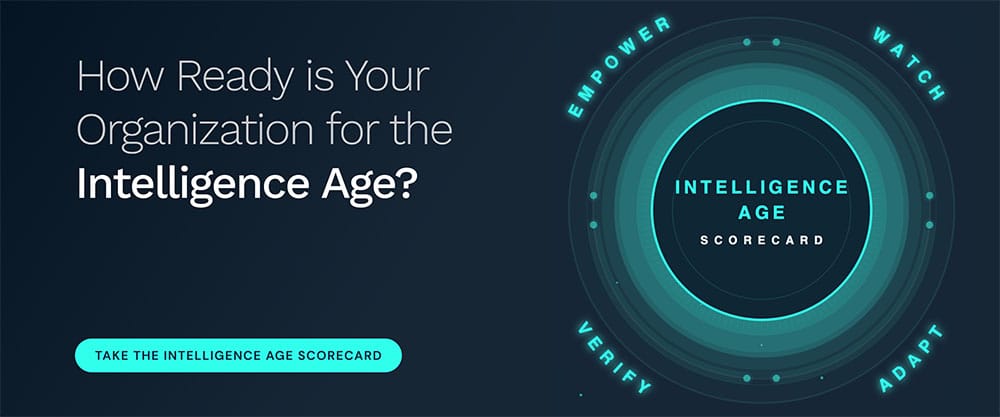
Restoration is becoming something you can buy: a tongue interface, an open diagnostic model, a bespoke cancer vaccine. The gap between patients runs on access, not science. That is an Empower question in the WAVE cycle (Watch, Adapt, Verify, Empower): the capability exists, so the work is building the access and judgment to deploy it well.
Benchmark your readiness for the next two quarters with the Intelligence Age Scorecard. Or read the public Intelligence Age Scorecard of Verizon, Accenture, IBM, Visa, Qantas, Woolworths, Telstra or Commonwealth Bank first.
If this newsletter was forwarded to you, you can sign up here.
Thank you.
Mark
Frequently asked questions
What is the MouthPad and how does it help paralyzed patients?
The MouthPad is a tongue-read retainer that lets people with quadriplegia or ALS control a computer cursor by reading movements of the tongue against the palate. It requires no surgery and no implant, unlike brain chip approaches, and is already shipping to real users, giving them working control over a computer without invasive procedures.
Link to this questionHow does the open pathology model detect cancer?
The open pathology model reads a routine slide, the kind a pathologist already has, and matches or beats existing systems at spotting cancer and estimating survival. Its full workings are free for any lab to use, meaning it applies sharper analysis to existing diagnostic material rather than requiring new imaging technology or equipment.
Link to this questionWhy does the article call these medical breakthroughs quiet rather than dramatic?
These breakthroughs are called quiet because they arrive through modest, unglamorous hardware, a retainer, an existing slide, a personalized shot, rather than dramatic interventions like a craniotomy or a brain implant. The underlying engine is the same in each case: intelligence has gotten cheap enough that it can infer intent, read slides, or pick vaccine targets without invasive hardware, restoring lost capability rather than just managing decline.
Link to this questionWhat is the main concern raised about access to these new treatments?
The concern is that restoration you can buy is restoration someone has to afford. The tongue interface costs over a thousand dollars and depends on insurance approval, while the personalized cancer vaccine starts as one patient in one trial. The technology clearly works, so the real question becomes who gets restored first and how quickly access expands to everyone else, since capability is abundant but access is a choice.
Link to this question
Dr Mark van Rijmenam
Dr. Mark van Rijmenam, widely known as The Digital Speaker, isn’t just a #1-ranked global futurist; he’s an Architect of Tomorrow who fuses visionary ideas with real-world ROI. As a global keynote speaker, Global Speaking Fellow, recognized Global Guru Futurist, and 5-time author, he ignites Fortune 500 leaders and governments worldwide to harness emerging tech for tangible growth.
Recognized by Salesforce as one of 16 must-know AI influencers , Dr. Mark brings a balanced, optimistic-dystopian edge to his insights—pushing boundaries without losing sight of ethical innovation. From pioneering the use of a digital twin to spearheading his next-gen media platform Futurwise, he doesn’t just talk about AI and the future—he lives it, inspiring audiences to take bold action. You can reach his digital twin via WhatsApp at: +1 (830) 463-6967.