Synthetic Minds | Your Next Customer Is a Machine That Barely Spends
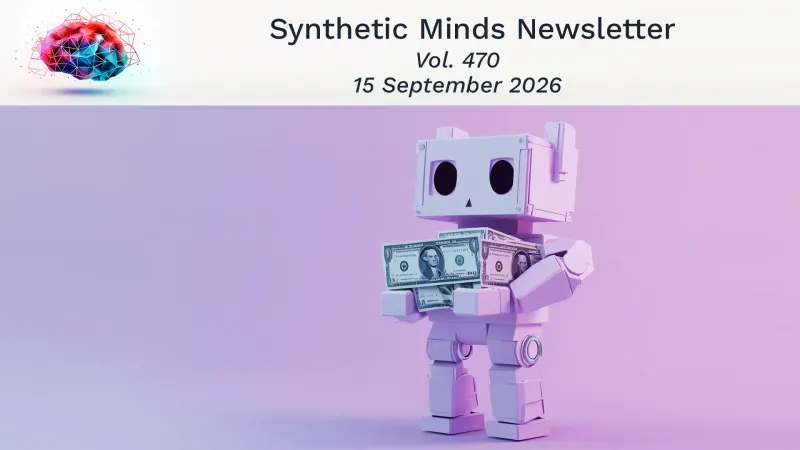
Synthetic Minds | Your Next Customer Is a Machine That Barely Spends
The Synthetic Minds newsletter offers short daily insights to get you thinking. If you enjoy it, please forward. All signals are powered by Futurwise. If you need more insights, subscribe to Futurwise and get 25% off for the first three months!
I built the Intelligence Age Scorecard! It will help you understand how ready your organization is for the Intelligence Age.
Today’s topic: Agentic AI & Tokenization
Machines Have Started Buying, Badly and Barely
Count every payer that could plausibly be a machine and software is 7.5 percent of the busiest rail built for software to pay for things. Demand proof, and it is 0.6 percent. That gap is the state of the art.
The machines buying on public rails are still a rounding error, and they already behave nothing like the customers those rails were designed for.
The uncertainty is the point. This is small enough to study completely, and the early readings say these buyers do not behave like the ones the rails were built for.
A blockchain analytics firm screened 198.9 million settlements to get there, and says the registries that would settle the question are voluntary and mostly unused.
Put a hundred of them in a closed town economy and multiply demand twelvefold, and the agents start to behave in ways not expected. Revenue rose more than fourfold, wages did not measurably move, and almost none of the prices changed.
Hand those agents cash and they hold 96.7 percent of it.
Nearly half of merchants say pricing is the last function they would hand an agent, and only fifteen in a hundred hold product data a machine can read.
A payment protocol for agents has gone live across wallets serving 1.5 billion accounts, carrying a trust score that governs how much freedom each agent gets.
Nine economists have modeled the loop where AI improves itself and found it not self-sustaining, and strengthening.
That's the adoption story. Here is the signal.
Nobody is going to rebuild a pricing system for a customer whose entire market moves $11,000 in a good month. That is the right call.
The merchants who hold no product data a machine can read did not choose to be invisible to a machine buyer. They never had a reason to look.
In this specific case, the organizations that look anyway might be better off, and not because the forecast comes true.
Every pricing model built for machine buyers assumes a relentless hunter. A hundred of them left 3,981 menu items almost untouched.
A team that tests its prices against a buyer who does not haggle learns what those prices actually depend on. That holds whether or not the buyer ever arrives.
Online retail was 0.6 percent of American retail sales when the Census Bureau first measured it. The firms studying it then were not visionary. They were reading a faint signal, and they were the only ones holding data when it mattered.
Prices, terms and access are beginning to be settled between machines. Most people will never choose their agent, never see the negotiation, never learn what a better one would have won.
So the question for a board is not whether machine buyers matter yet. It is what the business looks like to one, and whether anybody has looked.
The Intelligence Age Scorecard
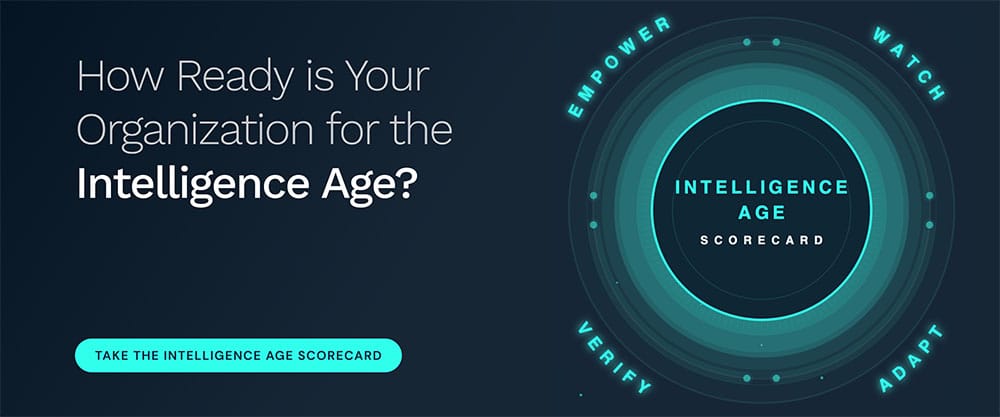
The machines buying on public rails are still a rounding error, and they already behave nothing like the customers those rails were designed for. WAVE asks which part of the cycle a signal this faint actually demands: this one is Watch, not Adapt, and the discipline is knowing the difference.
Benchmark your readiness for the next two quarters, and the next five years, with the Intelligence Age Scorecard.
If this newsletter was forwarded to you, you can sign up here.
Thank you.
Mark

Dr Mark van Rijmenam
Dr. Mark van Rijmenam, widely known as The Digital Speaker, isn’t just a #1-ranked global futurist; he’s an Architect of Tomorrow who fuses visionary ideas with real-world ROI. As a global keynote speaker, Global Speaking Fellow, recognized Global Guru Futurist, and 5-time author, he ignites Fortune 500 leaders and governments worldwide to harness emerging tech for tangible growth.
Recognized by Salesforce as one of 16 must-know AI influencers , Dr. Mark brings a balanced, optimistic-dystopian edge to his insights—pushing boundaries without losing sight of ethical innovation. From pioneering the use of a digital twin to spearheading his next-gen media platform Futurwise, he doesn’t just talk about AI and the future—he lives it, inspiring audiences to take bold action. You can reach his digital twin via WhatsApp at: +1 (830) 463-6967.