AI and Jobs: Revolution or Evolution?

AI and Jobs: Revolution or Evolution?
Will AI take your job or make it better? The answer might surprise you.
PwC’s 2024 AI Jobs Barometer reveals that AI is revolutionizing knowledge-based sectors, driving productivity, and reshaping job markets.
The report analyzed over half a billion job ads from 15 countries, encompassing over 30% of global GDP and shows AI-exposed sectors experiencing nearly five times higher growth in labor productivity. Financial analysts, customer service agents, and software coders must adapt quickly as their roles evolve.
This productivity boost is not just about doing the same tasks faster but also about uncovering new, AI-powered ways to create and deliver value. For instance, AI is enabling financial analysts to sift through vast amounts of data rapidly, providing deeper insights and more strategic decision-making capabilities.
Specialist AI roles, particularly those requiring advanced skills in machine learning and data analysis, are growing 3.5 times faster than the overall job market. These roles come with a significant wage premium of up to 25%, reflecting the high demand and critical importance of these skills in driving AI initiatives. However, the report reveals a broader trend: the nature of many jobs is changing, with a 25% faster turnover in required skills for AI-exposed occupations compared to others. Traditional skills are being supplemented or replaced by new competencies related to AI, such as prompt engineering and AI-driven data interpretation.
The implications for workers are profound. Continuous learning and adaptability are becoming essential. Workers must proactively acquire new skills to remain competitive in an AI-driven job market. For instance, while the demand for traditional coding skills in languages like JavaScript is declining, there's a growing need for skills that leverage AI or are difficult for AI to replicate, such as strategic thinking and complex problem-solving.
Companies and policymakers have a shared responsibility to facilitate this transition. Investing in upskilling and reskilling programs is crucial. PwC’s Global CEO Survey supports this, with 69% of CEOs expecting AI to require most of their workforce to develop new skills. By embracing AI, workers can enhance their productivity and value, leading to greater bargaining power and improved economic outcomes.
In essence, the AI revolution in the workplace is about augmenting human capabilities rather than replacing them. This integration promises a future of increased productivity, economic growth, and enhanced living standards. The key question remains: Are you prepared to adapt and thrive in this evolving landscape?
For workers, this means adapting to new roles where AI tools complement their expertise. Financial analysts, customer service agents, and software coders must learn to harness AI to stay relevant. CEOs and investors agree: AI is key to future profitability and innovation. Will you embrace the AI revolution or be left behind?
Read the full article on PWC.
----
💡 We're entering a world where intelligence is synthetic, reality is augmented, and the rules are being rewritten in front of our eyes.
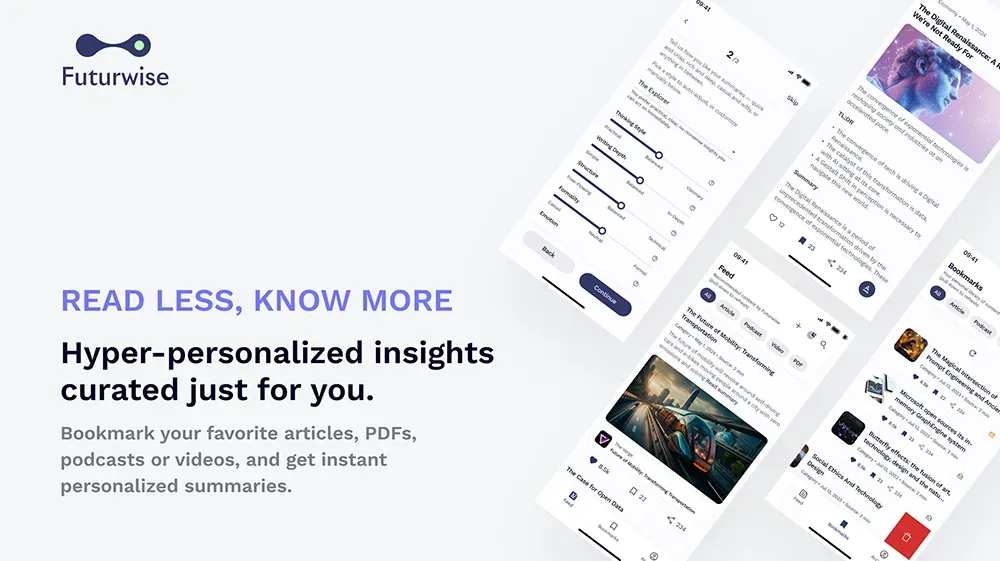
Staying up-to-date in a fast-changing world is vital. That is why I have launched Futurwise; a personalized AI platform that transforms information chaos into strategic clarity. With one click, users can bookmark and summarize any article, report, or video in seconds, tailored to their tone, interests, and language. Visit Futurwise.com to get started for free!

Dr Mark van Rijmenam
Dr. Mark van Rijmenam, widely known as The Digital Speaker, isn’t just a #1-ranked global futurist; he’s an Architect of Tomorrow who fuses visionary ideas with real-world ROI. As a global keynote speaker, Global Speaking Fellow, recognized Global Guru Futurist, and 5-time author, he ignites Fortune 500 leaders and governments worldwide to harness emerging tech for tangible growth.
Recognized by Salesforce as one of 16 must-know AI influencers , Dr. Mark brings a balanced, optimistic-dystopian edge to his insights—pushing boundaries without losing sight of ethical innovation. From pioneering the use of a digital twin to spearheading his next-gen media platform Futurwise, he doesn’t just talk about AI and the future—he lives it, inspiring audiences to take bold action. You can reach his digital twin via WhatsApp at: +1 (830) 463-6967.