Synthetic Minds | AI's Biggest Bet is that Compute Stays Scarce Forever
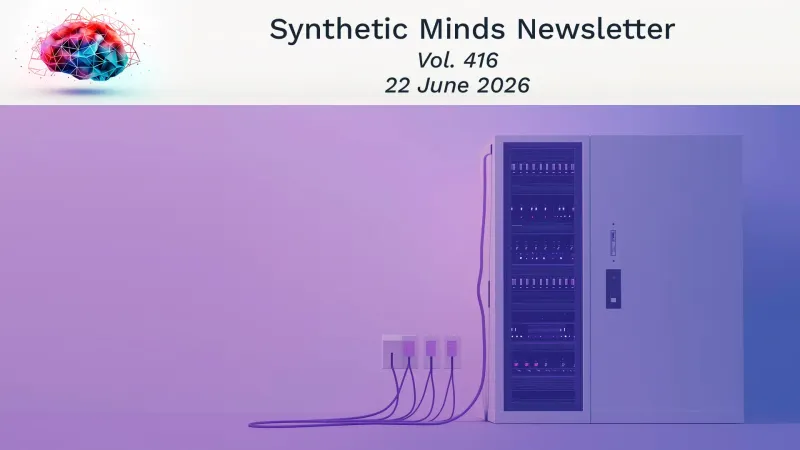
Synthetic Minds | AI's Biggest Bet is that Compute Stays Scarce Forever
The Synthetic Minds newsletter offers short daily insights to get you thinking. If you enjoy it, please forward. All signals are powered by Futurwise. If you need more insights, subscribe to Futurwise and get 25% off for the first three months!
I have just launched the Intelligence Age Scorecard! It will help you understand how ready your organization is for the Intelligence Age.
Today’s topic: AI & Automation
What If the AI Power Race is Wrong
Three continents are answering the rise of AI the same way: by building power plants. The United States, China, and Europe are racing to wire up gigawatts of electricity for machines that think.
Seen together, the buildout reveals the bet underneath the AI economy: intelligence is bought with electricity, and whoever owns the most power wins.
In the United States, Meta has locked 1.6 gigawatts of capacity, power for over a million homes, inside a $600-billion plan.
In China, the state is preparing to pour roughly $295 billion into a national AI data-center network, built on domestic chips.
In Europe, OpenAI and its partners are raising an Arctic AI gigafactory on cheap Norwegian hydropower, targeting 100,000 processors.
Then the counter-move. A Miami startup, Subquadratic, has published outside-verified benchmarks for a model it says needs a fraction of the power.
Its claim: a retrieval test that costs $2,600 on a leading model cost the startup eight dollars. The model reads up to twelve million words at once, where most stop near one.
That's the spending story. Here is the signal.
Every region's answer to AI is the same: build power. More chips, more electricity, more gigawatts, and whoever owns the most of it owns the future.
The power deals are decade-long bets. They are poured in concrete, signed into multi-year electricity contracts, and sized against how much computing current models demand.
The efficiency claim is software. It can change in a single release.
Subquadratic says the math that makes big models such power hogs, every word weighed against every other word, can be replaced. Outside testers have backed part of the claim.
The proof is thin, and the model sits in a closed preview. One AI engineer summed up the mood: the biggest leap since the transformer, or an AI Theranos.
Here is what none of the builders say out loud. If even part of the efficiency claim holds, some of that concrete was sized for a problem that is shrinking.
The last time an industry read a demand surge as permanent, telecom companies buried the country in fiber, and most of it sat dark for a decade.
AI has already moved into the operating seat of the energy system. The harder question is whether it is over-ordering the fuel.
So the question your board should debate is not how many gigawatts to secure. It is what your AI strategy is worth if compute stops being scarce.
Scarcity is a strategy until someone engineers a way out of it. The firms pouring concrete and the startup writing code cannot both be right about how much power intelligence actually needs.
The Intelligence Age Scorecard

Three continents have committed gigawatts to AI on the assumption that compute stays scarce, and a startup has put an outside-verified question mark on it. Are you still watching the power race or already verifying the assumption underneath it?
Take the Intelligence Age Scorecard to benchmark your readiness for the next two quarters, and the next five years. Or read the public Intelligence Age Scorecard of Qantas, Woolworths, Telstra or Commonwealth Bank first.
If this newsletter was forwarded to you, you can sign up here.
Thank you.
Mark
Frequently asked questions
Why are the US, China, and Europe building massive power plants for AI?
They are betting that intelligence is bought with electricity, so whoever controls the most power wins the AI race. The United States has locked 1.6 gigawatts of capacity within a $600-billion plan, China is preparing to invest roughly $295 billion in a national AI data-center network on domestic chips, and Europe is building an Arctic AI gigafactory on Norwegian hydropower targeting 100,000 processors.
Link to this questionWhat is Subquadratic's efficiency claim about AI models?
Subquadratic, a Miami startup, published outside-verified benchmarks claiming its model needs far less power than leading models. It says a retrieval test costing $2,600 on a leading model cost the startup eight dollars, and its model can read up to twelve million words at once, compared to most models stopping near one million.
Link to this questionWhat is the risk of over-investing in AI power infrastructure?
Power deals are decade-long bets poured in concrete and locked into multi-year electricity contracts sized against current computing demands, while efficiency claims are software-based and can change with a single release. If such claims hold, some of that infrastructure may be built for a computing problem that is shrinking, echoing how telecom companies once buried the country in fiber that sat dark for a decade after misreading a demand surge as permanent.
Link to this questionHow credible is Subquadratic's efficiency breakthrough claim?
The evidence is still thin: outside testers have backed only part of the claim, and the model remains in a closed preview rather than being fully available for scrutiny. One AI engineer described the uncertain reaction to it as either the biggest leap since the transformer or an AI Theranos, reflecting deep division over whether the claim is a genuine breakthrough or overhyped.
Link to this question
Dr Mark van Rijmenam
Dr. Mark van Rijmenam, widely known as The Digital Speaker, isn’t just a #1-ranked global futurist; he’s an Architect of Tomorrow who fuses visionary ideas with real-world ROI. As a global keynote speaker, Global Speaking Fellow, recognized Global Guru Futurist, and 5-time author, he ignites Fortune 500 leaders and governments worldwide to harness emerging tech for tangible growth.
Recognized by Salesforce as one of 16 must-know AI influencers , Dr. Mark brings a balanced, optimistic-dystopian edge to his insights—pushing boundaries without losing sight of ethical innovation. From pioneering the use of a digital twin to spearheading his next-gen media platform Futurwise, he doesn’t just talk about AI and the future—he lives it, inspiring audiences to take bold action. You can reach his digital twin via WhatsApp at: +1 (830) 463-6967.